The Olympic torch relay was invented for the 1936 Berlin Games
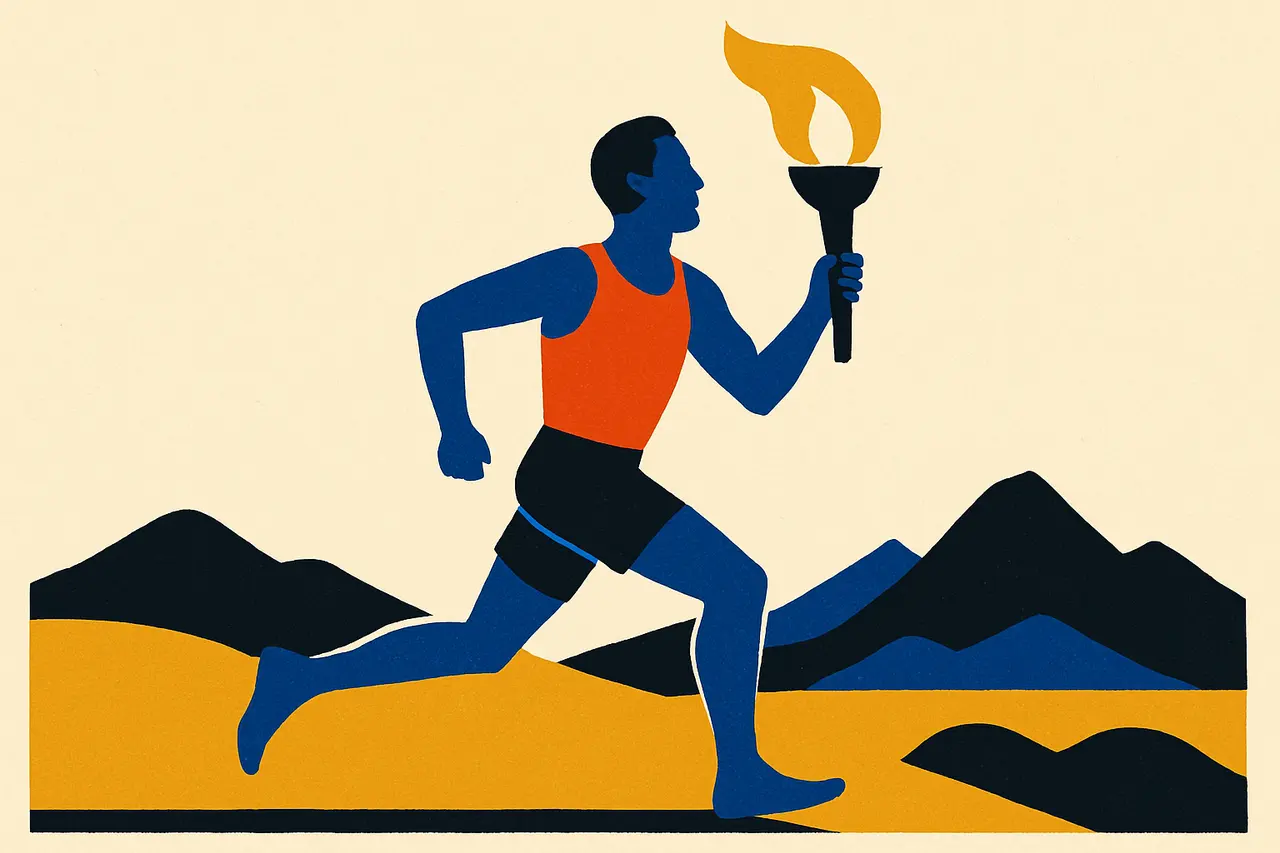
It feels ancient, but the cross-country torch relay is barely a century old - it was created as a spectacle for the 1936 Olympics.
The sight of a flame carried from Olympia to the host city looks like a rite handed down from antiquity. It isn’t. The relay “has no predecessor or parallel in antiquity” - it was a modern invention staged for the Berlin 1936 Games.
German organiser Carl Diem devised the run, in which the flame was kindled in ancient Olympia using sunlight focused through a mirror, then carried by relay to the stadium. Around 3,000 runners covered roughly 3,187 kilometres across several countries over about twelve days.
The relay was also propaganda: Nazi organisers used the link to classical Greece to glorify the regime. The flame itself had first appeared at the 1928 Amsterdam Games, but the cross-country relay debuted only in 1936 - and proved so striking it has featured at every Games since.
An “ancient” tradition that is younger than the aeroplane.
Sources & references
2 referencesWell-established. Corroborated by 2 independent sources.