The Olympic rings hide the colours of every national flag
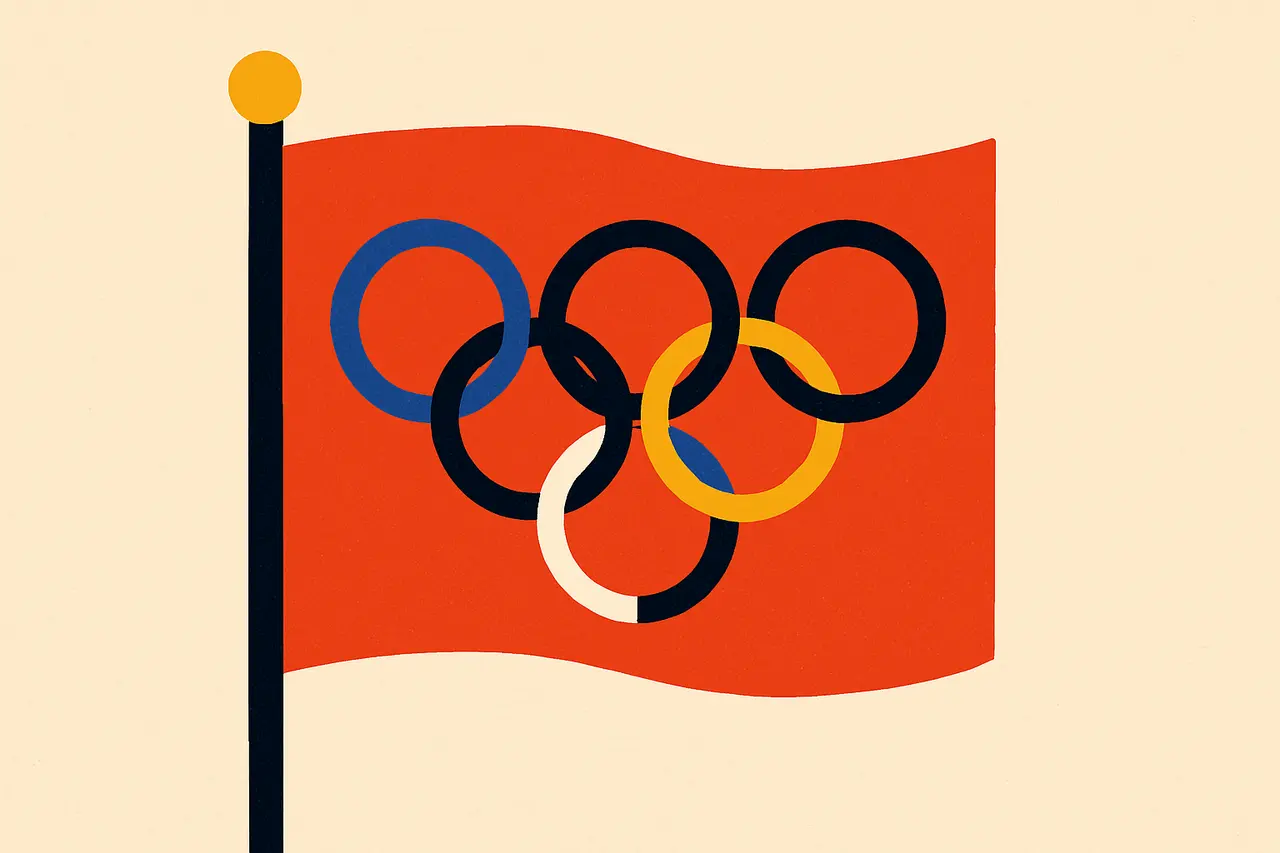
Coubertin chose the five ring colours plus white for a clever reason: together they reproduce at least one colour from every nation's flag.
Pierre de Coubertin designed the five-ring emblem in 1913 and unveiled it at the 1914 Paris Congress marking the Olympic movement’s 20th anniversary. The interlaced rings stand for the five parts of the world united by the Games - not for any single continent each.
The colours were chosen with deliberate diplomacy. The five hues - blue, yellow, black, green and red - plus the white background were picked because, taken together, at least one of them appears in the flag of every competing nation. No ring “belongs” to a particular continent.
That is why the symbol has worn so well: it was engineered to leave no country out. The rings first flew over a Games at Antwerp in 1920, and have since become one of the most recognised symbols on Earth.
Six colours, chosen so that every flag in the world could see itself in the flag of the Games.
Sources & references
2 referencesWell-established. Corroborated by 2 independent sources.