Nutmeg once grew on just one tiny cluster of islands
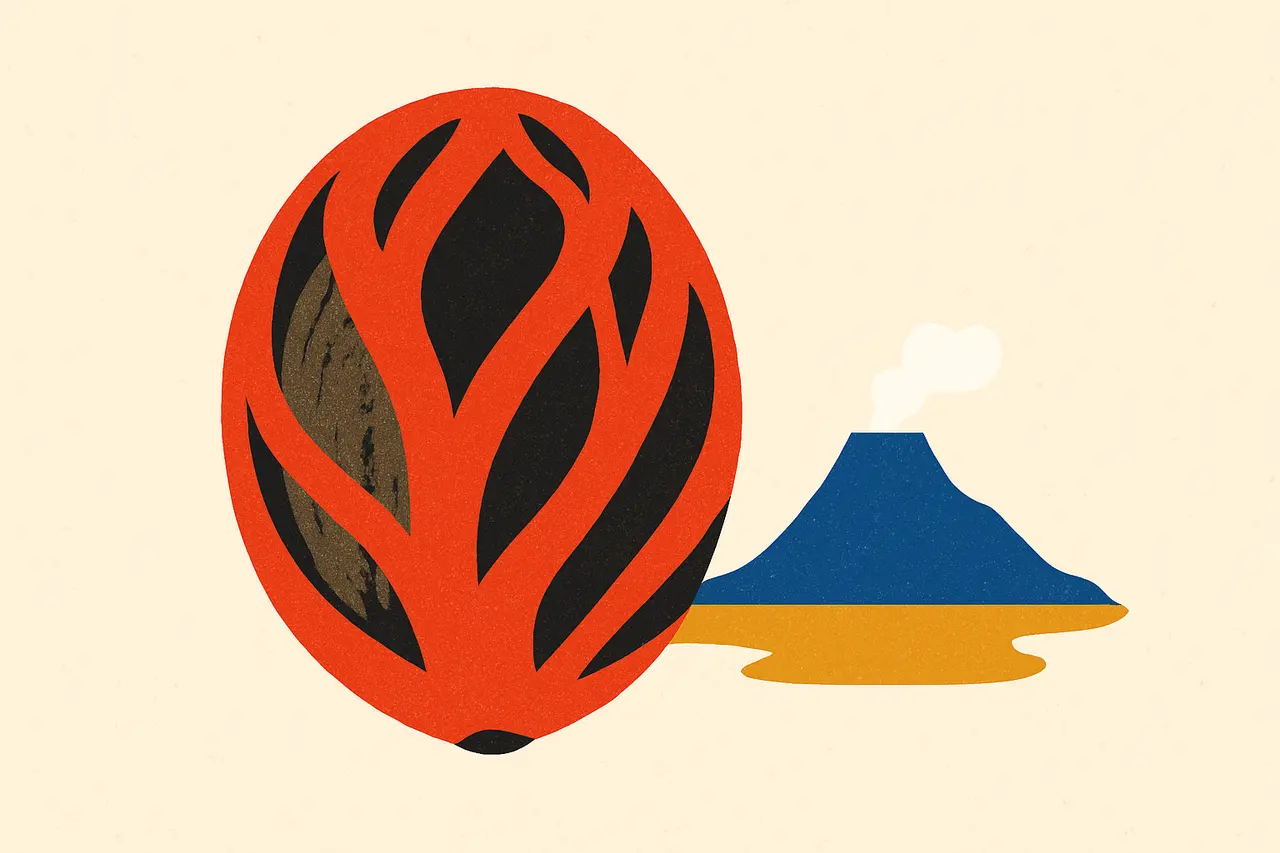
The world's entire supply came from the Banda Islands - and the Dutch killed to keep it that way.
For centuries, nutmeg and its sister spice mace came from a single source: the volcanic Banda Islands in the Moluccas, or Spice Islands, of Indonesia. Nowhere else on Earth did the nutmeg tree grow. That scarcity made the spice astonishingly valuable — by the time a cargo reached Venice it could be “worth 1000% more” than its island price.
Around 1600 nutmeg became a coveted commodity in Europe, sparking what Britannica calls “Dutch plots to keep prices high and English and French counterplots to obtain fertile seeds.” To lock down the monopoly, the Dutch East India Company sent Jan Pieterszoon Coen, who in 1621 unleashed a campaign of such brutality on Banda that it remains a byword for colonial atrocity: the population crashed from roughly 15,000 to about 1,000, the survivors killed, deported, or enslaved on the very nutmeg plantations the Dutch then ran.
Nutmegs sold whole were dipped in lime so no rival could plant a fertile seed.
One island defied them. Run, a sliver of land held by English traders, was the holdout the Dutch could not stomach. The dispute was settled in the 1667 Treaty of Breda, where England formally surrendered Run — and in exchange kept a Dutch-held island on the far side of the world called New Amsterdam, soon renamed Manhattan.
The monopoly couldn’t outlast smuggling. The French administrator Pierre Poivre spirited seedlings out in the 1700s, and the British later did the same, transplanting nutmeg to Grenada — still nicknamed the Spice Isle — and to Zanzibar, finally breaking Banda’s three-century grip on the trade.
Sources & references
2 referencesWell-established. Corroborated by 2 independent sources.