Why a single gene variant makes alcohol flush hundreds of millions red
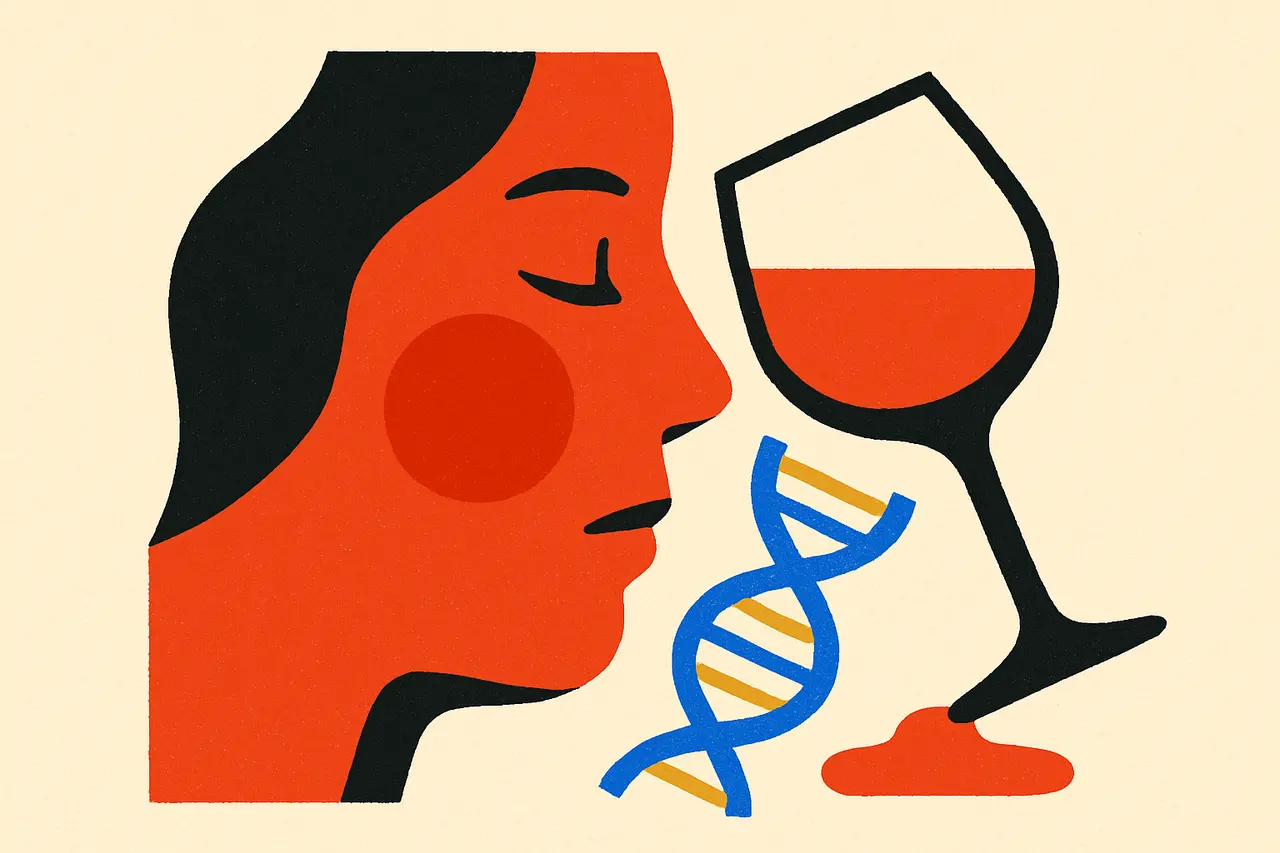
The 'Asian glow' is your body struggling to clear a toxic by-product of the drink in your hand.
When you drink, your body breaks alcohol down in two steps: first into acetaldehyde, a toxic, DNA-damaging chemical, then into harmless acetate. The second step relies on an enzyme called ALDH2. But a common gene variant, ALDH2*2, encodes an inactive version - and in people who carry it, acetaldehyde piles up instead of being cleared.
The result is the alcohol flushing response: facial flushing, nausea, and a racing heart after even modest drinking. About 36% of East Asians (Japanese, Chinese, and Korean populations) carry the variant - at least 540 million people, roughly 8% of everyone alive.
The flushing response is a reliable biomarker for identifying ALDH2-deficient individuals.
It is more than an inconvenience. Because acetaldehyde is a carcinogen, ALDH2-deficient people who drink heavily face a sharply elevated risk of oesophageal cancer - making the glow a visible warning, not just a quirk.
Sources & references
2 referencesWell-established. Corroborated by 2 independent sources.