Almonds, peaches and apricots are close cousins - and some kernels carry cyanide
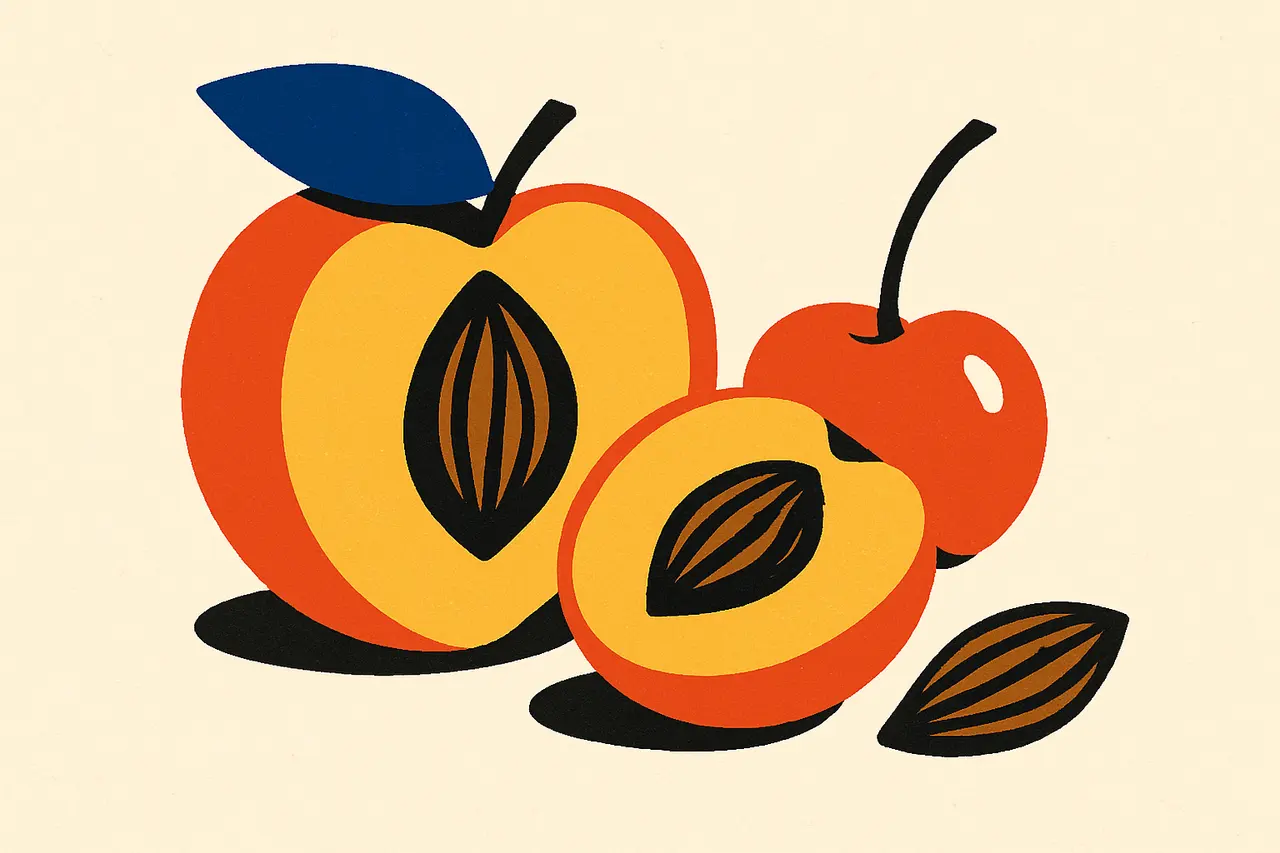
The almond on your snack tray and the pit inside a peach belong to the same genus, and one is a domesticated cousin of a poison.
Crack open a peach, an apricot, or a cherry and you’ll find a hard kernel hiding inside the pit. That kernel is a near-relative of the almond - all of them belong to the genus Prunus, alongside plums. The almond is essentially the seed of a fruit whose flesh we never bothered to eat, while peaches and apricots are prized for the flesh and discarded the seed.
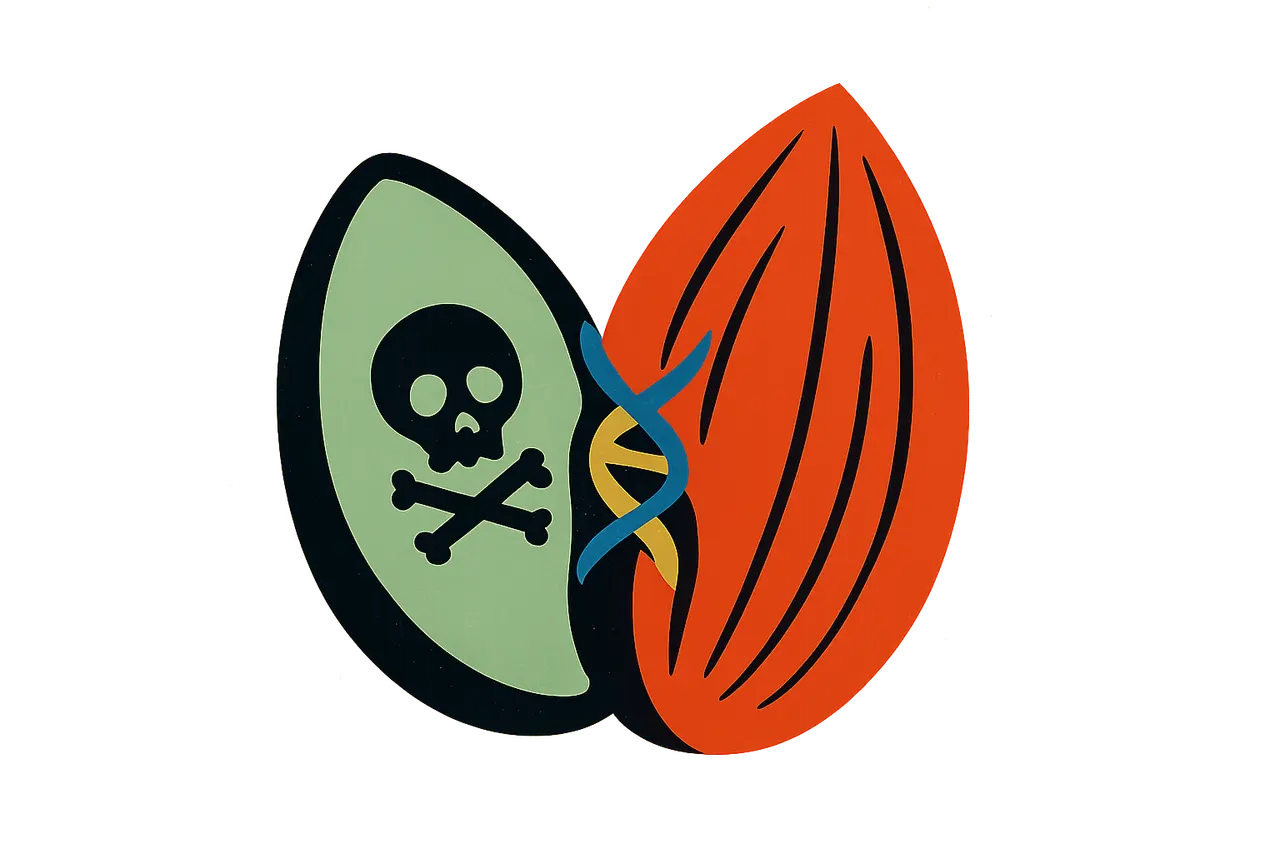
The family resemblance comes with a dangerous inheritance. Many Prunus kernels - bitter almonds, apricot stones, peach pits - contain amygdalin, a compound that breaks down into hydrogen cyanide when the kernel is chewed or crushed. In bitter almonds, amygdalin can run up to 1,000 times higher than in the sweet almonds we eat, and food-safety bodies warn that a small handful of raw bitter kernels can poison an adult.
The difference between snack and toxin is a single switch in the plant’s chemistry.
Sweet, edible almonds exist because that switch flipped. In sweet varieties, the genes driving the first steps of amygdalin synthesis simply aren’t expressed, so the cyanide pathway never fires. Domesticated humans selected hard for that quiet mutation - turning a poisonous wild seed into one of the world’s most-eaten nuts.
Sources & references
2 referencesWell-established. Corroborated by 2 independent sources.