Mary, Queen of Scots lost Langside despite the bigger army
On this day · 13 May 1568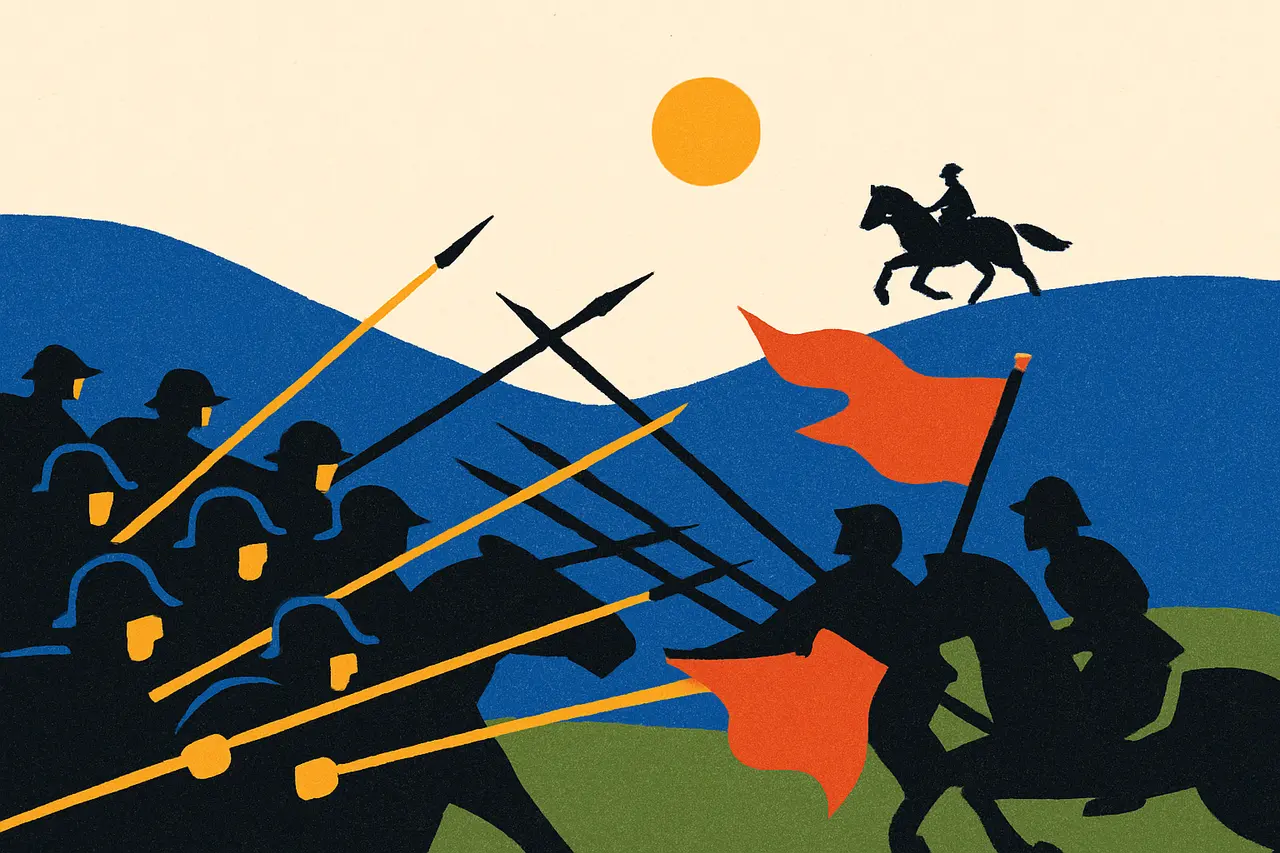
On 13 May 1568 Mary's 6,000 men were routed near Glasgow by a smaller force — and within days she had fled Scotland forever.
Mary, Queen of Scots lost the Battle of Langside, fought on 13 May 1568 on the south side of modern Glasgow, even though her army of roughly 6,000–6,500 men outnumbered the regent Moray’s force of about 4,000. The defeat ended her attempt to win back the crown she had been forced to abdicate in 1567, only days after her escape from Lochleven Castle.
Why did the bigger army lose?
Position and speed beat numbers. Mary’s commanders were escorting her from Hamilton toward Dumbarton Castle and, knowing they outnumbered the enemy, were probably not expecting a fight. Her half-brother James Stewart, Earl of Moray, marched out of Glasgow to seize Langside Hill first. On the suggestion of Sir William Kirkcaldy of Grange, he sent 200 horsemen ahead, each with a hagbutter (an early musketeer) riding behind him. Those gunmen took cover in the gardens of the houses along the village’s main street, the “Lang Loan”, a lane no more than about 40 feet wide.
Mary’s vanguard pushed up that lane into crossfire. Her commander, the Earl of Argyll, a man of little military experience, had fallen ill on the march, and when Kirkcaldy swung reinforcements into the vanguard’s flank it broke. Accounts disagree on how long it took: Holinshed’s chronicle says 45 minutes, while the Scottish Diurnal records an hour of fighting and two hours of flight. Most of the dead, about 300 by George Buchanan’s count, fell in the rout, which would have been bloodier had Moray not ordered his men to stop the killing.
Where did Mary go next?
South, fast. She was welcomed at Dundrennan Abbey on the Solway coast on 15 May, then sailed for the Cumberland coast, expecting her cousin Elizabeth I to help her. She never returned to Scotland. Instead she was held captive in England for 19 years and beheaded at Fotheringhay in February 1587. A 58-foot memorial column, its foundation stone laid on 12 May 1887, still marks the field.
Sources & references
4 referencesWell-established. Corroborated by 4 independent sources.