The Maillard reaction is the chemistry behind almost every "cooked" flavour
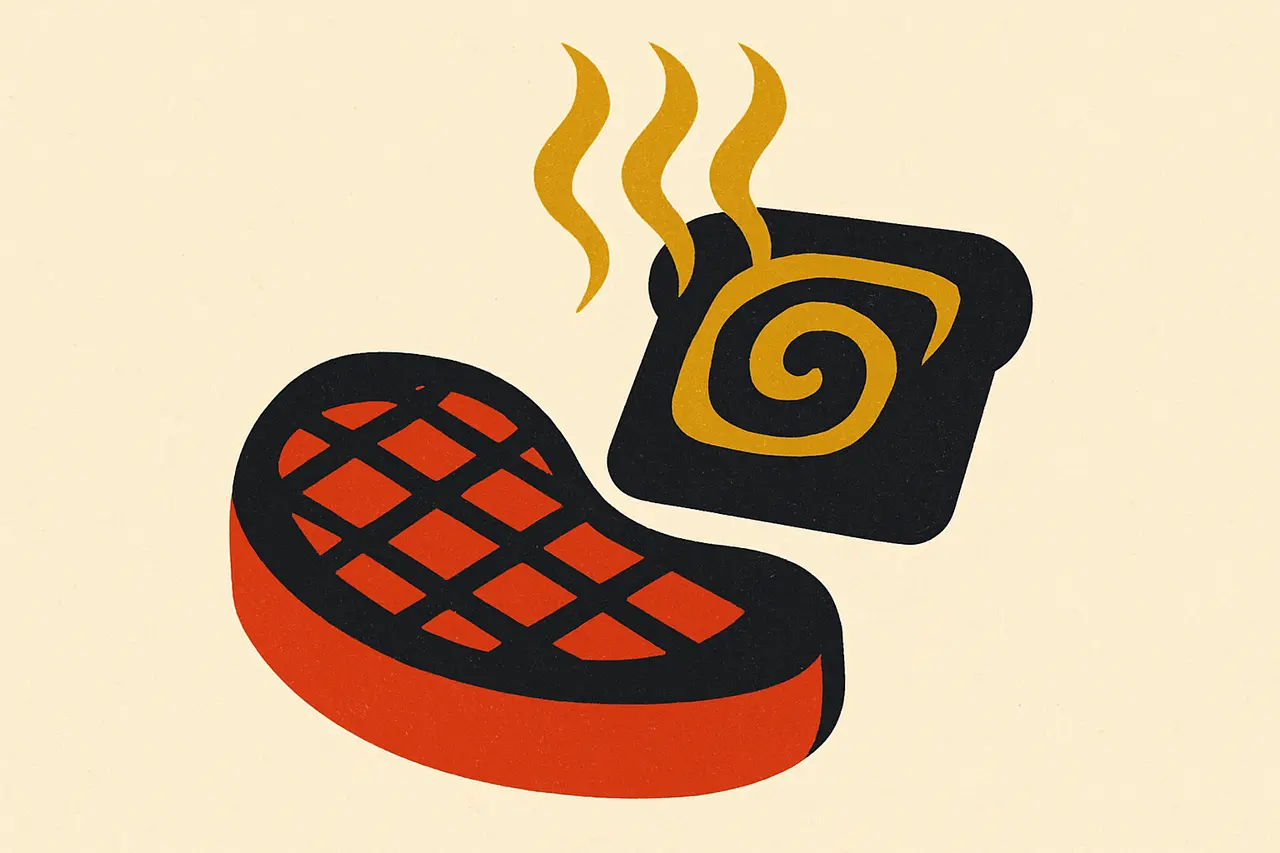
Seared steak, toast, coffee, roasted onions - one 1912 reaction between sugars and amino acids builds them all.
When food turns golden-brown and smells irresistible, you are usually tasting the Maillard reaction. Named after French chemist Louis-Camille Maillard, who first described it in 1912, it is a cascade of reactions between reducing sugars and the amino acids in proteins, driven by heat.
The reaction needs temperatures above roughly 100C - ideally 110-170C - which is why boiling never browns food but searing, roasting and baking do. As it proceeds, it spins off hundreds of new molecules: nutty pyrazines, meaty furans, and large brown polymers called melanoidins that give crusts their colour.
It is distinct from caramelisation, which involves sugar alone. The Maillard reaction is what separates a pale boiled potato from a crisp roast one, and it builds the flavour of bread crust, chocolate, beer and seared meat alike. A downside: at very high heat it can also generate acrylamide, a compound food scientists try to limit.
Sources & references
2 referencesWell-established. Corroborated by 2 independent sources.