Leonardo's flying machines never left the page
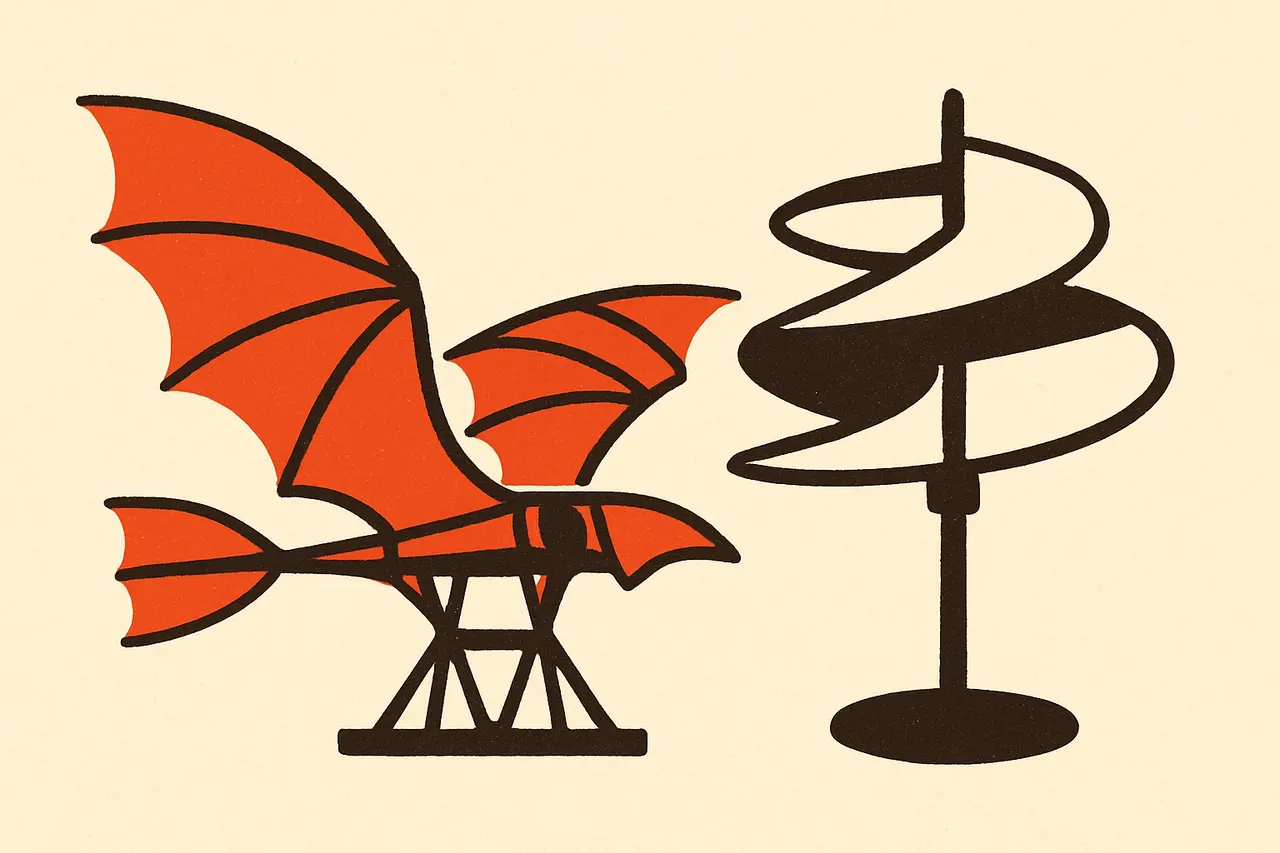
Leonardo da Vinci filled notebooks with aircraft centuries before powered flight, yet not one of his designs was ever built or flown.
For much of his life Leonardo da Vinci was gripped by the dream of human flight. He produced more than 35,000 words and 500 sketches on flying machines, the nature of air, and the soaring of birds, sketching everything from a flapping-wing ornithopter (c. 1490) to a helical airscrew (c. 1487) that looks startlingly like a modern helicopter rotor.
Most of his aircraft were ornithopters, kept aloft by beating wings, with a pilot lying prone and driving the membrane-covered frame by arm and leg. The designs ran into one stubborn obstacle: power. Human muscle simply cannot generate the sustained force needed to lift such a structure, a limit Leonardo could never overcome.
“As far as it is known, none of these inventions were ever built.”
His most concentrated study, the Codex on the Flight of Birds, came later, around 1505–1506. A popular legend dates a failed flight test to 3 January 1496, but no museum, library, or scholarly authority documents such an event — Leonardo’s machines remained brilliant paper visions, not flown aircraft.
Sources & references
3 referencesWell-established. Corroborated by 3 independent sources.