The microwave oven was invented after a candy bar melted in an engineer's pocket
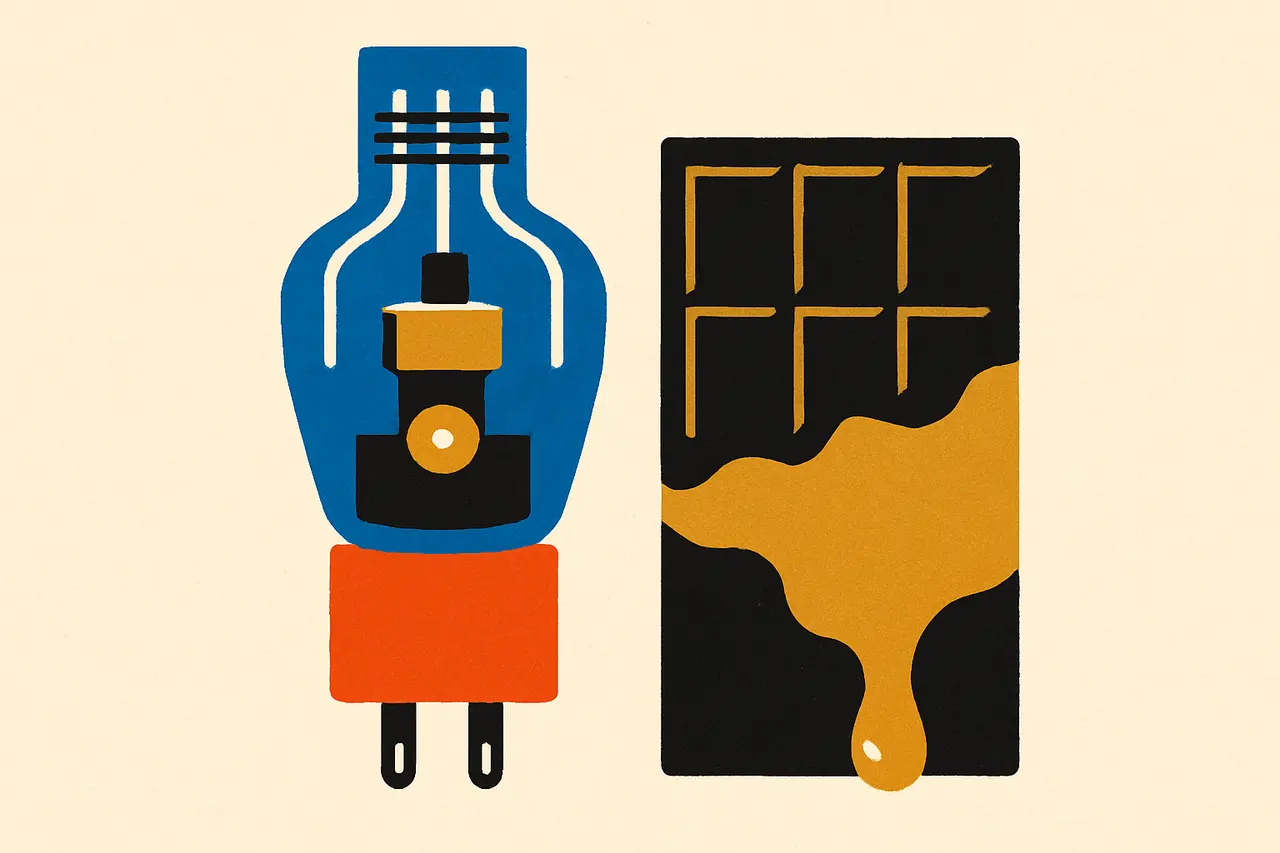
Standing beside a running radar tube, Percy Spencer noticed his snack had turned to goo — and chased the clue.
In 1945, self-taught engineer Percy Spencer was working with magnetrons — the vacuum tubes that powered Allied radar — at Raytheon in Massachusetts. Standing near a running tube, he noticed the candy bar in his pocket had melted into a sticky mess.
Most people would have shrugged. Spencer’s backstory made him unusually equipped to chase the clue. Orphaned young, he left school around the fifth grade, taught himself electronics after joining the Navy, and rose to become one of Raytheon’s top engineers with roughly 300 patents to his name. He sent for popcorn kernels and held them near the tube; they burst into fluffy clouds. An egg came next, and promptly exploded.
Here’s the part the legend gets wrong: microwaves don’t cook “from the inside out.” The radiation, around 2.45 gigahertz, makes water molecules flip back and forth — dielectric heating — but it only penetrates a few centimeters, so it actually heats the outer layers first. The center cooks by ordinary conduction, the same as in any oven.
A clue in a coat pocket became one of the twentieth century’s defining appliances.
Raytheon filed a patent in 1945 and unveiled the first commercial microwave, the Radarange, in 1947. It stood nearly six feet tall, weighed about 750 pounds, was water-cooled, cost around $3,000, and was aimed at restaurants. Only the countertop Amana Radarange in 1967, and cheaper magnetrons, finally carried it into ordinary kitchens.
Sources & references
2 referencesWell-established. Corroborated by 2 independent sources.