Einstein Patented a Refrigerator With No Moving Parts
On this day · 11 November 1930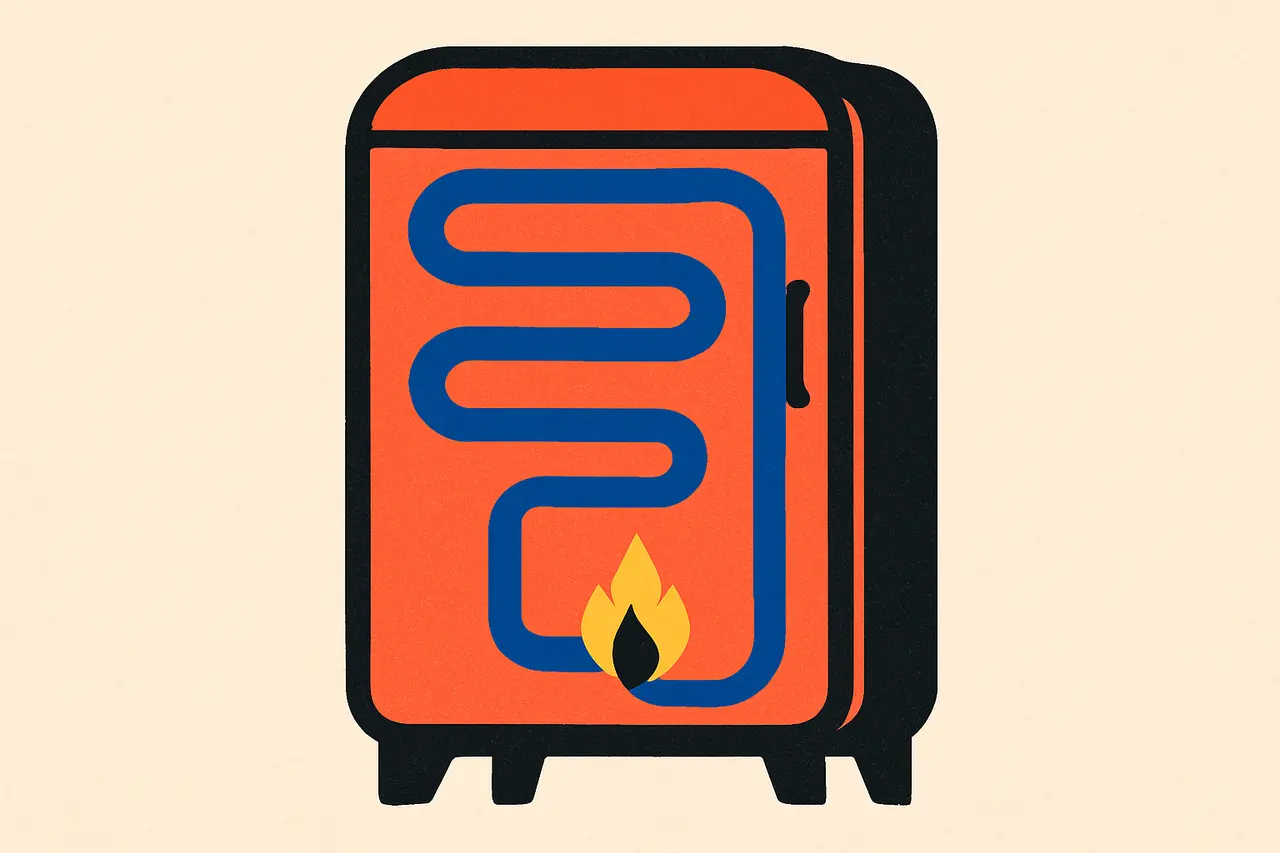
Two physicists who would help shape the atomic age first set out to build a safer fridge that never wore out.
On November 11, 1930, the United States granted patent No. 1,781,541 to Albert Einstein and his former student Leo Szilard for a new method of refrigeration. Their goal was safety: early electric fridges relied on toxic gases held back by mechanical seals, and a leaking seal could kill a sleeping family.
The pair’s answer was a machine with no moving parts. Instead of a motor-driven compressor that could fail or wear out, the design was hermetically sealed and used only heat to drive a cycle through three working fluids — water, ammonia, and butane. A linked invention, an electromagnetic pump, moved liquid metal with magnetic fields rather than pistons.
A fridge that ran on heat alone, with nothing inside to break.
The device was never a commercial success. The arrival of cheaper, less toxic refrigerants in the 1930s favoured conventional compressor fridges. Szilard soon turned to nuclear physics, and the refrigerator remained one of Einstein’s few patented inventions — a quiet footnote beside relativity.
Sources & references
2 referencesWell-established. Corroborated by 2 independent sources.