The implantable pacemaker was born when an engineer grabbed the wrong resistor
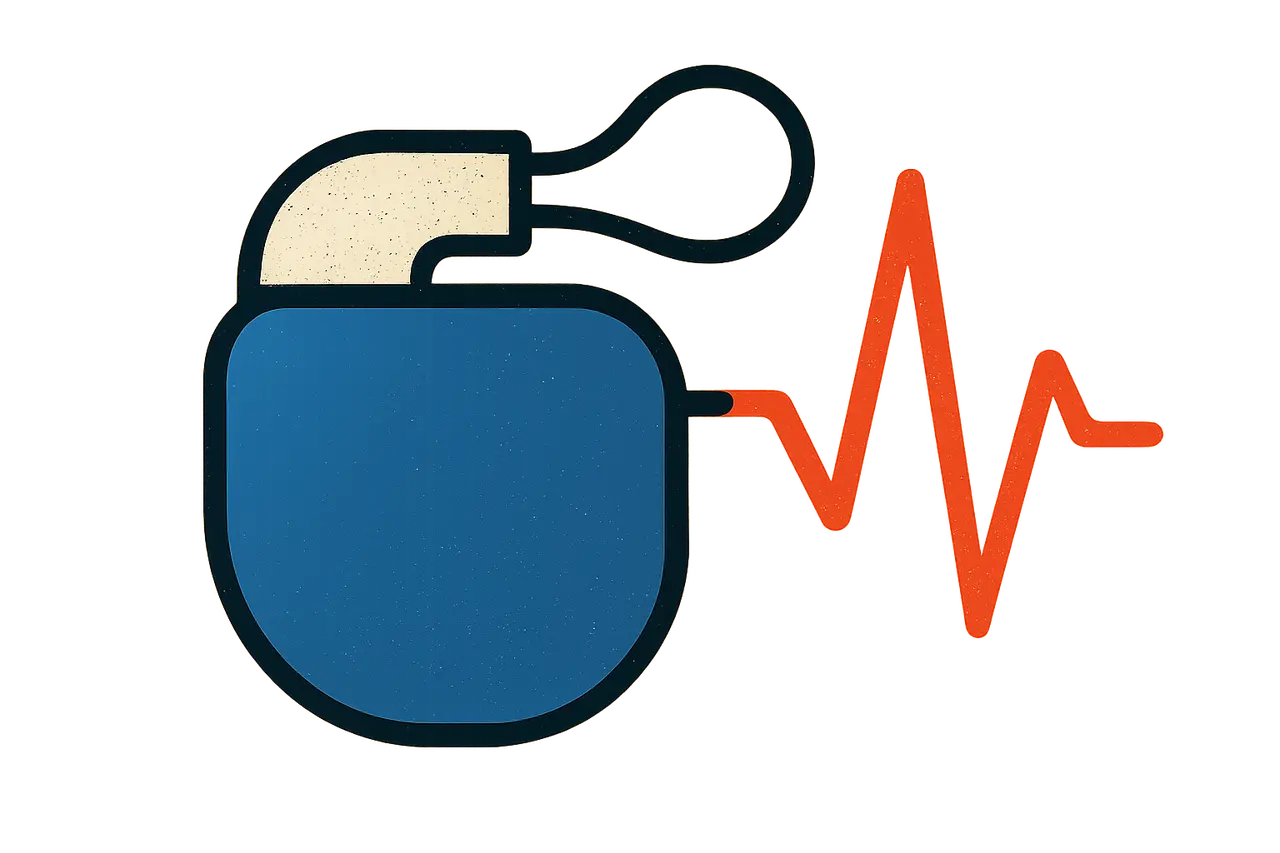
Wilson Greatbatch reached into a box for one part, pulled out another, and built a circuit that beat like a heart.
In the late 1950s, engineer Wilson Greatbatch was building a device to record the sounds of the human heart. Reaching into a box of parts, he grabbed a resistor of the wrong value and soldered it in by mistake.
Instead of recording, the circuit began to pulse — 1.8 milliseconds on, then a one-second pause, then again. Greatbatch recognized the rhythm at once: the lub-dub of a heartbeat. He had stumbled onto a way to electrically pace a heart.
“I stared at the thing in disbelief,” he later recalled.
The stakes were enormous. Before implantable units, pacing meant external machines — transcutaneous jolts that were painful, or bulky bedside boxes plugged into wall power. A power outage could kill the patient. Greatbatch’s device freed people from the wall entirely, tucking the whole rhythm-keeper inside the body. He refined the design for two years with surgeon William Chardack; a prototype paced a dog’s heart in 1958, and in 1960 the first implantable cardiac pacemaker went into human patients.
Early implants still had a fatal flaw: zinc-mercury batteries leaked and lasted only about two years. Greatbatch’s second breakthrough fixed it — a sealed, corrosion-resistant lithium-iodide battery in the 1970s that stretched device life to roughly a decade and became the industry standard still used today. Among his 350-plus patents he counted the pacemaker his proudest, and the device now keeps millions of hearts beating worldwide.
Sources & references
2 referencesWell-established. Corroborated by 2 independent sources.