William Tell's 1307 apple shot is legend, not history
On this day · 18 November 1307
Swiss tradition dates the apple shot to 18 November 1307, but the date was supplied more than two centuries later, and Tell may never have lived.
Swiss tradition dates William Tell’s apple shot to 18 November 1307 in Altdorf, in the canton of Uri. No record from the time mentions Tell, and the date was supplied by the 16th-century chronicler Aegidius Tschudi, more than two centuries later.
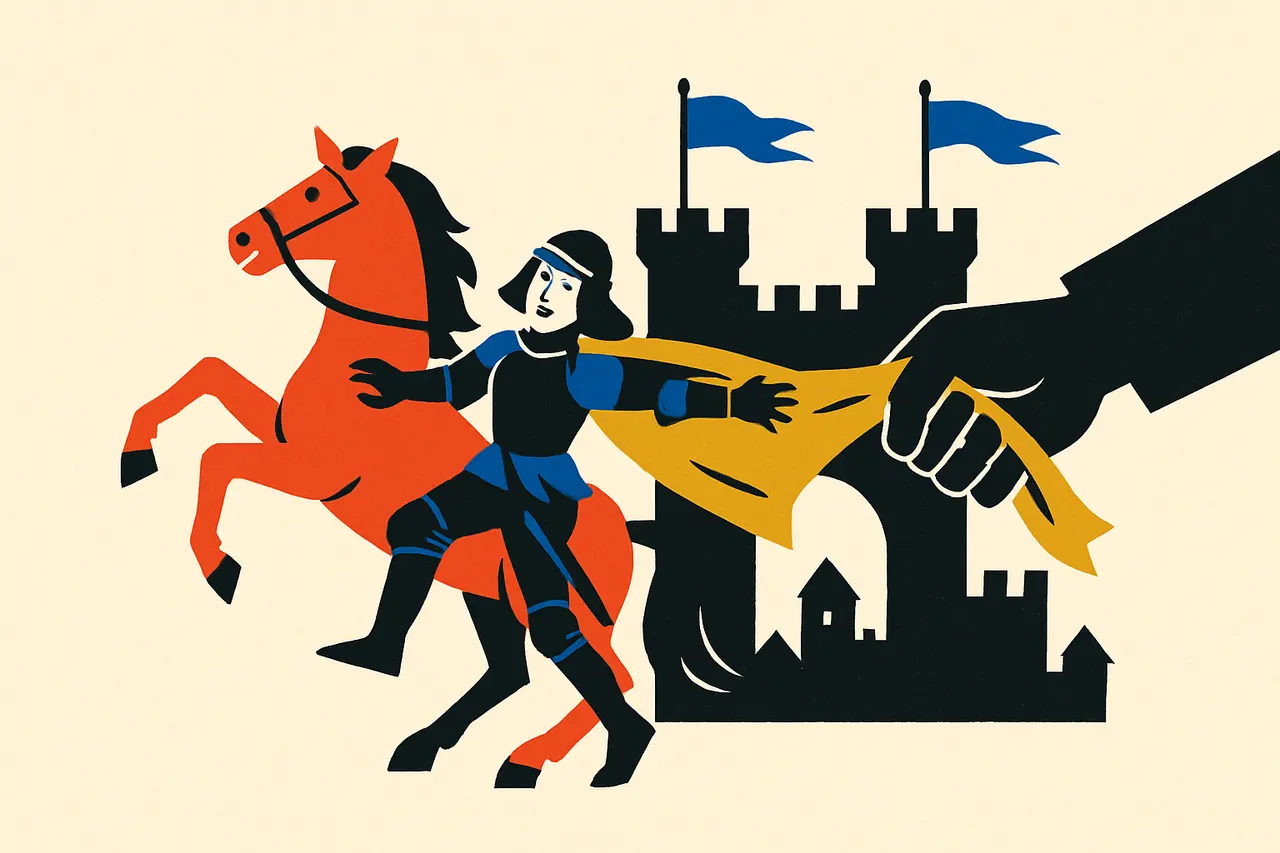
In the story, Tell refuses to bow to a hat that the Habsburg bailiff Gessler has hung on a pole in the square. As punishment he must shoot an apple off his son Walter’s head with a crossbow, a weapon the medieval Church had tried to ban. He splits the apple and admits that a second bolt was meant for Gessler if the boy had been hurt. He then escapes during a storm on the lake and later ambushes the tyrant.
Did William Tell really exist?
Probably not, and Switzerland’s own foreign ministry says nothing proves he lived. Tell first appears in the White Book of Sarnen, a copybook of about 1470, and in a ballad of about 1477, some 160 years after 1307. The Historical Dictionary of Switzerland credits Tschudi with fixing the year, yet his Chronicon Helveticum was not printed until 1734–36. After 1845 the historian Joseph Eutych Kopp, working from charters rather than chronicles, rejected Tell and the Rütli oath altogether.
Even the date is unstable. The ministry’s own retelling has Tell snub the hat on the 18th and face the apple the following day.
Where did the apple story come from?
It probably came from an older Danish tale. In his 12th-century Gesta Danorum, the monk Saxo Grammaticus describes the archer Toko, forced by King Harald Bluetooth to shoot an apple off his son’s head. Toko, too, kept a spare arrow for the king. When two Bernese writers argued in 1760 that Tell was a “Danish fairy tale”, the claim caused a scandal.
The legend outlived the scholars. Friedrich Schiller’s 1804 play Wilhelm Tell, drawn from Tschudi, made the marksman a national hero, and Rossini turned the story into an opera in 1829.
Sources & references
3 referencesWell-established. Corroborated by 3 independent sources.