Railroads gave America "the Day of Two Noons"
On this day · 18 November 1883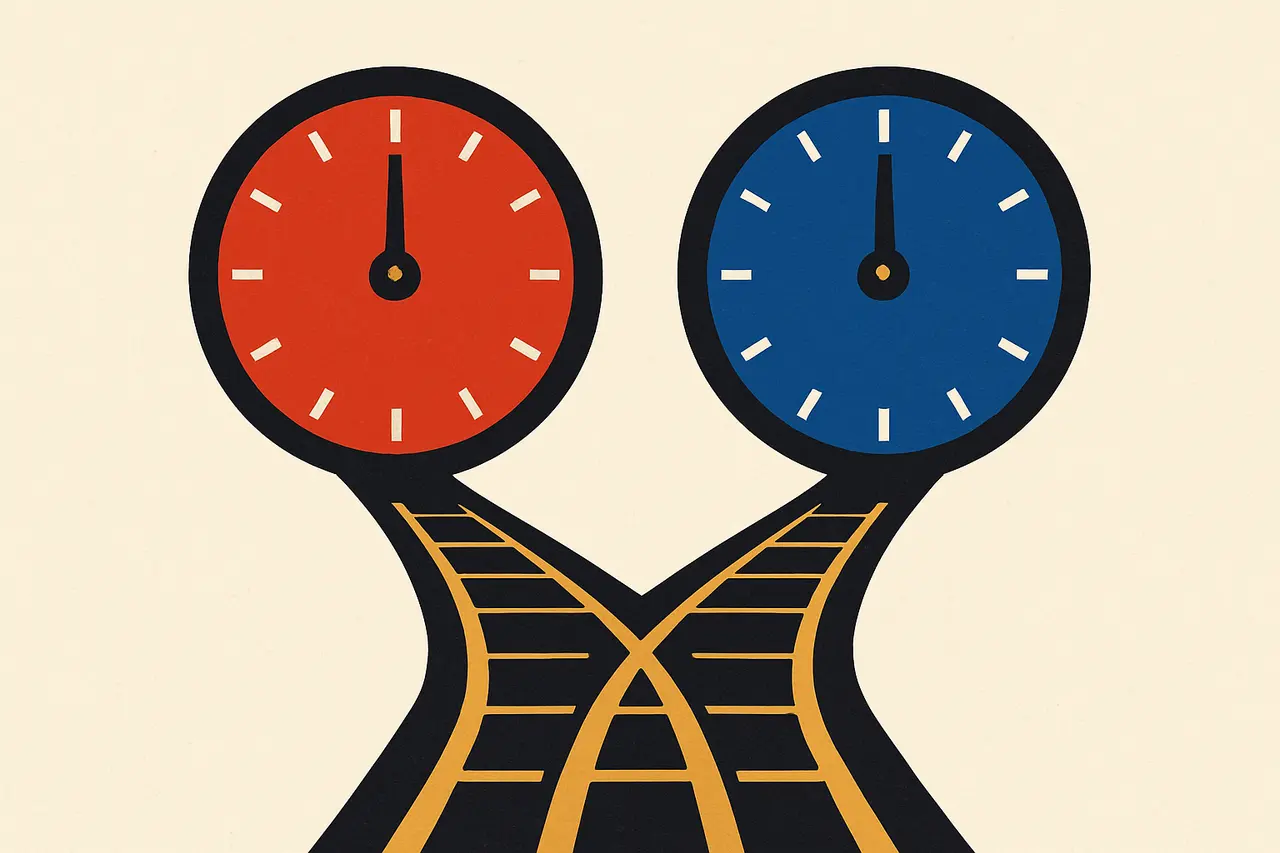
To stop a chaos of clocks, U.S. and Canadian railroads imposed five time zones in a single coordinated afternoon.
On November 18, 1883, North American railroads switched to a system of standard time zones, ending an era when nearly every town kept its own local clock by the sun.
Before that, a traveler crossing the continent might reset a watch dozens of times, and rival railroads ran on conflicting schedules that caused dangerous confusion and collisions. Editor William F. Allen of the Traveler’s Official Railway Guide championed a fix: five zones — Intercolonial, Eastern, Central, Mountain, and Pacific — each set roughly one hour apart along selected meridians.
At noon that day, clocks in each zone were reset to the new standard. In many cities the hour of twelve arrived twice, once by old local time and once by the new railway time, earning the event its nickname: “the Day of Two Noons.”
The railroads acted entirely on their own; the U.S. government did not formally adopt standard time until the Standard Time Act of 1918. Yet the transition was so orderly that most towns simply went along.
Sources & references
2 referencesWell-established. Corroborated by 2 independent sources.