King John sealed Magna Carta on 15 June 1215 — it lasted 10 weeks
On this day · 15 June 1215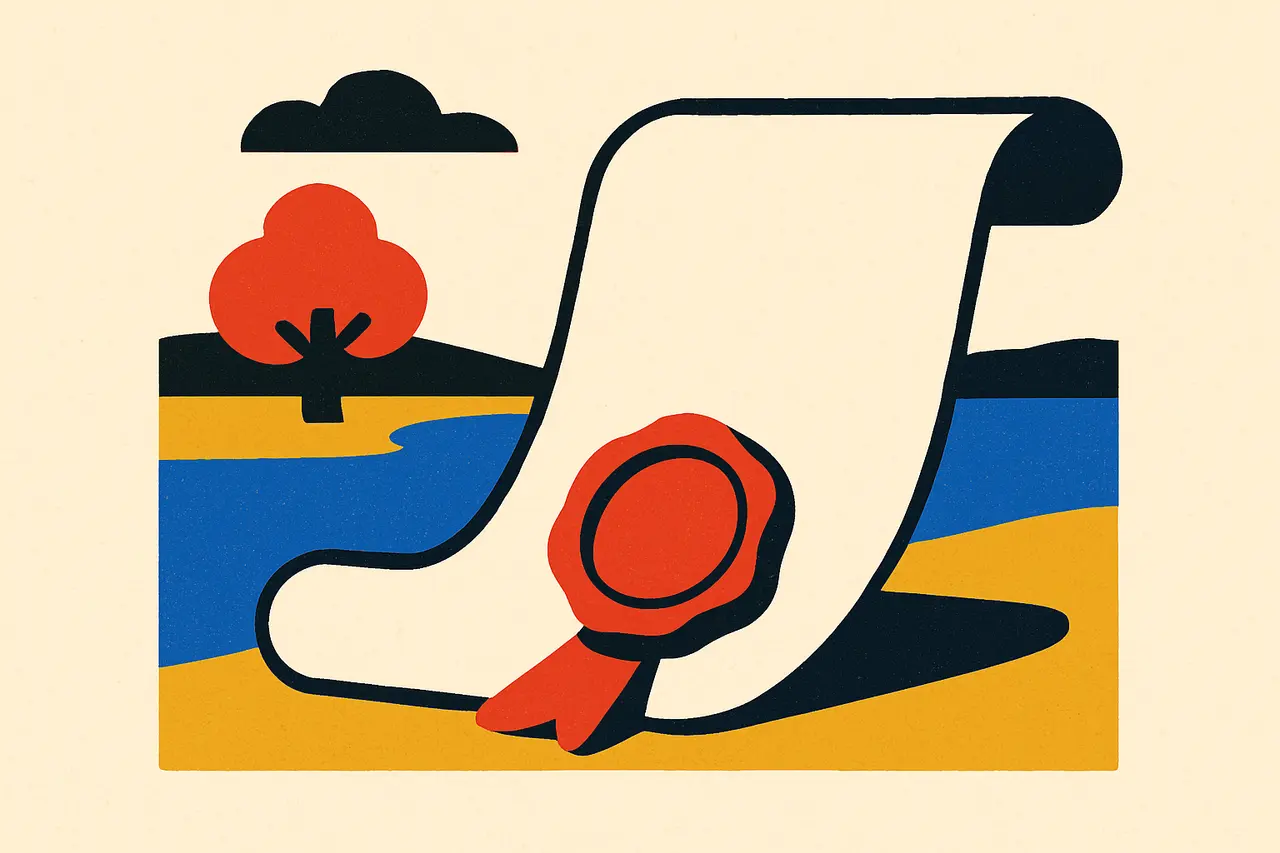
Sealed at Runnymede, annulled by the pope within weeks, and not even called Magna Carta until 1217 — yet three clauses are still law.
King John set his seal to Magna Carta in the meadow of Runnymede, between Windsor and Staines, on 15 June 1215 — sealed, not signed, and at that point a draft rather than a finished charter. The UK National Archives’ timeline records John sealing a draft and accepting its terms that day; the rebel barons formally made peace and renewed their allegiance on 19 June, and sheriffs were ordered to make everyone swear an oath to the 25 barons the charter appointed to hold the king to it.
It was a peace treaty that failed fast. Just 10 weeks later, papal bulls dated 24–25 August 1215 declared it null and void at John’s request, and England slid into civil war. It was not yet even called Magna Carta: when first issued it was known as the Charter of Runnymede, and took its famous name only from 1217, when it was reissued beside a new, smaller Charter of the Forest.
| Version | What happened |
|---|---|
| 1215 | Sealed by John at Runnymede; annulled within weeks |
| 1216 | Reissued in the name of the boy-king Henry III |
| 1217 | Reissued; forest rules moved to a separate charter |
| 1225 | Henry III’s own reissue, the definitive text |
| 1297 | Confirmed by Edward I and enrolled as a statute |
The charter survived only because John died in 1216 and his nine-year-old son’s regents used it to win rebels back. What still sits on the statute book is not the 1215 text but the 1297 statute. Of its 37 numbered chapters, just three remain in force in England and Wales: the freedom of the English Church, the liberties of the City of London, and chapter 29, which guarantees that no free man is imprisoned or outlawed “but by lawful judgment of his Peers, or by the Law of the Land”. It ends:
“We will sell to no man, we will not deny or defer to any man either Justice or Right.”
One of only four surviving originals of that 1297 issue is on display not in England but at the U.S. National Archives in Washington.
Sources & references
4 referencesWell-established. Corroborated by 4 independent sources.