Ponce de León sighted and named Florida on April 2, 1513
On this day · 2 April 1513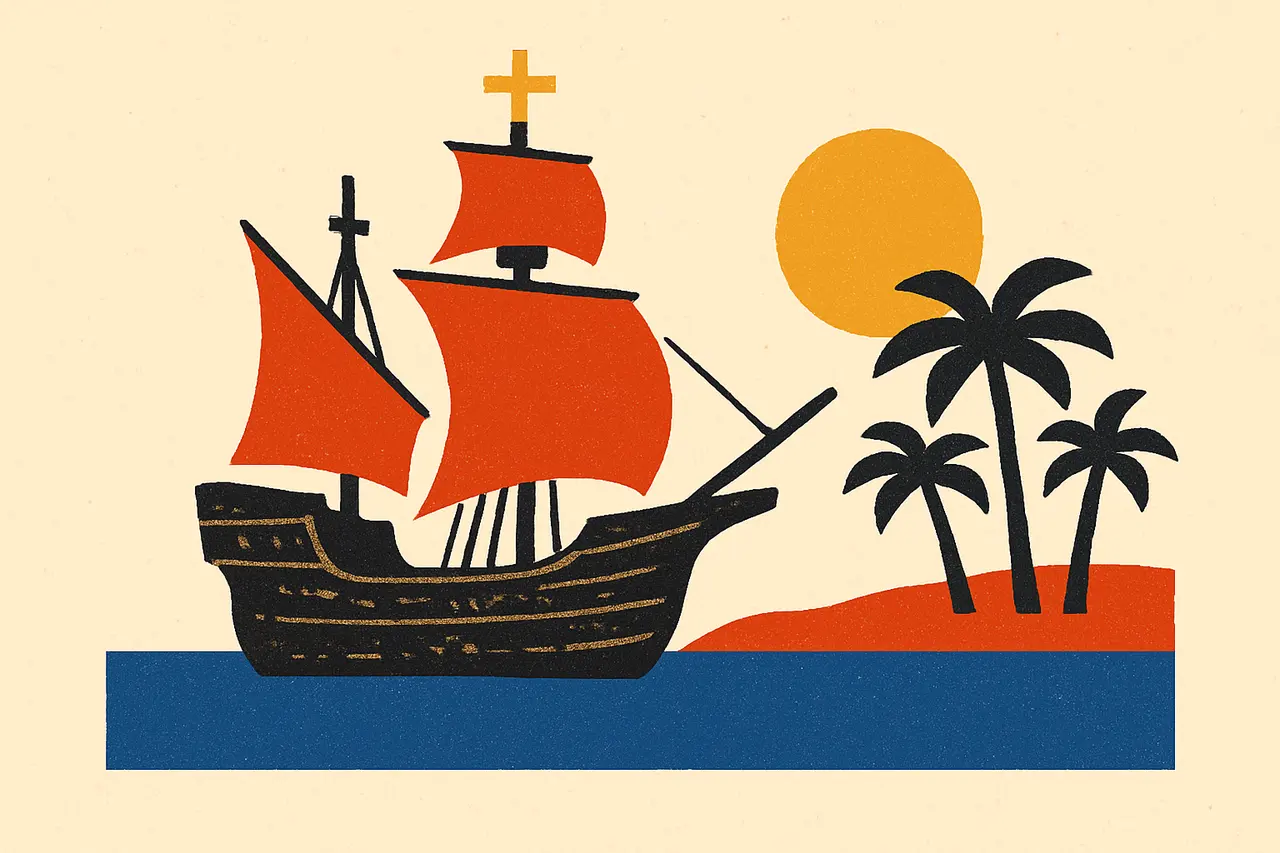
He named La Florida for the Easter season and came ashore a day later — but nobody knows where, and his royal contract never mentioned a Fountain of Youth.
Spanish explorer Juan Ponce de León sighted the Florida coast on April 2, 1513, named the land La Florida after the Easter season, and came ashore the next day, April 3, to claim it for Spain. He had sailed from Puerto Rico, where he had served as governor, with three ships, the Santiago, the San Cristóbal and the Santa María de la Consolación, and about 200 people, including women and free people of African descent.
The fleet reached the northern Bahamas by March 27, which was Easter Sunday; the Spanish called the season Pascua Florida, the “festival of flowers”. That is why some calendars file the voyage under late March. The mainland sighting came on April 2. Ponce took it for an island and spent weeks trying to sail around it.
Where did he actually land?
Nobody knows. Towns near St. Augustine, Ponce Inlet, Melbourne Beach and Jupiter Inlet have all claimed the honour, and the Florida Historical Society notes that no physical evidence supports any of them. The society even staged a mock courtroom trial of the rival claims in 2013, ahead of the 500th anniversary, and concluded only that they are inconclusive and open to debate.
Was he looking for the Fountain of Youth?
His royal paperwork points elsewhere. As the Florida Historical Society summarises it, King Ferdinand’s 1512 contract licensed him to search for “the islands of Benimy” and set out how any gold and slaves he found would be shared, with Ponce as governor for life of whatever he discovered. Rejuvenating water is not part of that bargain.
The claim had consequences. Spain founded St. Augustine on September 8, 1565, 52 years later. It was 42 years old when the English reached Jamestown, and it remains the oldest continuously occupied European town in the United States. Ponce returned in 1521 to build a colony on the Gulf coast, but Calusa warriors ambushed the settlers and an arrow struck his thigh. He died of the wound in Cuba. Florida itself joined the Union as the 27th state in 1845.
Sources & references
4 referencesWell-established. Corroborated by 4 independent sources.