William Burt patented the typographer, an early forerunner of the typewriter
On this day · 23 July 1829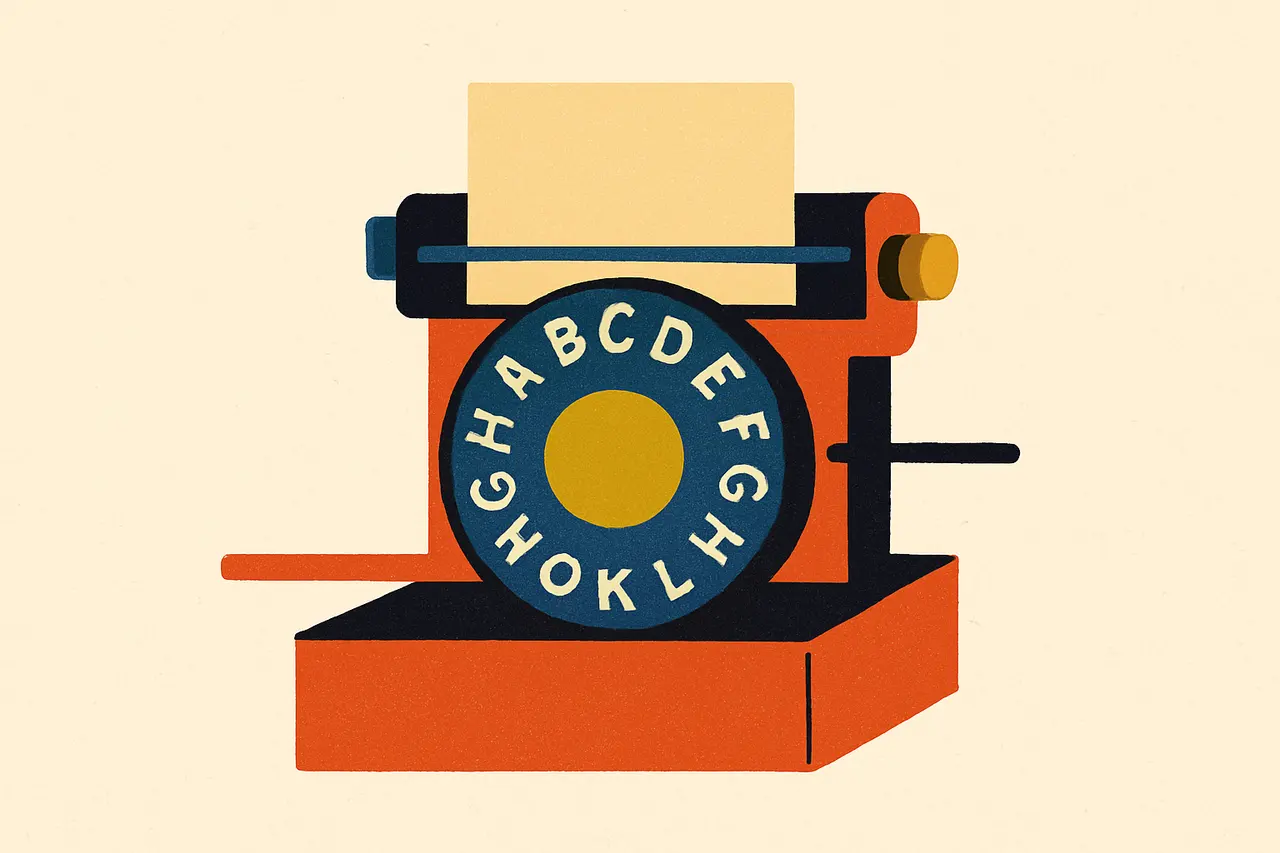
On July 23, 1829, American surveyor William Austin Burt won the first US patent for a writing machine — the typographer.
On July 23, 1829, the American surveyor and inventor William Austin Burt received a US patent for the typographer, a wooden writing machine now regarded as the first typewriter patented in the United States. The patent was signed by President Andrew Jackson.
The device was a far cry from the keyboards that followed. Burt’s typographer used a rotating dial to choose each letter; the operator swung the character into position and pressed it onto the page through an inked ribbon. It produced uniform, legible type — but slowly.
The original Burt typographer was the first such machine known to be capable of practical work.
That practicality came with a catch: setting a letter by dial took longer than writing it by hand, and the typographer was a commercial failure. Decades passed before the familiar QWERTY machines of the 1870s made typing faster than the pen. Still, Burt’s patent marked the moment the idea of a personal writing machine entered the record.
Sources & references
2 referencesWell-established. Corroborated by 2 independent sources.