Most animals make their own vitamin C - humans carry a broken copy of the gene
We need oranges because of a mutation our ancestors picked up tens of millions of years ago.
A dog, a cat, or a cow never worries about vitamin C: their bodies manufacture it internally from glucose, on demand. Humans can’t - and that is the whole reason scurvy is a human problem at all.
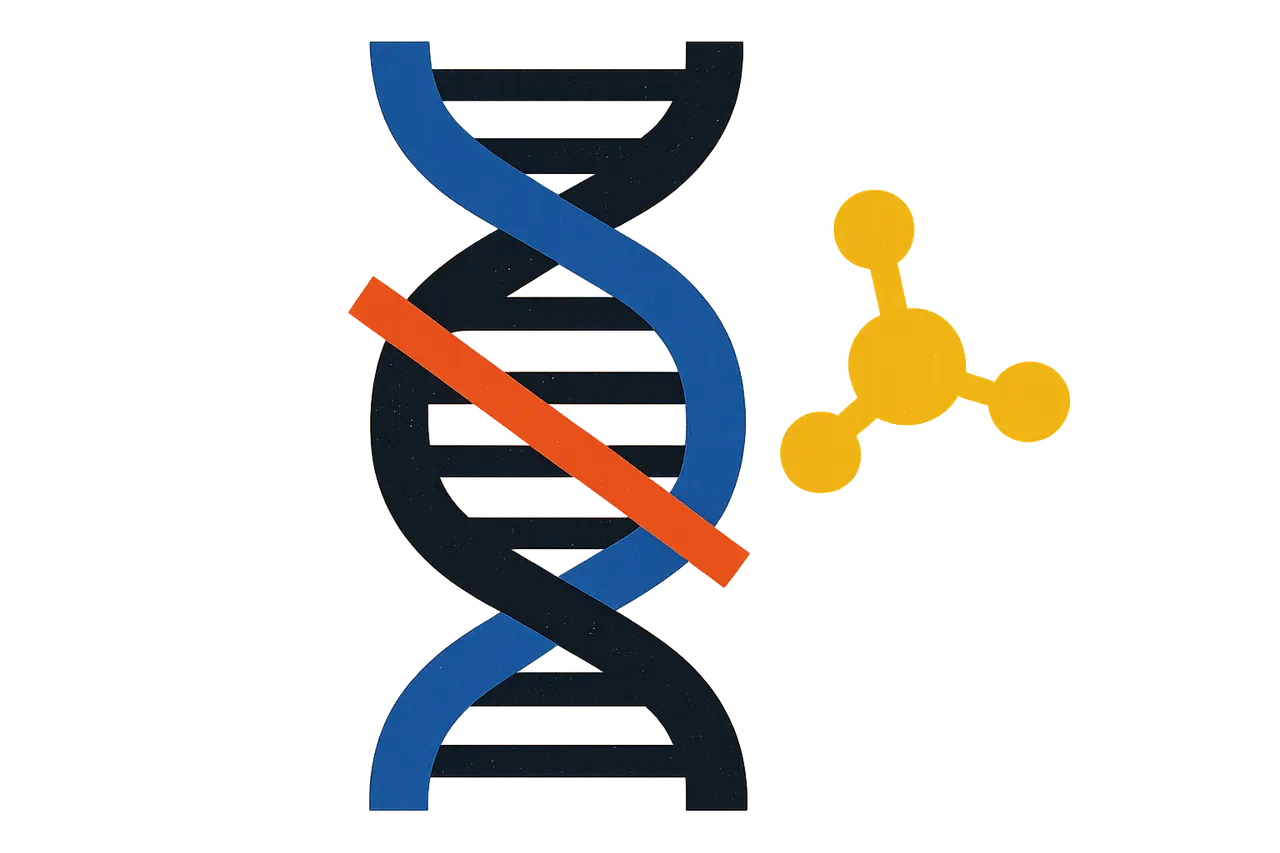
The final step in making vitamin C is performed by an enzyme called L-gulonolactone oxidase (GULO). In our lineage the gene that encodes it has been wrecked by mutations and survives only as a pseudogene - a dead, non-functional relic. The damage is ancient, dating back roughly 61 million years in our primate ancestors.
Vitamin C synthesis is the ancestral mammalian trait; only a few lineages lost it.
The same accident struck independently in guinea pigs and some bats, which is exactly why guinea pigs are used to study scurvy. For the unlucky few species that broke the gene, vitamin C stopped being something the body produces and became something the diet must supply.
Sources & references
2 referencesWell-established. Corroborated by 2 independent sources.