Honey never spoils - jars from ancient Egyptian tombs are still edible
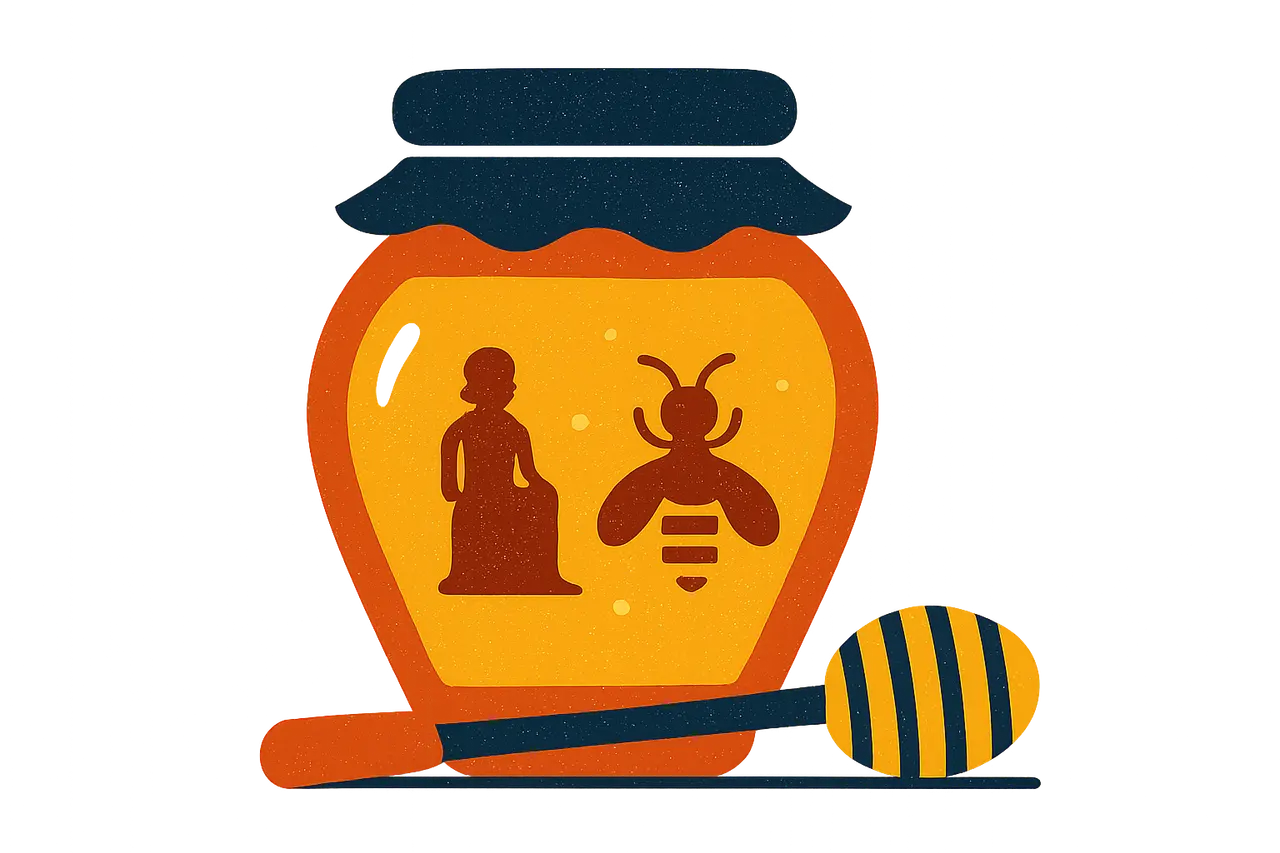
Sealed honey can outlast empires: archaeologists keep finding jars thousands of years old that haven't gone bad.
Open a jar of honey, leave it on a shelf, and decades later it will still be honey. Archaeologists have done dramatically better than your pantry. Pots of honey recovered from sealed ancient Egyptian tombs, some over 3,000 years old, have been found essentially unspoiled. The reason isn’t magic; it’s chemistry that makes honey one of the most hostile foods a microbe could try to colonize.
Three forces stack against spoilage. First, honey is extraordinarily dry: its water content sits around 17–18%, and its sugars greedily pull moisture out of any bacteria or yeast that land in it, leaving them desiccated. Second, it’s acidic, with a pH typically between 3.2 and 4.5 - a sour environment most pathogens can’t tolerate.
Third, and most elegant, is an enzyme the bees themselves add. Glucose oxidase sits dormant in concentrated honey, but when honey is diluted - say, by the moisture in a wound or an invading microbe - it slowly generates hydrogen peroxide, a mild antiseptic, in a continuous trickle.
Dry, acidic, and quietly self-disinfecting, honey is built to refuse decay.
The one catch is the seal. Honey is hygroscopic, meaning it pulls water from humid air; leave it open in a damp room and it can absorb enough moisture to ferment. Keep the lid on, and it can outlast you by millennia.
Sources & references
2 referencesWell-established. Corroborated by 2 independent sources.