Dick Fosbury cleared the bar backwards and rewrote the high jump

In 1968, one jumper's 'wrong' technique looked absurd - until he won Olympic gold and every rival copied him.
Until the late 1960s, high jumpers cleared the bar face-down using the straddle, or feet-first with the scissors. Then Dick Fosbury, a gangly and frequently unsuccessful Oregon high-schooler, began going over backwards, arching his spine across the bar and landing on his shoulders. He hadn’t designed it so much as stumbled into it - tinkering with the old scissors style to clear more height, he kept leaning further back until a wholly new technique emerged. A local newspaper, watching this ungainly contortion, mocked it as the “Fosbury Flop,” and the dismissive nickname stuck for good.
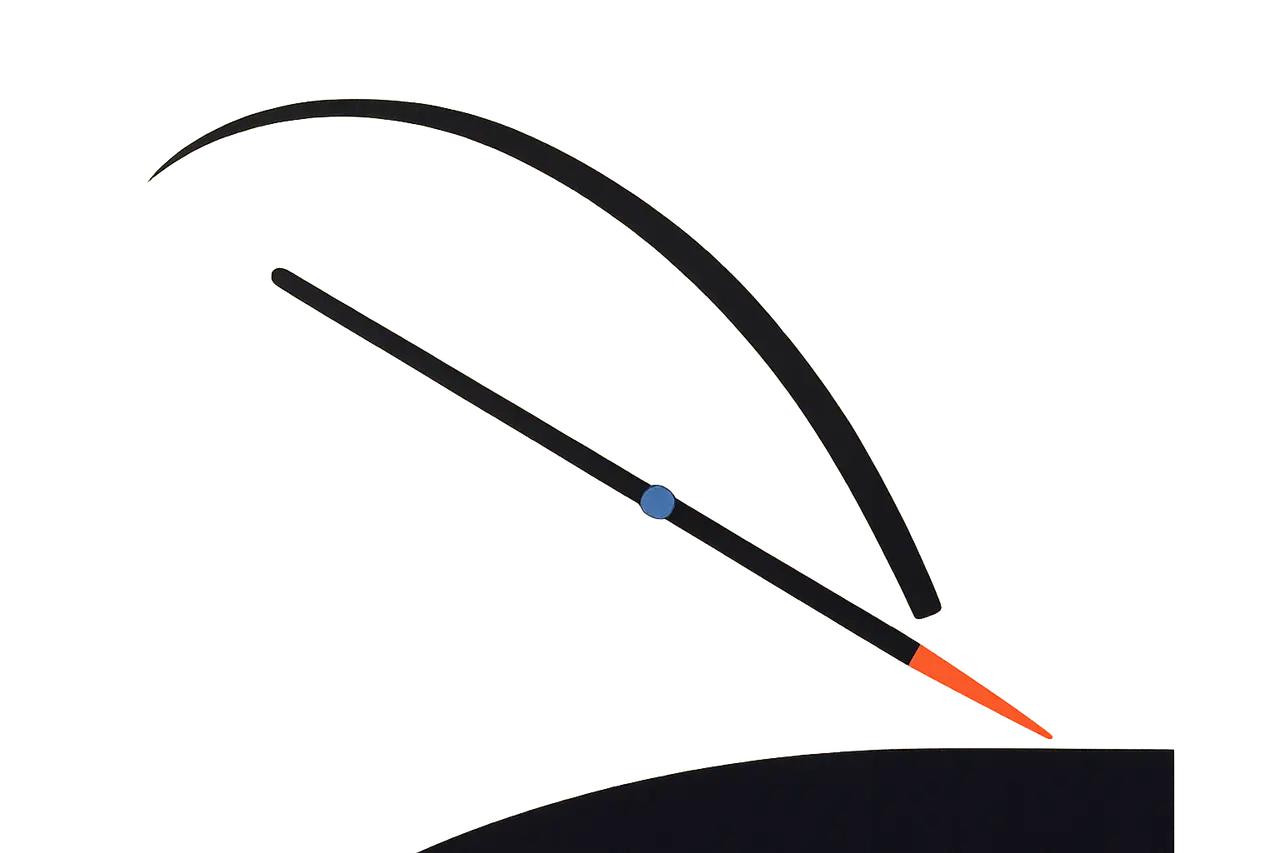
The genius of the flop is biomechanical. By arching the back into a tight curve over the bar, the jumper’s center of mass can actually pass beneath or straight through the bar even as the body clears above it. Less of the athlete’s mass has to be lifted over the obstacle, so a given leap of muscle translates into greater height - a free gift of physics that the straddle and scissors squandered.
The curved approach run is the other half of the trick. Sweeping in along an arc builds rotation and tilts the jumper’s body away from the bar, setting up the backward lean and the spin needed to roll across it cleanly.
By the 1972 Olympics, 28 of the 40 high jumpers were using the “Fosbury Flop.”
At the 1968 Mexico City Olympics, Fosbury won gold at 2.24 m, an Olympic record, using a method no rival dared try - made safe only by the deep foam landing mats that had replaced sand and sawdust. The last Olympic straddle jumper competed in 1988; today virtually every elite high jumper on Earth uses Fosbury’s once-ridiculed flop.
Sources & references
2 referencesWell-established. Corroborated by 2 independent sources.