An F1 car makes so much downforce it could, in theory, drive on the ceiling
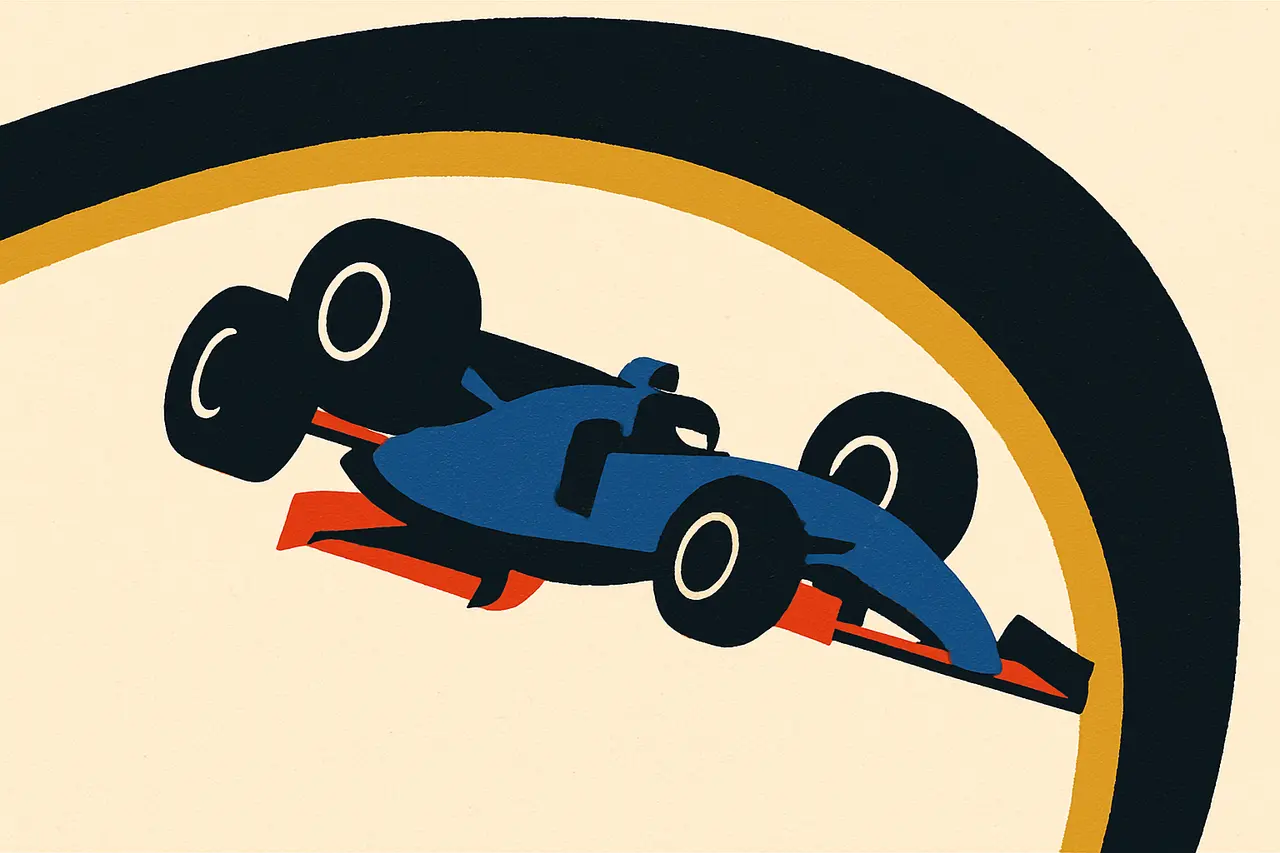
Past about 150 km/h, the air pushing a Formula 1 car down outweighs the car itself.
A Formula 1 car is, in essence, an aircraft wing bolted on upside down. Its front and rear aerofoils get the headlines, but the real workhorse is the floor. Shaped channels and a rising diffuser at the back accelerate the air squeezed beneath the car; by Bernoulli’s principle, faster-moving air drops in pressure, so the relative high pressure on top sucks the whole machine onto the track. That phenomenon - ground effect - generates a large share of the total grip, which is why modern cars run so close to the asphalt.
The faster the car goes, the harder the air pushes. According to one leading team, at around 150 km/h (93 mph) an F1 car already makes as much downforce as it weighs, and the minimum car weight is about 795 kg. By the end of a long straight, at top speed, the downward force can climb to three or four times the car’s weight - on the order of 4,000 kg pressing it down.
Generate more grip than gravity, and the logic is unavoidable: a car could, in principle, drive along the roof of a tunnel.
Yet no one has done it, and the obstacles are mundane rather than aerodynamic. An F1 engine’s oil and fuel systems are built for an upright car; invert them and lubrication starves, the pumps lose their pickup, and the engine quickly dies. You would also need to hold the necessary speed continuously through a banked loop, which no road or track allows.
The same force you can’t quite use to drive on a ceiling is doing very visible work elsewhere. It lets these cars take corners at highway speeds and pull roughly 5 to 6 g of lateral load - enough to fling an ordinary vehicle clean off the road.
Sources & references
2 referencesWell-established. Corroborated by 2 independent sources.