F1 brakes glow over 1,000C and stop a car in seconds
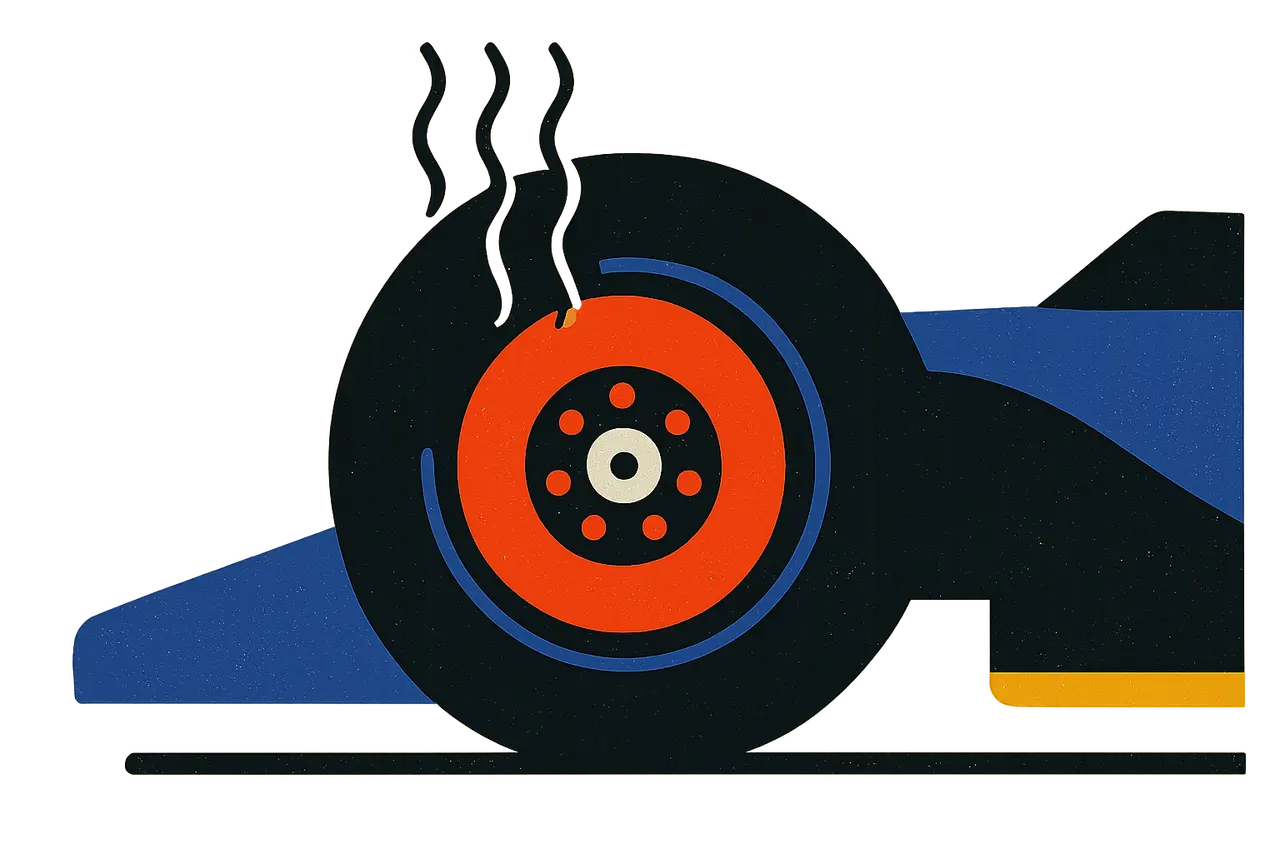
A Formula 1 brake disc hits the temperature of molten lava and slows the car with five times the force of gravity.
A Formula 1 car can shed enormous speed in a heartbeat, and the violence of it happens at the brakes. Under hard braking, the disc glows orange and reaches roughly 1,000 degrees Celsius — hotter than flowing lava, and a temperature that would melt steel. The discs survive because they aren’t metal at all.
Instead, F1 uses carbon-carbon brakes: carbon fiber woven into a carbon matrix. The trick is counterintuitive — these brakes barely work cold. Below about 400°C they have almost no bite, and they only reach peak performance once they’re glowing. Each disc weighs under a kilogram yet routinely runs between 400°C and 1,000°C lap after lap.
The driver isn’t braking. The driver is managing a controlled fire.
The payoff is deceleration on a scale road cars never touch. While a hard stop in a family car peaks around 1g, an F1 car decelerates at roughly 5g. At that rate a driver’s body is thrown forward with five times its own weight, and a relaxed leg would effectively weigh around 100 kilograms — which is partly why drivers can shove the pedal so hard.
The result is brutal efficiency: a car traveling at racing speed can scrub to a near stop in a few seconds and a few car-lengths, all while its brakes sit at the temperature of molten rock.
Sources & references
2 referencesWell-established. Corroborated by 2 independent sources.