Abel Tasman became the first European to sight New Zealand
On this day · 13 December 1642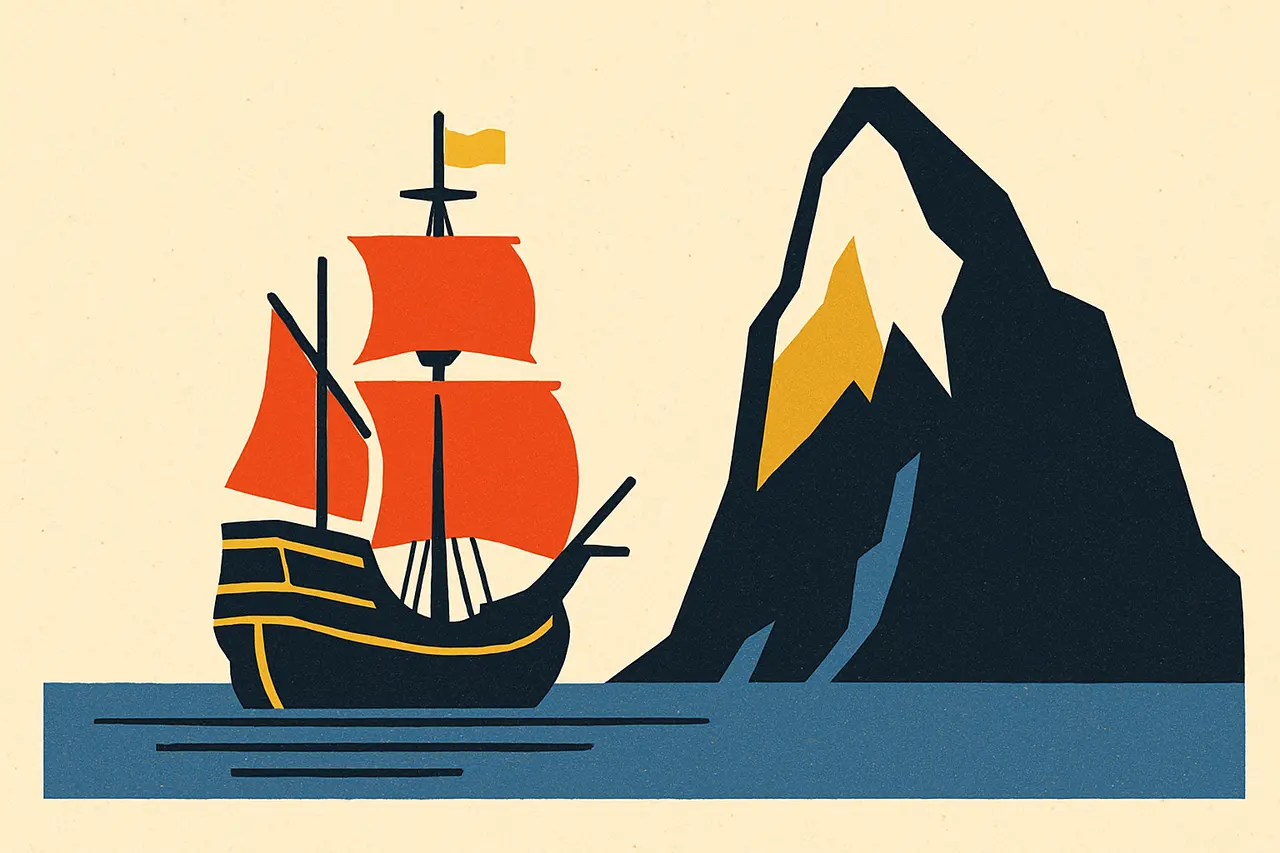
On December 13, 1642, a Dutch trading expedition spotted a strange coast on the horizon and stumbled into the bottom of the world.
On December 13, 1642, the Dutch ships Heemskerck and Zeehaen, commanded by Abel Tasman, sighted what the log called “a large land, uplifted high” off the northwest coast of New Zealand’s South Island. It was the first recorded European sighting of the country, almost certainly the snow-capped peaks behind the West Coast.
Tasman had sailed from Batavia in August with 110 men, hunting a fabled southern continent rich in minerals. He never set foot ashore. When his crew anchored in what is now Golden Bay days later, a tense first contact with Ngāti Tūmatakōkiri Māori turned violent and four of his sailors were killed.
He named the place Murderers’ Bay and sailed on, still convinced he had found the edge of a vast unknown land.
Tasman charted only a sliver of coastline and called it Staten Landt. Dutch mapmakers later renamed it Nieuw Zeeland, after the province of Zeeland — a name that, in anglicized form, stuck.
Sources & references
2 referencesWell-established. Corroborated by 2 independent sources.