Columbus reached South America in 1498, on his third voyage
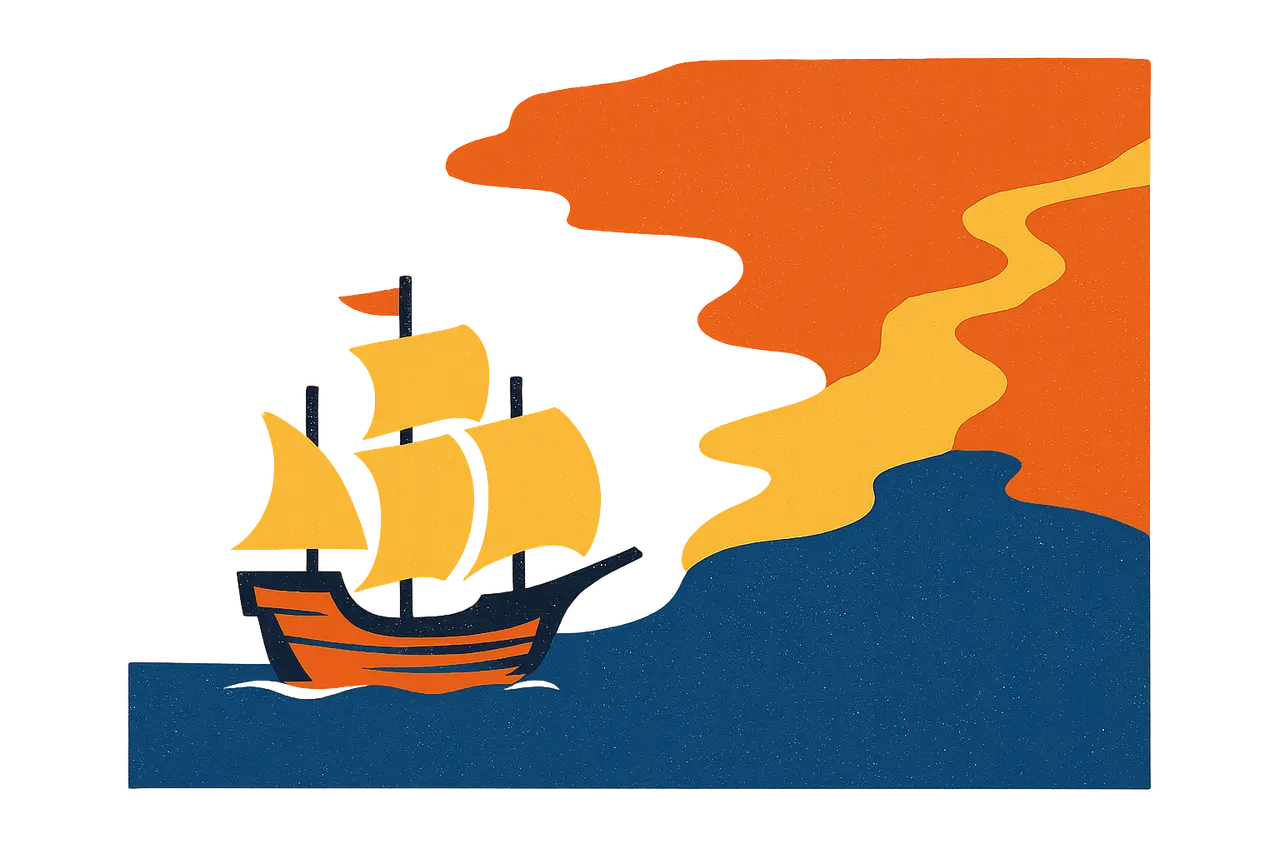
In August 1498 Columbus's men planted Spain's flag on the coast of Venezuela. He decided the Earth must be shaped like a pear.
Christopher Columbus reached the South American mainland in early August 1498, on his third voyage. His ships entered the Gulf of Paria, between Trinidad and present-day Venezuela, on August 1, and a few days later his captain Pedro de Terreros planted the Spanish flag on the Paria Peninsula. Columbus at first took the coast for another island.
The voyage, and what came after it, ran like this:
- 30 May 1498: Columbus leaves Spain with six ships, three carrying colonists and three loaded with supplies for the settlement on Hispaniola. The little Niña from the 1492 crossing is among them.
- 1 August: After a landfall on Trinidad, the fleet enters the Gulf of Paria, whose waters are fed by the Orinoco delta.
- Early August: Terreros goes ashore and claims the coast for Spain.
- 31 August 1498: Columbus reaches Santo Domingo on Hispaniola.
- 23 August 1500: He is arrested there, sent to Spain in chains in October, and released on 12 December 1500.
The size of the river convinced him he had reached a very large landmass, not an island. But his conclusion was stranger than the one usually credited to him. Columbus is often praised for proving the Earth was round, an idea Greek thinkers had held about 2,000 years before him. Off this coast, faced with navigational readings that didn’t agree, he dropped the round Earth altogether. The world, he proposed, was shaped like a pear, with a rise “like a woman’s breast” on which stood the Terrestrial Paradise, the Garden of Eden, which no one could reach without God’s permission.
He went on believing that Asia lay close by. He made one more voyage, and the continent he had touched was soon named after another navigator, Amerigo Vespucci. On his second voyage, five years earlier, he had stayed among the islands.
Sources & references
4 referencesWell-established. Corroborated by 3 independent sources.