Nobody is sure why the chequered flag means "finish"
Motor racing's most famous symbol has waved since 1906 - but its origin is a genuine mystery.
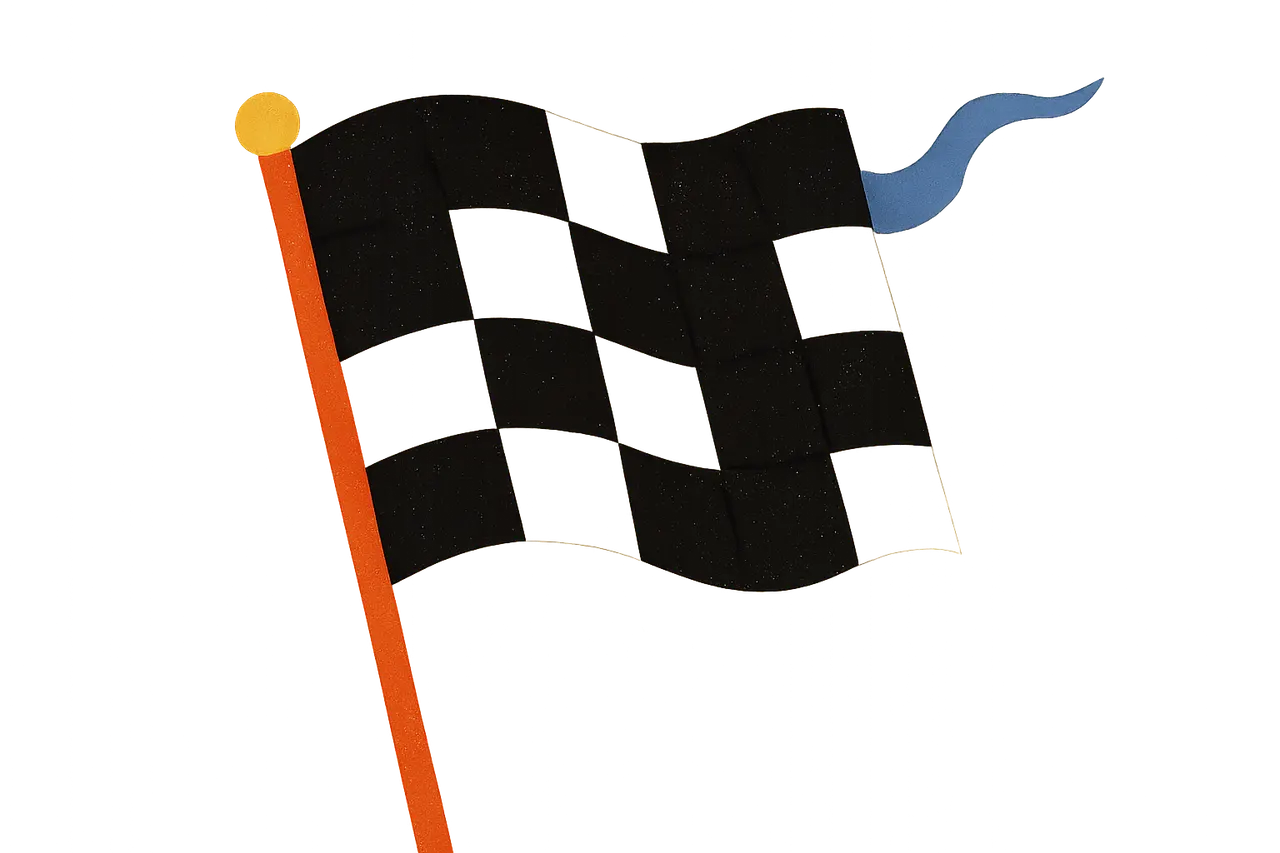
The black-and-white chequered flag is waved at the start-finish line to signal that a race is over. It is the one racing flag whose meaning has never drifted — and yet nobody can say for certain where it came from.
The earliest photographic record of one ending a race is the 1906 Vanderbilt Cup on Long Island, New York. Past that point the trail goes cold, and the popular origin stories mostly evaporate on inspection. The tale that it came from 19th-century French bicycle races has no documentary support, and the claim that horse racing used it first is equally thin — appealing, but unevidenced.
The most cited explanation traces it to the Glidden Tour reliability rallies of the same era. Officials known as “checkers” were posted at checkpoints to time cars at section endpoints, and the story holds that they flagged themselves with chequered cloth — later borrowed to mean “end of the road.” Tidy as that sounds, the leap from “checker” to “checkpoint” looks like a folk etymology stitched together after the fact, not a proven chain.
The likeliest reason may be plain practicality. A high-contrast checkerboard stands out against a milling crowd and punches through the dust thrown up by an early dirt track in a way a solid color never could.
Every other racing flag has been reassigned over the decades — yellow now means caution, the meanings of green, blue, and red all reshuffled — yet the chequered flag still means exactly what it did in 1906, the one fixed point in the whole vocabulary.
Sources & references
2 referencesWell-established. Corroborated by 2 independent sources.