Cashews Are Kin to Poison Ivy and Must Be Heated
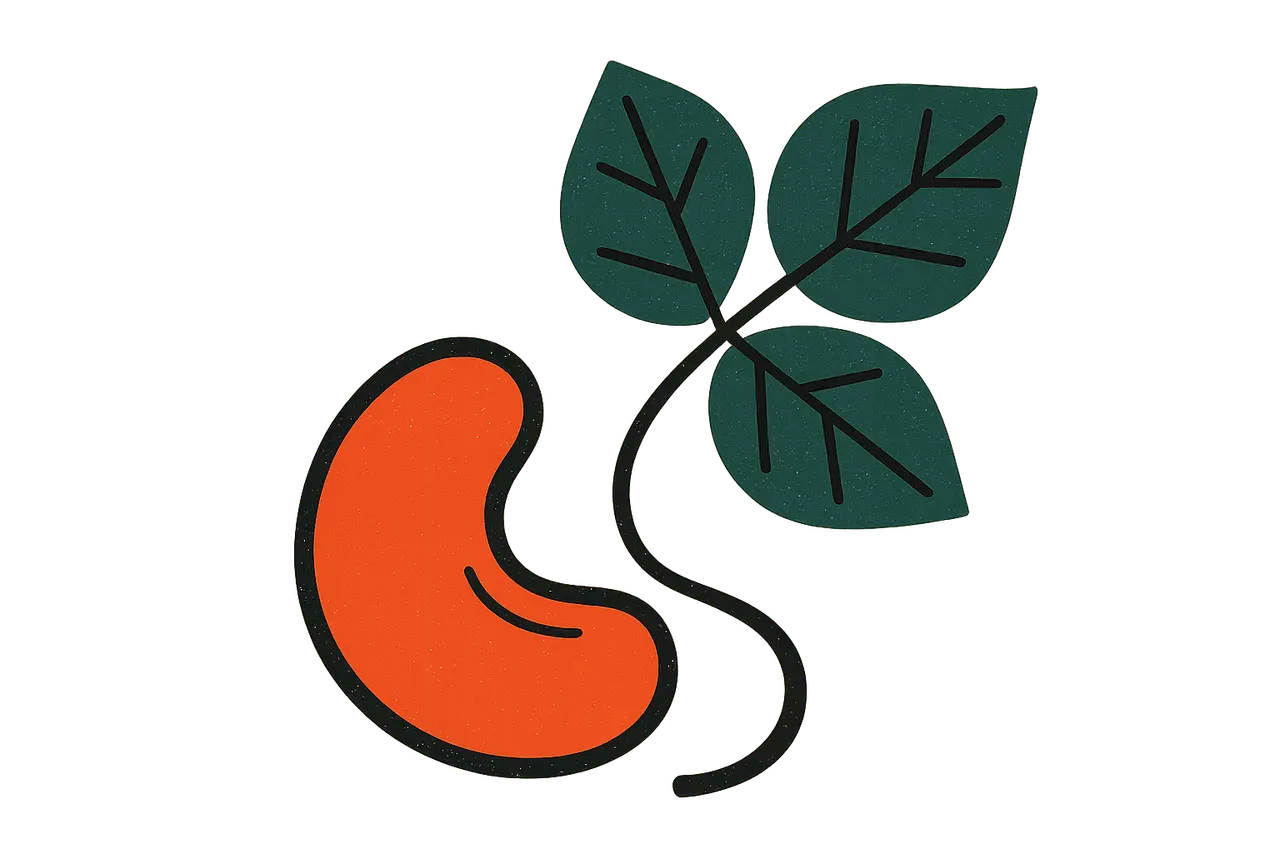
The cashew belongs to the same plant family as poison ivy, and its raw shell carries the very oil that makes that vine so notorious.
The cashew tree, Anacardium occidentale, is a member of the Anacardiaceae family — the same botanical clan as poison ivy, poison oak, sumac, and mango. That kinship is more than trivia. The cashew’s shell holds a caustic oil rich in anacardic acid and cardol, compounds chemically related to urushiol, the rash-inducing chemical in poison ivy.
This is why you never see cashews sold in their shells. The nut must be roasted or steamed at high temperature to destroy the irritant before it is safe to handle or eat. Even “raw” cashews in shops have been heat-treated.
Incompletely processed cashews can blister the unwary just like the vine they’re related to.
In 1982, 54 people in Pennsylvania broke out in a poison-ivy-like rash after eating cashews sold for a Little League fundraiser; inspectors found shell fragments still mixed in. The U.S. CDC documented the outbreak, a vivid reminder that the line between snack and irritant runs through the shell.
Sources & references
3 referencesWell-established. Corroborated by 3 independent sources.