Canning was invented to feed Napoleon's armies
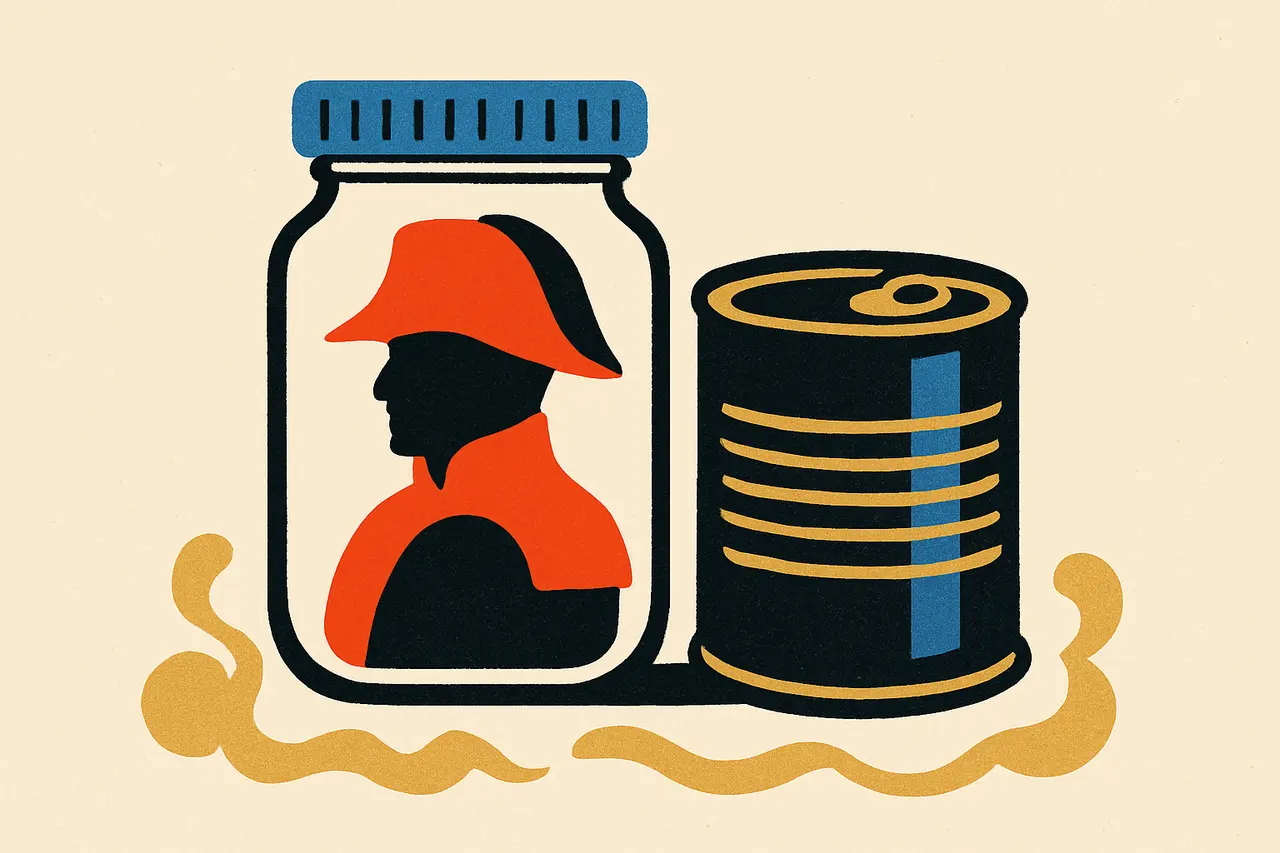
A French government prize for preserving food sent one confectioner on a 14-year quest - and gave us the tin can.
An army marches on its stomach, and revolutionary France struggled to feed troops far from home. So the government offered a 12,000-franc prize to anyone who could keep food from spoiling on long campaigns.
A Parisian confectioner, Nicolas Appert, took up the challenge in 1795 and spent 14 years experimenting. His method was deceptively simple: seal food inside corked glass jars, reinforce them with wire and wax, and heat them in boiling water. The food kept for months - decades before Louis Pasteur explained why heating killed the microbes that caused spoilage.
Appert claimed his award in 1810 and published The Art of Preserving All Kinds of Animal and Vegetable Substances. His countrymen still call canning appertisation in his honour.
The familiar metal tin came soon after, when British inventors swapped fragile glass for sturdier sealed cans.
Sources & references
2 referencesWell-established. Corroborated by 2 independent sources.