Japan's surrender on the USS Missouri didn't legally end WWII
On this day · 2 September 1945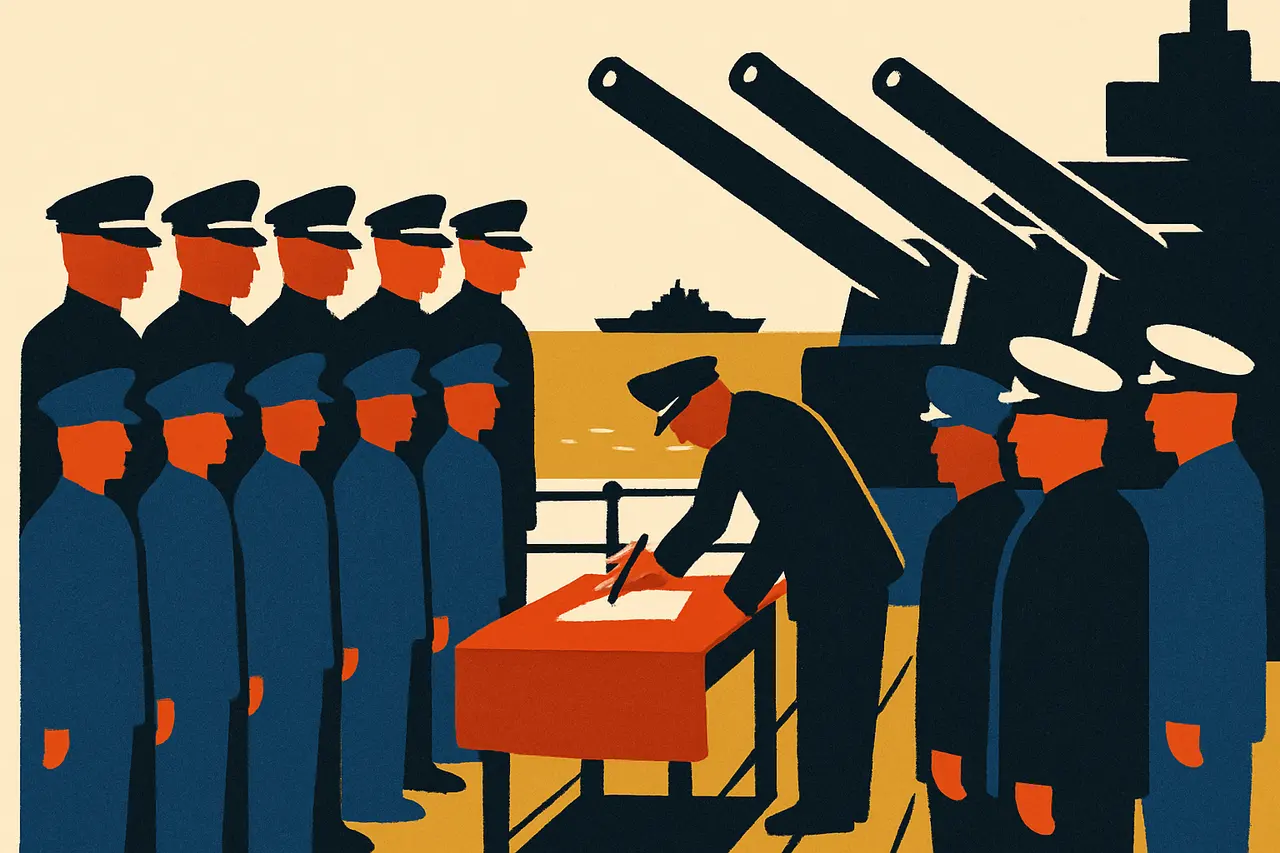
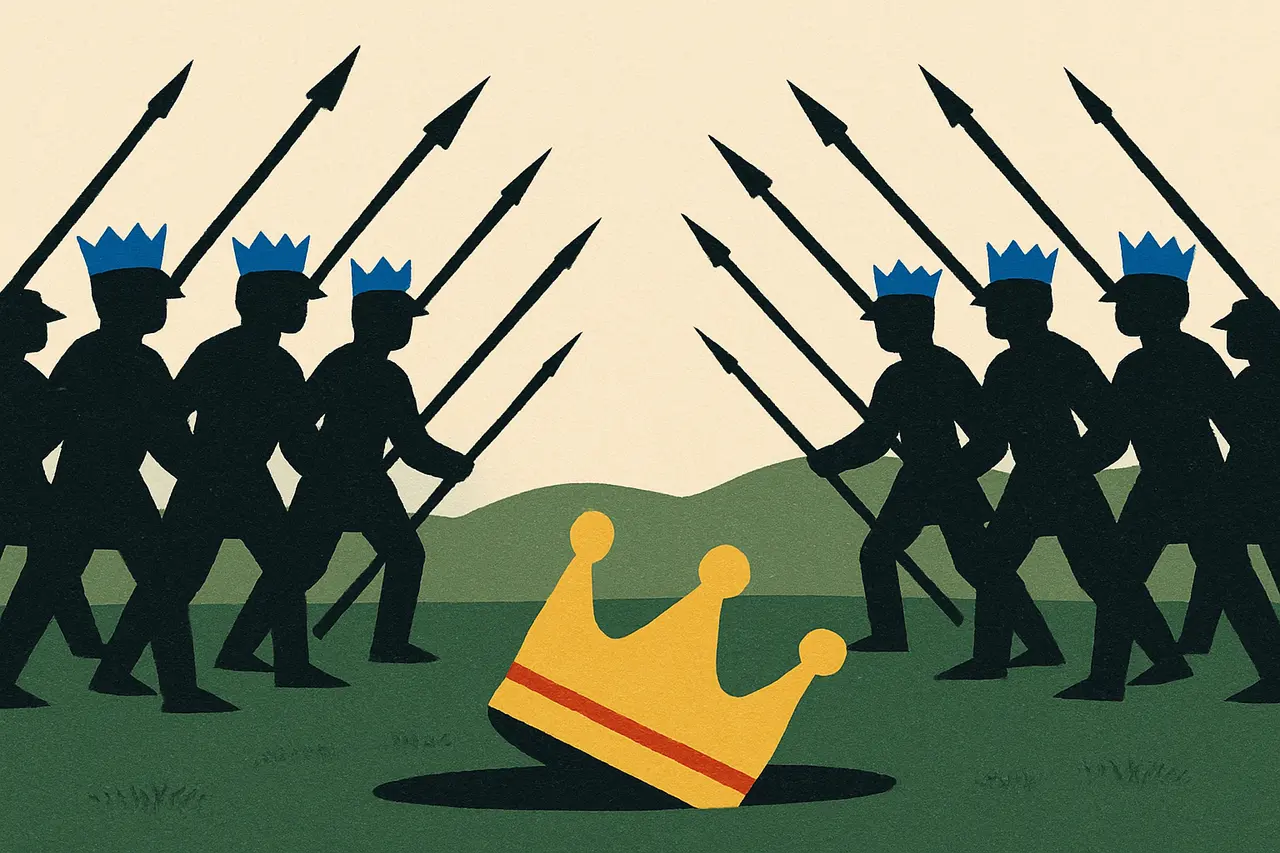
The 23-minute ceremony in Tokyo Bay on 2 September 1945 ended the fighting. The legal state of war took years longer to close.
Japan’s envoys signed the Instrument of Surrender aboard the battleship USS Missouri in Tokyo Bay at 9:04 a.m. on 2 September 1945, ending the fighting of World War II — but the legal state of war outlasted the ceremony by years, and between Japan and Russia no peace treaty has ever been signed.
Foreign Minister Mamoru Shigemitsu signed for the government and General Yoshijiro Umezu for the armed forces. The document, drafted by the U.S. War Department and approved by President Truman, set out Japan’s complete capitulation in eight short paragraphs. General Douglas MacArthur then signed for the Allies using five pens, handing two to Generals Wainwright and Percival, who had surrendered the Philippines and Singapore in 1942. Above the table hung the flag Commodore Perry had flown when he forced Japan open in 1853. The whole ceremony took 23 minutes, less than three weeks after Japan’s surrender was first announced.
It was not flawless. Canada’s representative, Colonel Lawrence Cosgrave, signed the Japanese copy on the wrong line, pushing the signatures below his out of place. When the Japanese delegation saw signatures out of place, it suggested to MacArthur’s chief of staff that it would not accept the document; a fix was found and the Japanese relented.
When did the war legally end?
The surrender ended hostilities; peace needed a treaty. Japan stayed under Allied occupation, led by MacArthur, until 1952. In September 1951, 52 nations met in San Francisco and 49 signed a peace treaty, which took effect in April 1952 and ended both the war and the occupation. The Soviet Union, Poland and Czechoslovakia refused to sign.
Moscow and Tokyo formally ended their state of war only on 19 October 1956, with a Joint Declaration signed in place of a peace treaty because they could not agree on the southern Kuril Islands, which Japan calls the Northern Territories. That dispute is still unresolved, so Japan and Russia remain without a peace treaty more than 80 years after the Missouri ceremony.
Sources & references
5 referencesWell-established. Corroborated by 5 independent sources.