Röntgen announced X-rays in Dec 1895 — the press broke it
On this day · 28 December 1895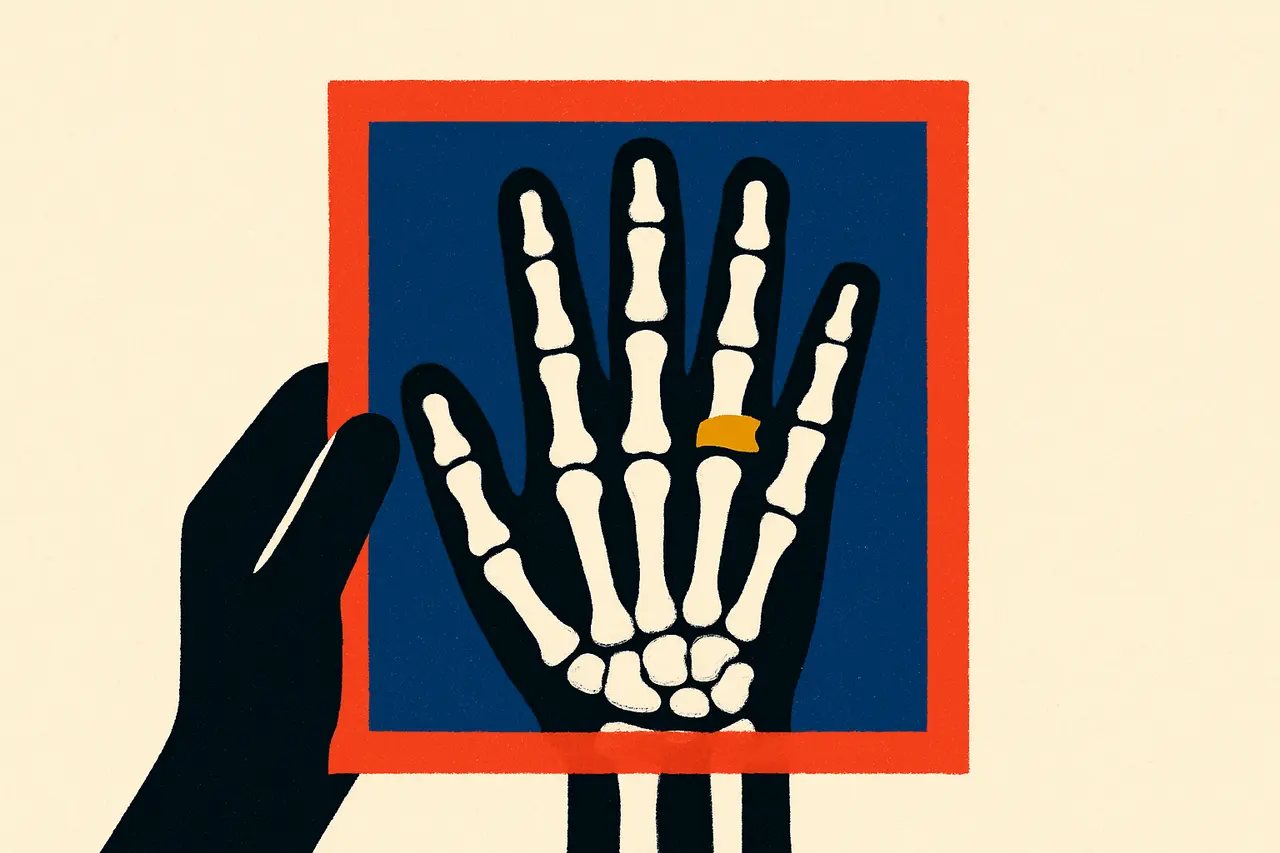
Röntgen's paper on X-rays was accepted on 28 December 1895, but the world heard about it first from a Vienna newspaper scoop.
Wilhelm Conrad Röntgen announced the discovery of X-rays on December 28, 1895, when his ten-page paper “On a New Kind of Rays” was accepted by the Physical-Medical Society of Würzburg, seven weeks after he first noticed the rays on November 8.
Yet most people heard about X-rays from newspapers, not journals. Röntgen had barely left his laboratory for weeks. On New Year’s Day 1896 he posted 90 reprints to physicists across Europe, some with photographs, including the radiograph of his wife Bertha’s hand with her wedding ring.
How the news broke
- 4 January 1896: Vienna physicist Franz Exner shows the photographs to dinner guests at his home.
- That weekend: guest Ernst Lecher borrows them for a day and shows his father, editor of Vienna’s daily Die Presse, who rewrites the next day’s front page under “A sensational discovery”, misspelling the discoverer as “Professor Routgen”.
- 6 January: leading German papers run the story; British papers carry it around the world within days.
- 16 January: Nature gives it 17 lines, then prints a translation a week later.
Doctors moved just as fast. In Manchester, physicist Arthur Schuster was swamped by doctors bringing patients suspected of having needles lodged in their bodies.
“During one week I had to give the best part of three mornings locating a needle in the foot of a ballet dancer.” — Arthur Schuster
By the end of 1896 more than 1,000 books and papers on X-rays had appeared, and a British Army expedition to the Nile had taken two X-ray machines with it.
That speed was partly Röntgen’s choice. He never patented the rays, so anyone with a cathode-ray tube could make them. He won the first Nobel Prize in Physics in 1901, gave the prize money to his university, and was nearly bankrupt from post-war inflation when he died in 1923.
Sources & references
3 referencesWell-established. Corroborated by 3 independent sources.