Over half of humanity lives inside one circle in Asia
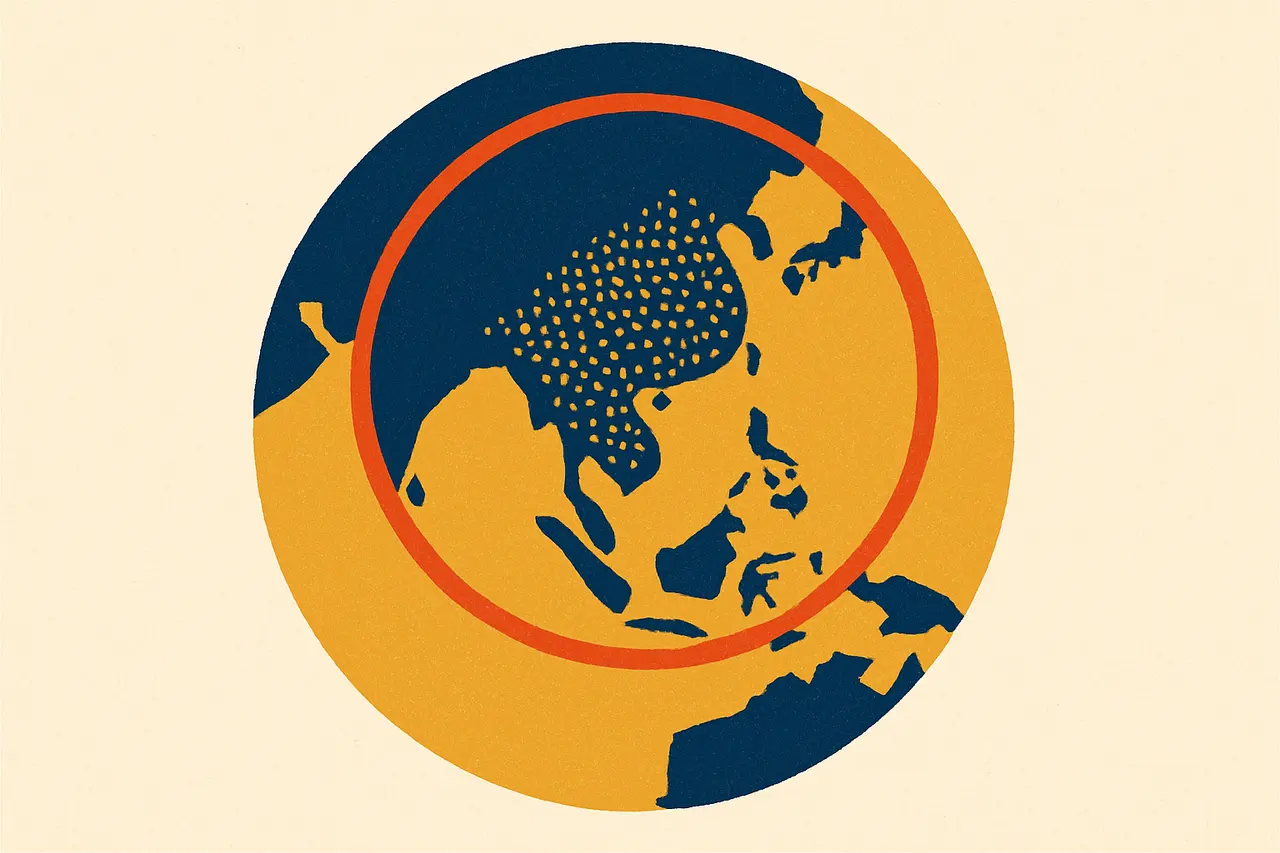
A circle covering about a tenth of Earth's surface holds more people than the rest of the planet combined.
Draw a circle on a map centred near Mong Khet, Myanmar, with a radius of about 3,300 km (2,050 miles), and you enclose more than half of all the people on Earth.
Dubbed the Valeriepieris circle, it was popularised by an American teacher, Ken Myers, in 2013 and rigorously verified in 2015 by LSE economist Danny Quah, who calculated it as the smallest such circle possible on the globe’s curved surface.
The reason is the sheer density of Asia: the circle sweeps in China, India, Indonesia, Bangladesh, Japan and much of Southeast Asia. Using UN population data, analysts estimate about 4.2 billion people lived inside it as of 2022 — out of 8 billion worldwide.
The circle covers only around 10% of Earth’s land surface, yet contains more humans than everywhere else combined.
It is a striking reminder of how unevenly our species is spread across the planet.
Sources & references
2 referencesWell-established. Corroborated by 2 independent sources.