Utah's Pando: One Tree With 40,000 Trunks
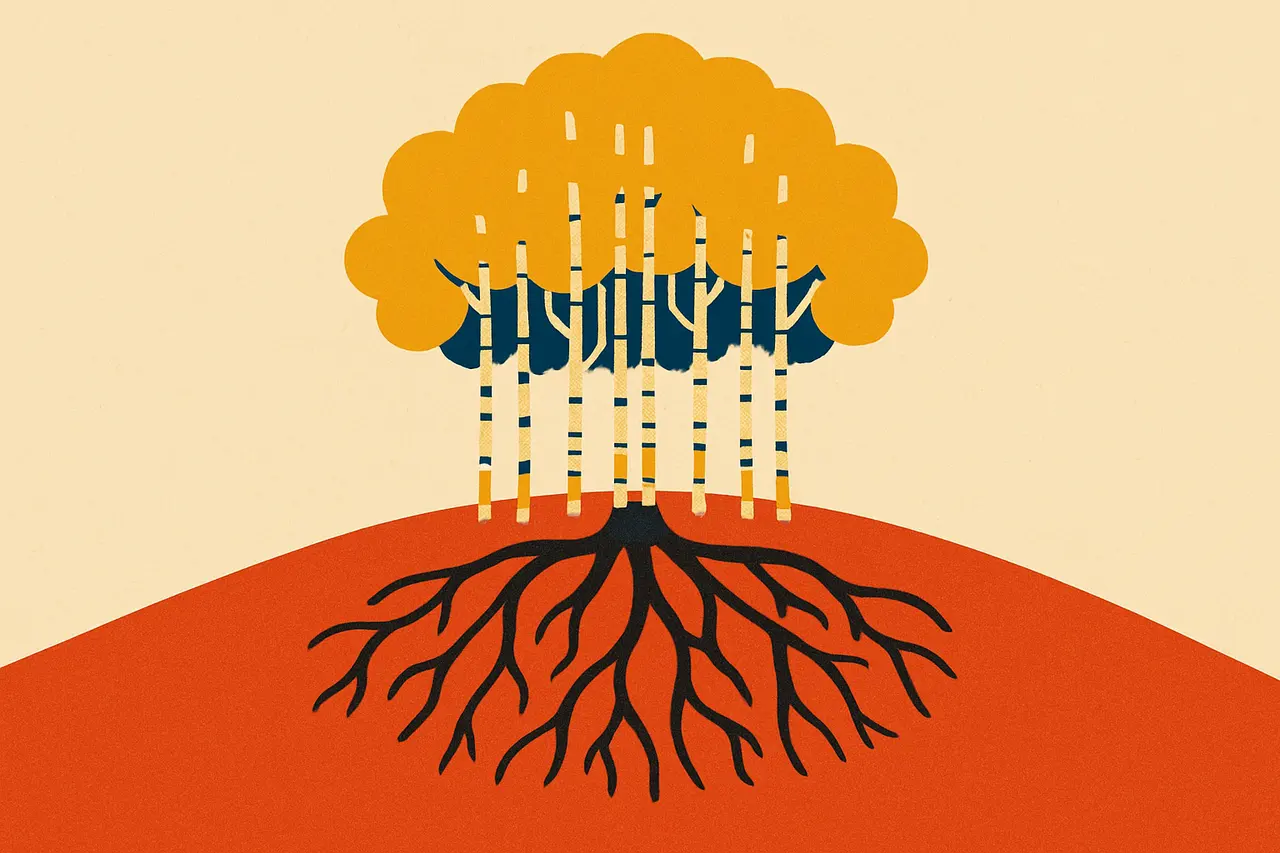
Tucked into a Utah forest, a single male aspen has cloned itself into tens of thousands of trunks sharing one vast root system.
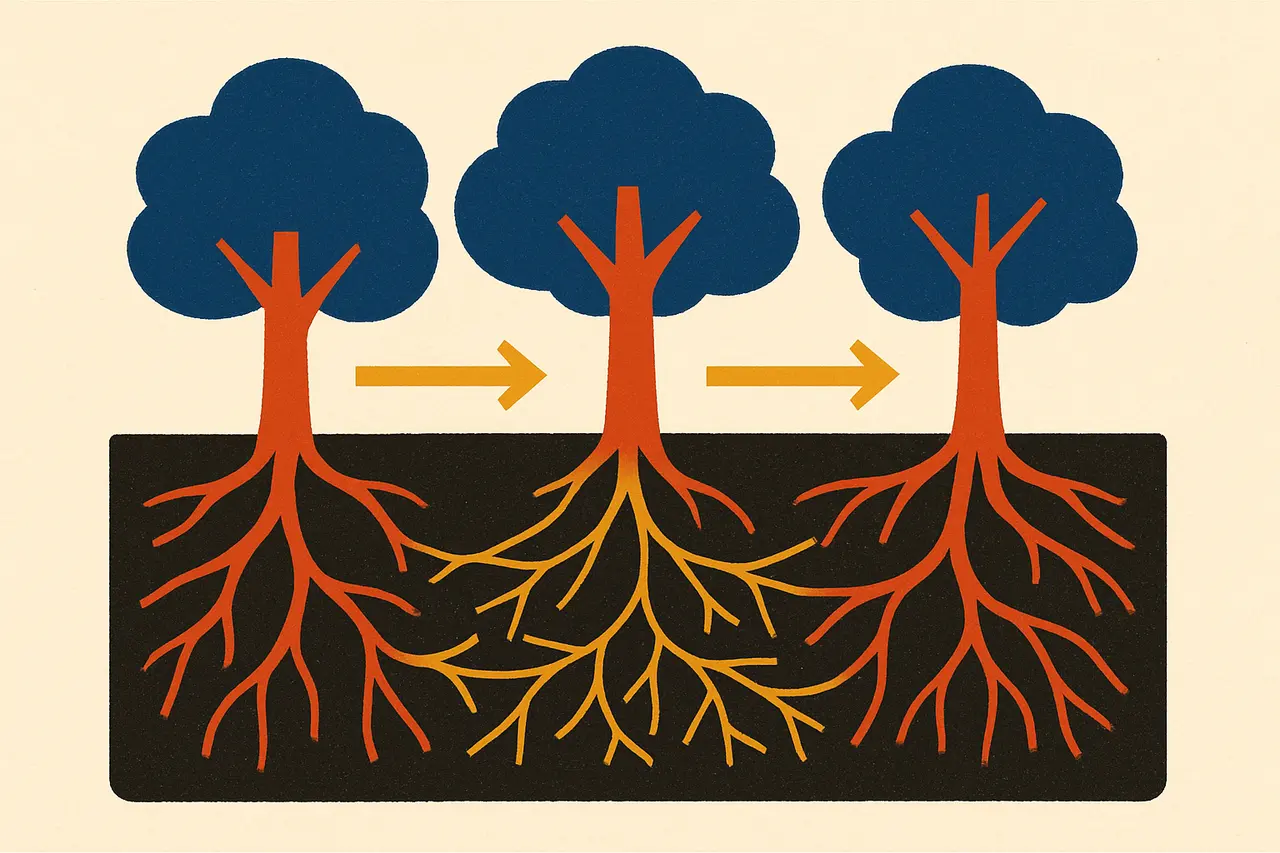
What looks like an ordinary grove in Utah’s Fishlake National Forest is actually a single living thing. Pando — Latin for “I spread” — is one male quaking aspen (Populus tremuloides) that has cloned itself into a forest of genetically identical trunks, all connected by one shared root system.
A 2018 peer-reviewed assessment describes Pando as a 43-hectare clone — roughly 106 acres — estimated to hold about 47,000 genetically identical stems, or “ramets.” Each visible trunk lives and dies on its own, but the underground organism endures, sprouting fresh shoots for what researchers believe has been thousands of years.
A “forest of one tree,” putatively the largest known organism on Earth by dry-weight mass.
That mass is staggering: around 13 million pounds (5.9 million kg). Yet Pando is in trouble. Scientists found much of the clone failing to regenerate, largely because mule deer browse young shoots before they can mature — a slow collapse unfolding, as one researcher put it, on our watch.
Sources & references
3 referencesWell-established. Corroborated by 3 independent sources.