Most land plants are wired into a fungal "wood wide web"
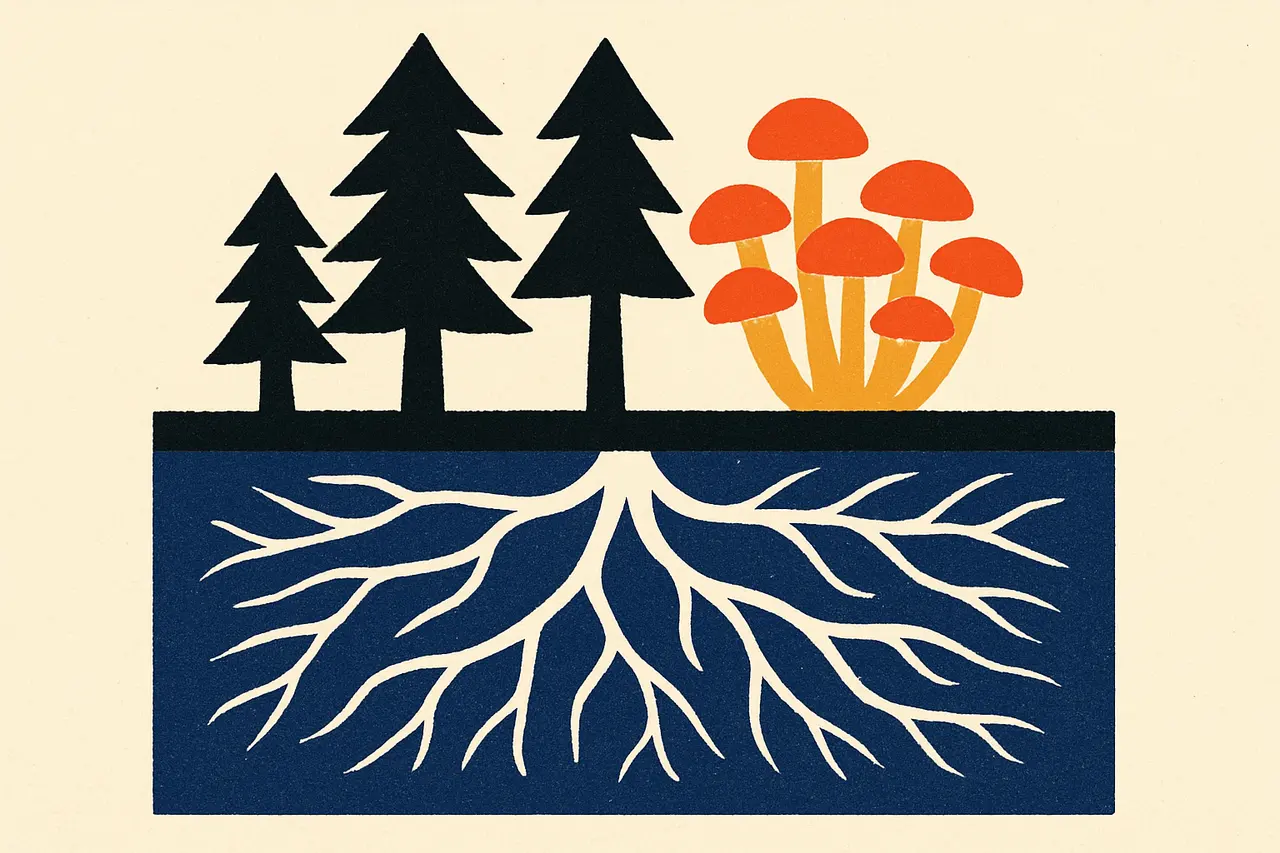
Beneath almost every forest, fungi trade sugar for minerals with the roots of the trees above.
Most plants don’t feed themselves alone. More than 80% of land plant species form partnerships called mycorrhizas — intimate unions between roots and the thread-like filaments of soil fungi, one of the most widespread symbioses on Earth.
The deal is a trade. The plant hands the fungus sugars made by photosynthesis — worldwide, up to 20% of all the carbon plants fix flows underground — and in return the fungus acts as a vast root extension, pulling in water and scarce minerals, especially phosphorus, from far more soil than roots could reach.
There are two main flavors. Arbuscular mycorrhizas, formed by ancient Glomeromycota fungi that push branching structures right inside root cells, partner with roughly 80% of plant species. Ectomycorrhizal fungi instead wrap a sheath around the roots of many temperate and boreal trees — oaks, pines, birches — without piercing the cells.
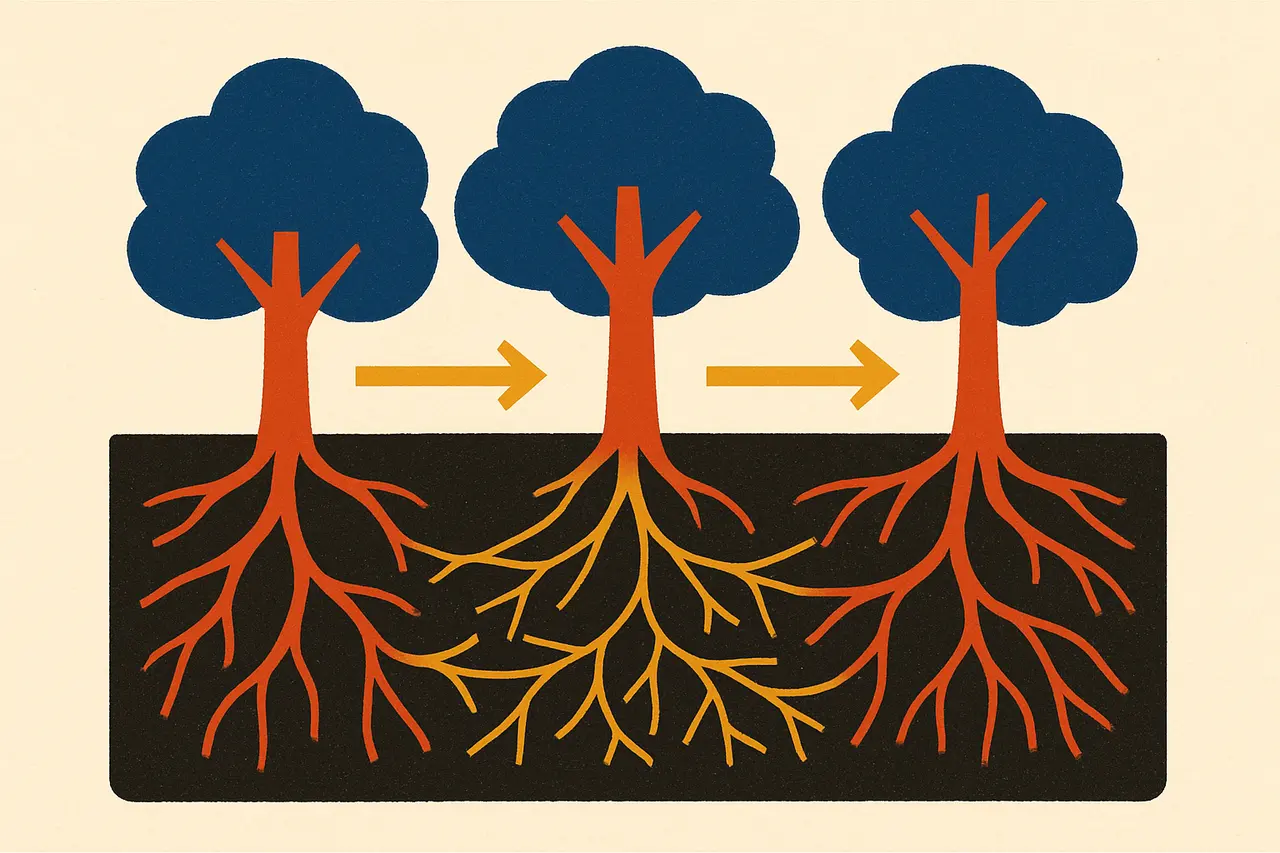
Because one fungus can link many plants at once, these threads weave whole communities into a shared network nicknamed the “wood wide web.” Experiments by ecologist Suzanne Simard traced labeled carbon moving from large “mother trees” to seedlings, suggesting trees might share resources and even warning signals through the fungal web.
A pointed 2023 review in Nature Ecology & Evolution by Karst, Jones, and Hoeksema argues those claims have run ahead of the evidence — citing positive citation bias and finding little field support for the idea that trees deliberately route resources to kin underground.
The partnership itself, though, is beyond dispute: fossils show mycorrhizas are roughly 400 to 460 million years old, dating to the very arrival of plants on land.
Sources & references
3 referencesWell-established. Corroborated by 3 independent sources.