Belka and Strelka were the first animals to survive orbit
On this day · 19 August 1960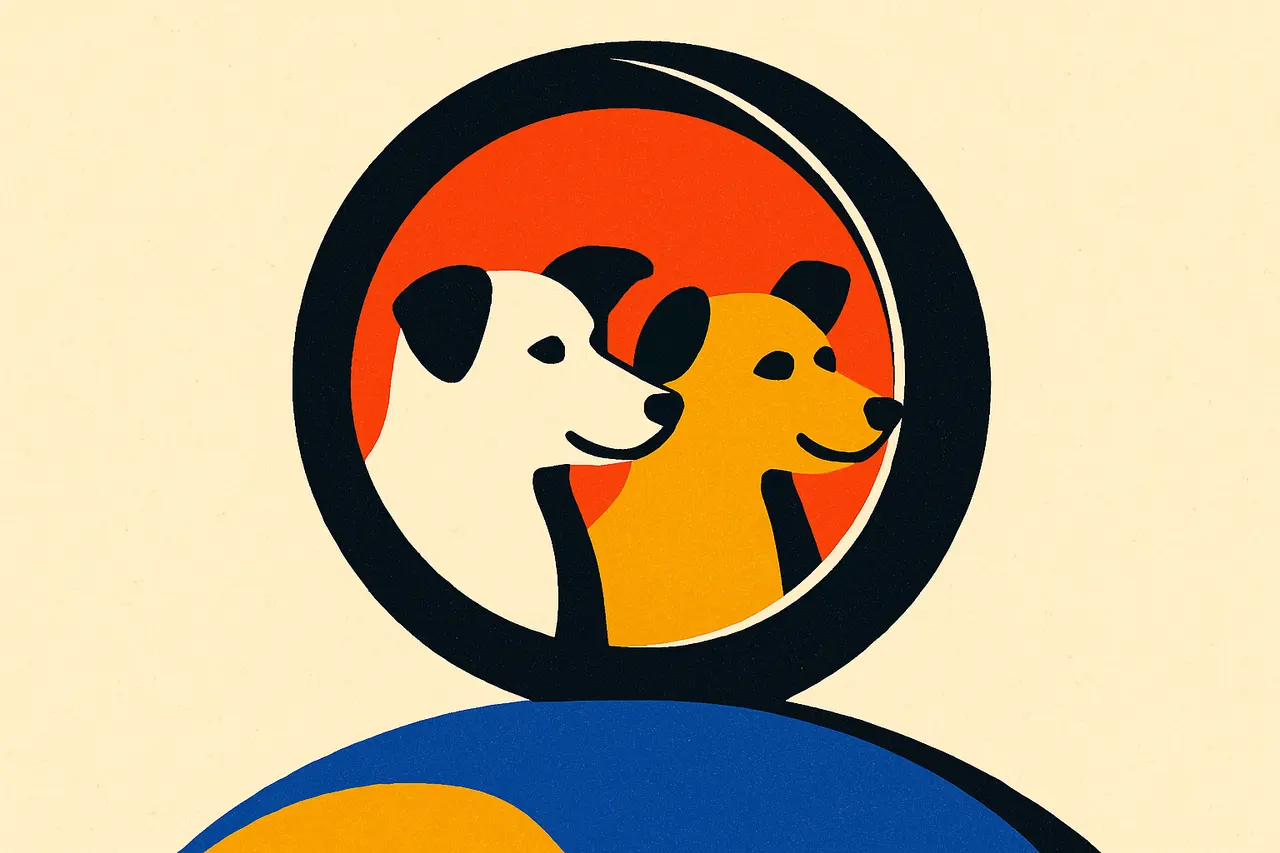
On August 19, 1960, two Soviet stray dogs rode Sputnik 5 around Earth 17 times and came home alive, between two deadly failures.
Belka (“Squirrel”) and Strelka (“Little Arrow”) became the first animals to orbit Earth and return alive when the Soviet Sputnik 5 (Korabl-Sputnik 2), launched from Baikonur on August 19, 1960, landed safely the next day after 17 orbits and more than 25 hours in space.
They were not the first dogs in space. Soviet dogs had flown short suborbital hops since 1951, beginning with Dezik and Tsygan, and Laika orbited in 1957 aboard a craft never designed to bring her back. What Belka and Strelka proved was that a living passenger could go around the planet and come home. They shared the capsule with a gray rabbit, 40 mice, 2 rats and flasks of fruit flies and plants, and medical checks after landing found nothing wrong.
The success sat between failures, which is why it mattered. That year’s dog flights went like this:
- July 28, 1960: dogs Bars and Lisichka died when their booster exploded on launch.
- August 19–20, 1960: Belka and Strelka orbit and return.
- December 1, 1960: Pchelka and Muska’s capsule burned up on reentry.
- December 22, 1960: Damka and Krasavka’s launch was aborted when the upper stage failed.
The flight also shaped the first human mission. After about four orbits, Belka grew agitated, barked and was sick; that episode is reported as a reason Soviet planners limited Yuri Gagarin, less than eight months later, to a single orbit.
Strelka later had a litter of six puppies. One, Pushinka (“Fluffy”), was given to President John F. Kennedy, settled at the White House and had puppies of her own with the Kennedys’ terrier, Charlie.
Sources & references
5 referencesWell-established. Corroborated by 3 independent sources.