Tutankhamun's 'intact' tomb had been robbed twice
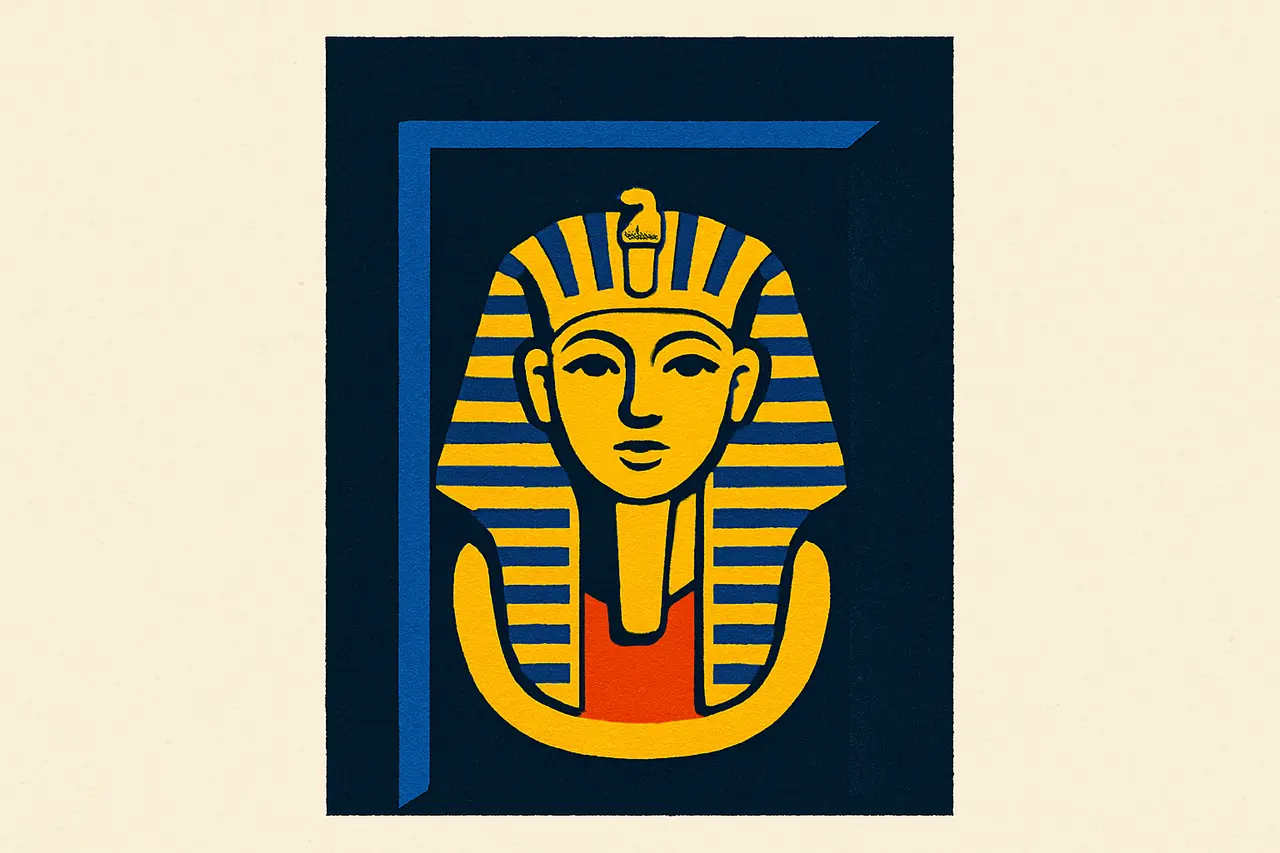
Found on 4 November 1922, Tutankhamun's tomb had been raided and resealed in antiquity, yet it still held over 5,000 objects.
Tutankhamun’s tomb was found on 4 November 1922, when Howard Carter’s team uncovered the top step of a staircase cut into the bedrock of Egypt’s Valley of the Kings. It is often called untouched, but it was not: the tomb had been robbed at least twice in antiquity, then tidied and resealed by officials. What makes it unique is how much the robbers left behind.
Was the tomb really intact?
Not entirely. By 5 November the team had reached a plastered doorway stamped with the royal necropolis seal, the jackal god Anubis over nine bound captives. Carter cabled his patron, Lord Carnarvon, about “a magnificent tomb with seals intact.” But once the stairway was cleared, the doorway showed patches where it had been broken through and resealed, and beyond it robbers had tunnelled through the rubble-packed corridor to a second door, also resealed in antiquity.
Carnarvon saw the signs immediately. Writing privately to the Egyptologist Alan Gardiner days later, he called the tomb plundered “to a certain extent”, adding that “even the ancients could not completely destroy it.” More than 5,000 objects survived, along with the king’s undisturbed mummy inside a solid-gold innermost coffin. Egypt’s antiquities ministry calls KV62 the only royal tomb in the valley discovered relatively intact.
Why did nobody find it sooner?
Partly because experts thought it already had been. In 1907 excavators found a pit, KV54, holding objects bearing Tutankhamun’s name and briefly took it for his tomb. By 1915 Carter had recognised it as a cache of material from the king’s funeral and concluded the real burial lay nearby.
The entrance was also buried under the remains of ancient workmen’s huts beside the much later tomb of Ramses VI, which Carter cleared at the start of the 1922 season. Emptying the tomb then took a decade: the work was not completed until 1932. The best-known moment, when Carter peered through the breach and saw “wonderful things”, came on 26 November.
Sources & references
4 referencesWell-established. Corroborated by 3 independent sources.