The tongue taste map is a myth: every area tastes all five
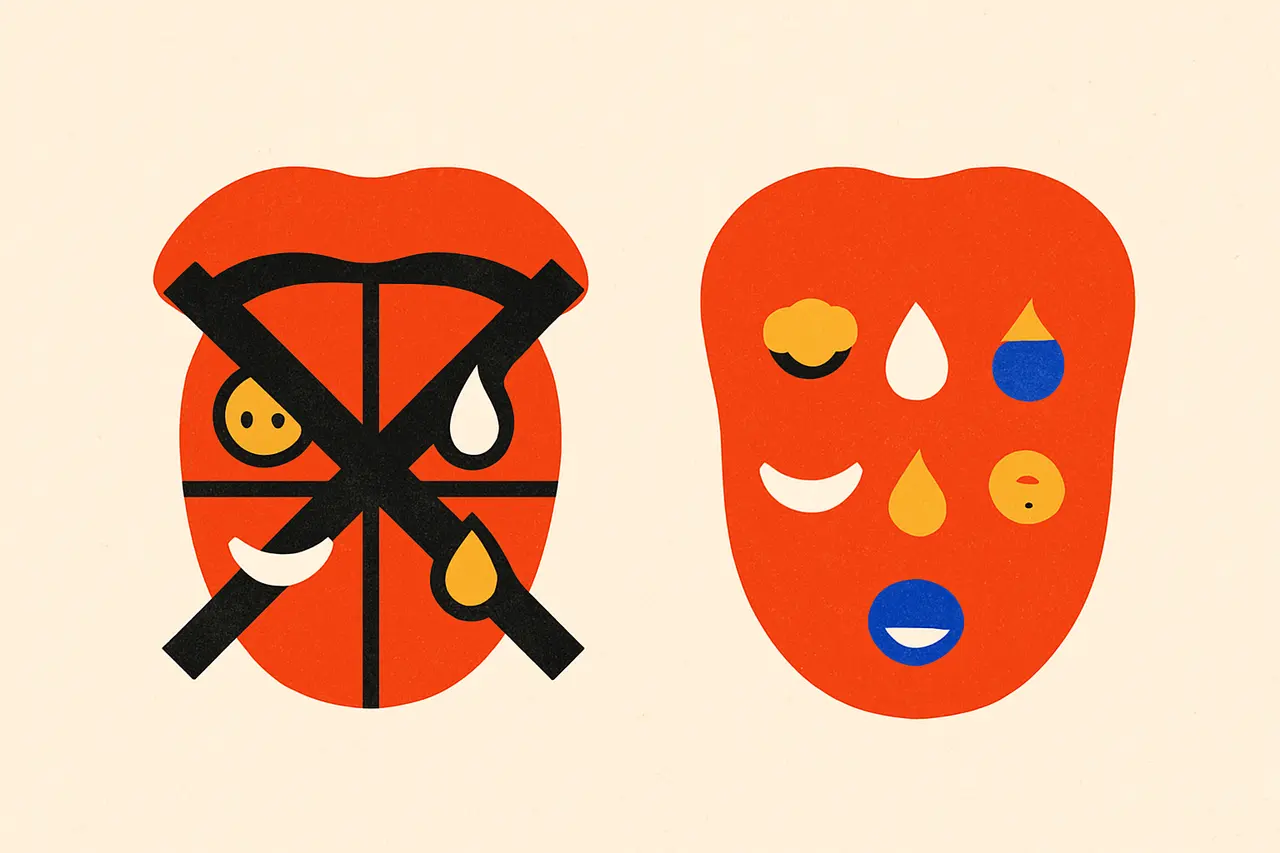
Sweet at the tip, bitter at the back? A 1942 redrawing of a 1901 graph created the map, and taste buds everywhere detect all five tastes.
The tongue “taste map” is a myth: every part of the tongue that has taste buds can detect all five basic tastes, sweet, sour, salty, bitter and umami. The regional differences behind the map are real but small, too small to play a clear role in how we actually taste.
The map traces to a 1901 paper by German scientist David Hänig, who measured how sensitivity to the four then-recognized tastes varied around the tongue. His finding of mild regional differences is still considered broadly correct.
Where the map went wrong
The error came in the redrawing. In 1942, Harvard psychologist Edwin Boring reworked Hänig’s data into a figure that listed only the taste each region was most sensitive to, and readers took areas of lower sensitivity to mean no sensitivity at all. That tidy diagram, with sweet at the tip, salty and sour along the sides and bitter at the back, spread through textbooks. In 1974, Virginia Collings re-examined the work, confirmed the variations were small, and found all tastes could be detected wherever there are receptors, including the soft palate and even the epiglottis.
The classic map also had only four zones because it missed a taste. Umami, the savory taste of glutamate, was identified by Japanese chemist Kikunae Ikeda in the early 1900s but largely ignored in the West for most of the century.
Taste is spread wider than the tongue anyway. A person has roughly 5,000 to 10,000 taste buds, each holding about 50 to 100 sensory cells, mostly on the tongue’s small bumps but also across the roof of the mouth and the throat. Different taste-cell types are scattered among them rather than zoned.
You can test the myth at home: put a few grains of salt on the tip of your tongue, the supposed sweet zone, and you will taste salt.
Sources & references
5 referencesWell-established. Corroborated by 3 independent sources.