How many died at Wounded Knee? More than 250 Lakota
On this day · 29 December 1890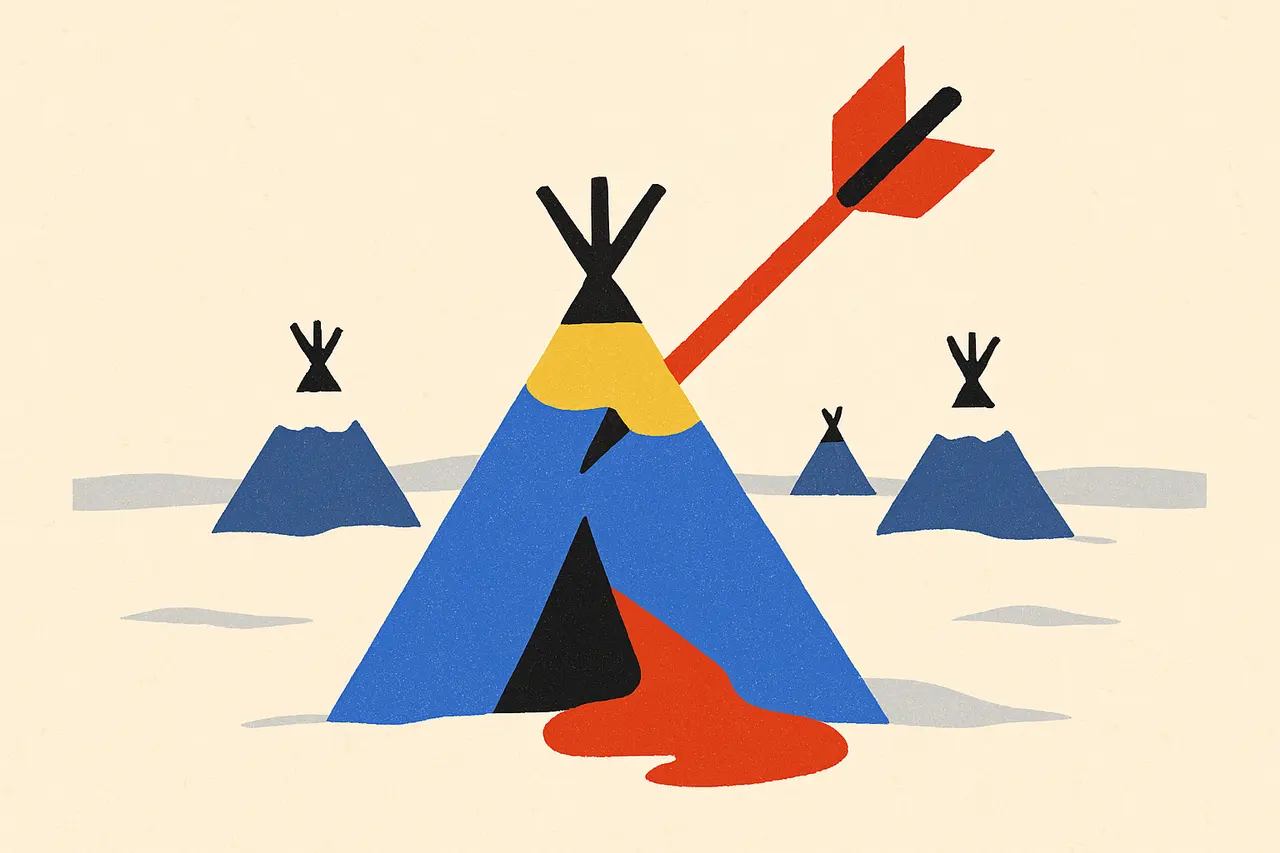
On December 29, 1890, the 7th Cavalry killed between 250 and 300 Miniconjou Lakota at Wounded Knee Creek — a toll that took weeks to count.
More than 250, and possibly as many as 300, Lakota people were killed at Wounded Knee Creek in southwestern South Dakota on December 29, 1890, when the U.S. Army’s 7th Cavalry opened fire on Big Foot’s band of Miniconjou Lakota during an attempt to disarm them. Twenty-five soldiers also died. A substantial share of the dead were women and children.
The imbalance was stark. About 470 troops surrounded a camp of roughly 120 men and 230 women and children, with four Hotchkiss rapid-fire guns trained on it from a hill. During the weapons search, a man named Black Coyote refused to hand over his rifle; it went off as a soldier wrestled him for it, and the troops began firing.
How the killing unfolded, and how slowly the dead were counted:
- December 15, 1890: Ghost Dance leader Sitting Bull was killed at Standing Rock, unnerving Big Foot’s Miniconjou band, who fled their village on December 23 toward the Badlands and Pine Ridge.
- December 28: The 7th Cavalry intercepted the band, its leader sick with pneumonia, and ordered it to camp at Wounded Knee.
- December 29: Firing continued for hours as soldiers pursued those who ran; bodies were later found as far as three miles from the camp.
- January 3, 1891: After fear of a reprisal attack had kept troops and civilians at the Pine Ridge Agency for days, a military-escorted burial party put 146 Lakota in a single mass grave. Photographers with it made 16 images that carried the story worldwide.
- Later counts: Further bodies brought the total past 250.
Charles Eastman, a Dakota physician, reached the field with the burial party after hearing reports of a battle. He wrote instead of a massacre:
“Fully three miles from the scene of the massacre we found the body of a woman completely covered with a blanket of snow.” — Charles Eastman
Wounded Knee is often called the last battle of the Indian Wars. Historians call it a massacre, because the people killed had been surrounded, were being disarmed, and were hunted down as they fled.
Sources & references
3 referencesWell-established. Corroborated by 2 independent sources.