The World's First Paper Money Came From Medieval China
Centuries before Europe printed a single banknote, Sichuan merchants were swapping bulky iron coins for slips of redeemable paper.
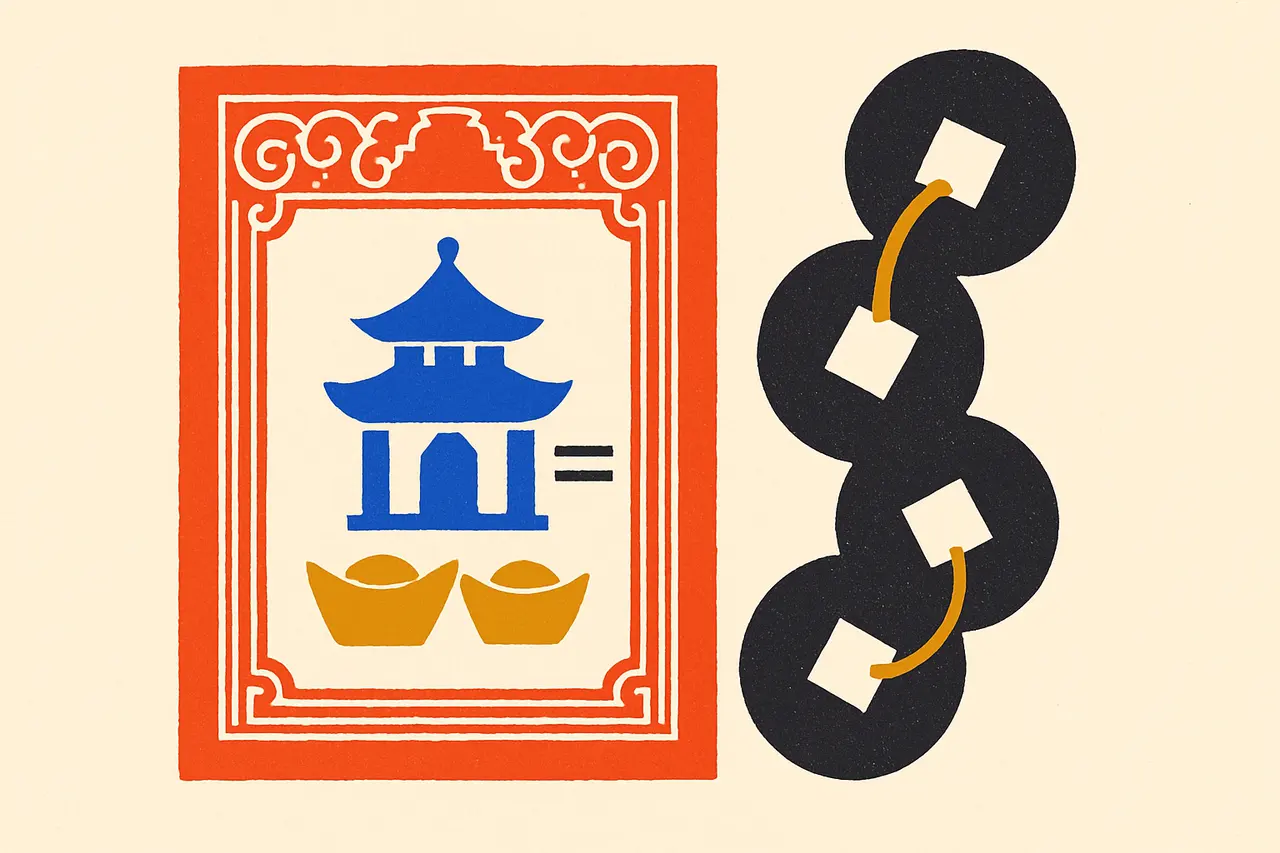
In the prosperous markets of the Song dynasty (960–1279), Chinese merchants solved a heavy problem with a light idea. As Columbia University’s Asia for Educators notes, traders in the region of Sichuan had grown weary of hauling strings of low-value iron coins, and began passing around deposit receipts instead of the metal itself.
These printed promissory notes, known as jiaozi, circulated around 1000 CE in the capital Chengdu. A small group of merchant houses issued them, redeemable for hard coin. When private issuers ran into trouble, the early Song state stepped in: by the 1020s the government had taken over the system, producing what the Smithsonian and Columbia both call the world’s first government-issued paper money.
The world’s first governmental paper money was issued in the 1120s. — Smithsonian’s National Museum of Asian Art
The leap was enormous. Europe would not print its own banknotes until the 17th century in Sweden, roughly 600 years later. China’s experiment showed that money could be a matter of trust and paper, not just precious metal.
Sources & references
3 referencesWell-established. Corroborated by 3 independent sources.