The U.S. and USSR signed the INF nuclear arms treaty
On this day · 8 December 1987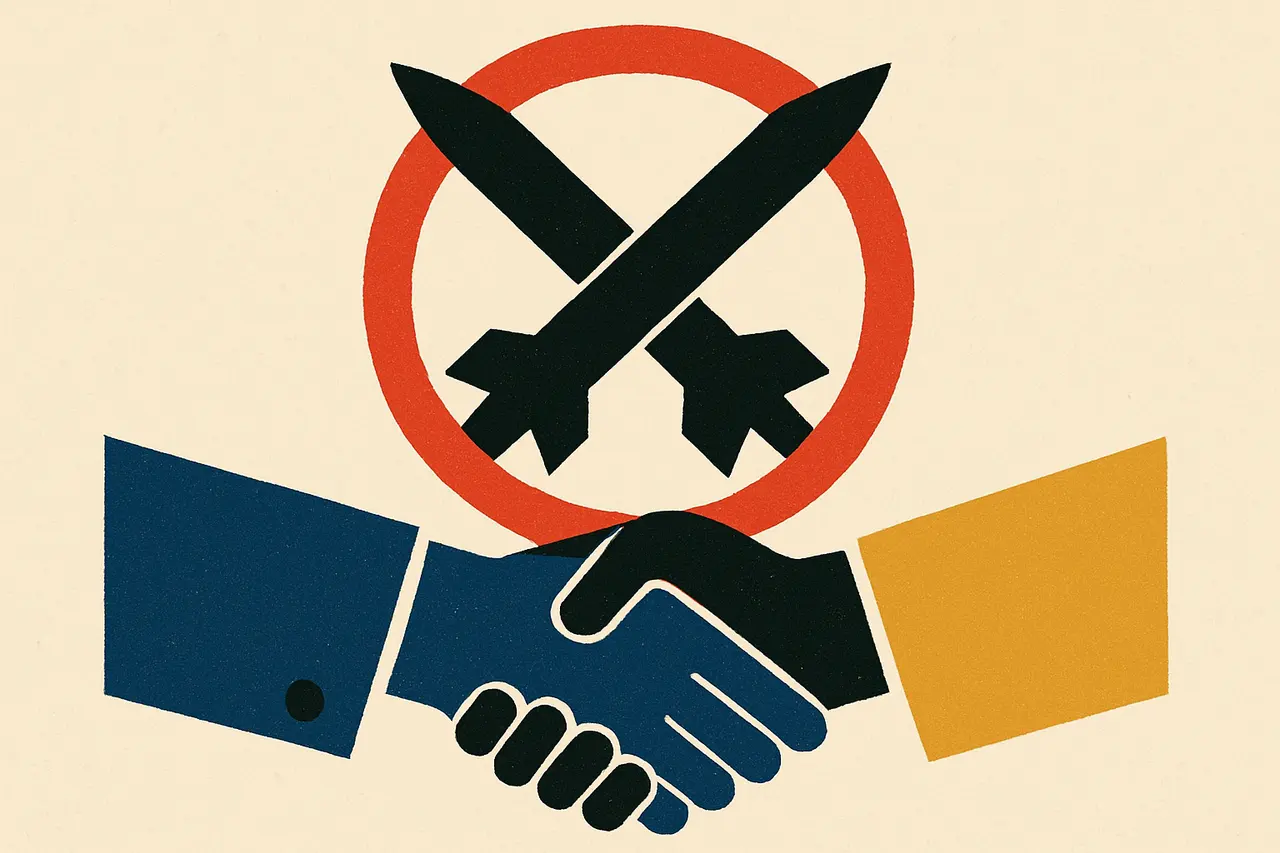
In the White House East Room, two superpowers agreed for the first time to destroy an entire class of nuclear missiles.
On December 8, 1987, in the East Room of the White House, U.S. President Ronald Reagan and Soviet leader Mikhail Gorbachev signed the Intermediate-Range Nuclear Forces (INF) Treaty. It was the first arms-control pact in which the two rivals agreed not merely to cap a weapons category but to eliminate one entirely.
The treaty banned all U.S. and Soviet ground-launched ballistic and cruise missiles with ranges of 500 to 5,500 kilometers, the intermediate and shorter-range weapons that put European capitals minutes from destruction. By the June 1, 1991 deadline, the two sides had destroyed 2,692 missiles, verified by unprecedented on-site inspections.
An entire class of nuclear arms would be removed, not just counted.
The agreement marked a thaw near the Cold War’s end. It held for three decades, until the United States and Russia each abandoned it in 2019, accusing the other of violations.
Sources & references
2 referencesWell-established. Corroborated by 2 independent sources.