Herostratus burned the Temple of Artemis in 356 BC for fame
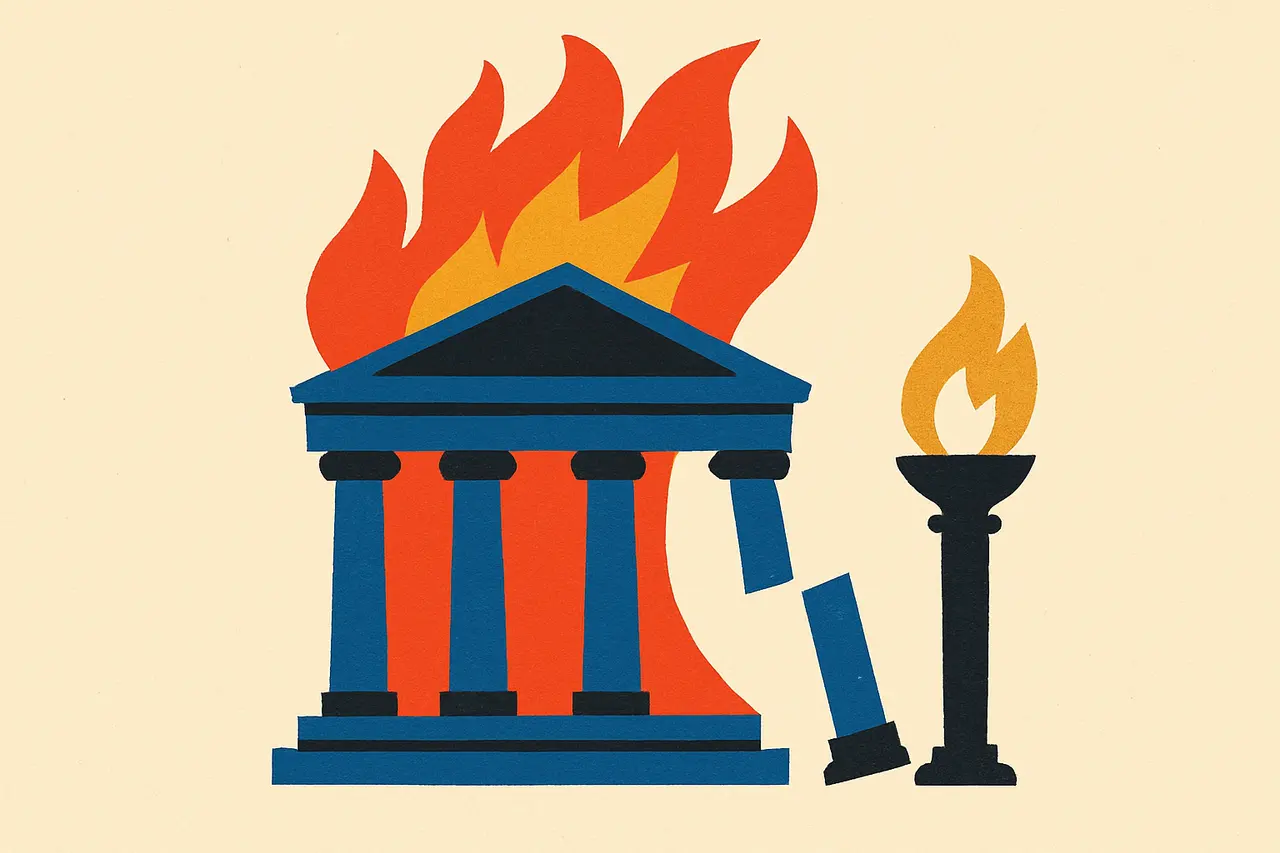
An arsonist torched Ephesus's vast marble temple to make his name immortal. The ban on his name failed, and the famous birthday coincidence is shakier than it sounds.
The Temple of Artemis at Ephesus, on Turkey’s Aegean coast and later counted among the Seven Wonders of the Ancient World, was burned down in 356 BC by a man named Herostratus, who set fire to its wooden roof frame for one stated reason: to make his name live forever. The marble temple, begun in the mid-6th century BC with money from the Lydian king Croesus, was about twice the size of other Greek temples, the Parthenon included.
The Ephesians answered by decreeing that his name never be recorded. The ban failed. A history now lost preserved it, the geographer Strabo repeated it, and “herostratic fame” still means notoriety for its own sake. The Roman writer Valerius Maximus spelled out the logic:
“A man was found to plan the burning of the temple of Ephesian Diana so that through the destruction of this most beautiful building his name might be spread through the whole world.” — Valerius Maximus, Memorable Doings and Sayings
Did it really burn the night Alexander was born?
Probably not exactly. The coincidence comes from Plutarch, who puts Alexander’s birth on the sixth day of the month Hecatombaeon and adds that the temple burned that same day, repeating a quip that Artemis was too busy delivering the baby to save her own house. The Loeb editor of Plutarch notes that the birthday “has probably been moved back two or three months” to make the story work. Hecatombaeon corresponds roughly to July, which is why calendars print 20 or 21 July; only the year is secure.
When Alexander reached Ephesus in 334 BC the new temple was still unfinished, and he offered to pay for all of it if he got the credit. The Ephesians declined, telling him it was “inappropriate for a god to dedicate offerings to gods.” The rebuilt temple was burned again by the Goths in the 260s AD; then, much like the Library of Alexandria, it faded slowly, torn down and quarried for later buildings. The single column at the site today was pieced together in 1972 from scattered drums.
Sources & references
3 referencesWell-established. Corroborated by 3 independent sources.