The Reichstag burns, and German democracy with it
On this day · 27 February 1933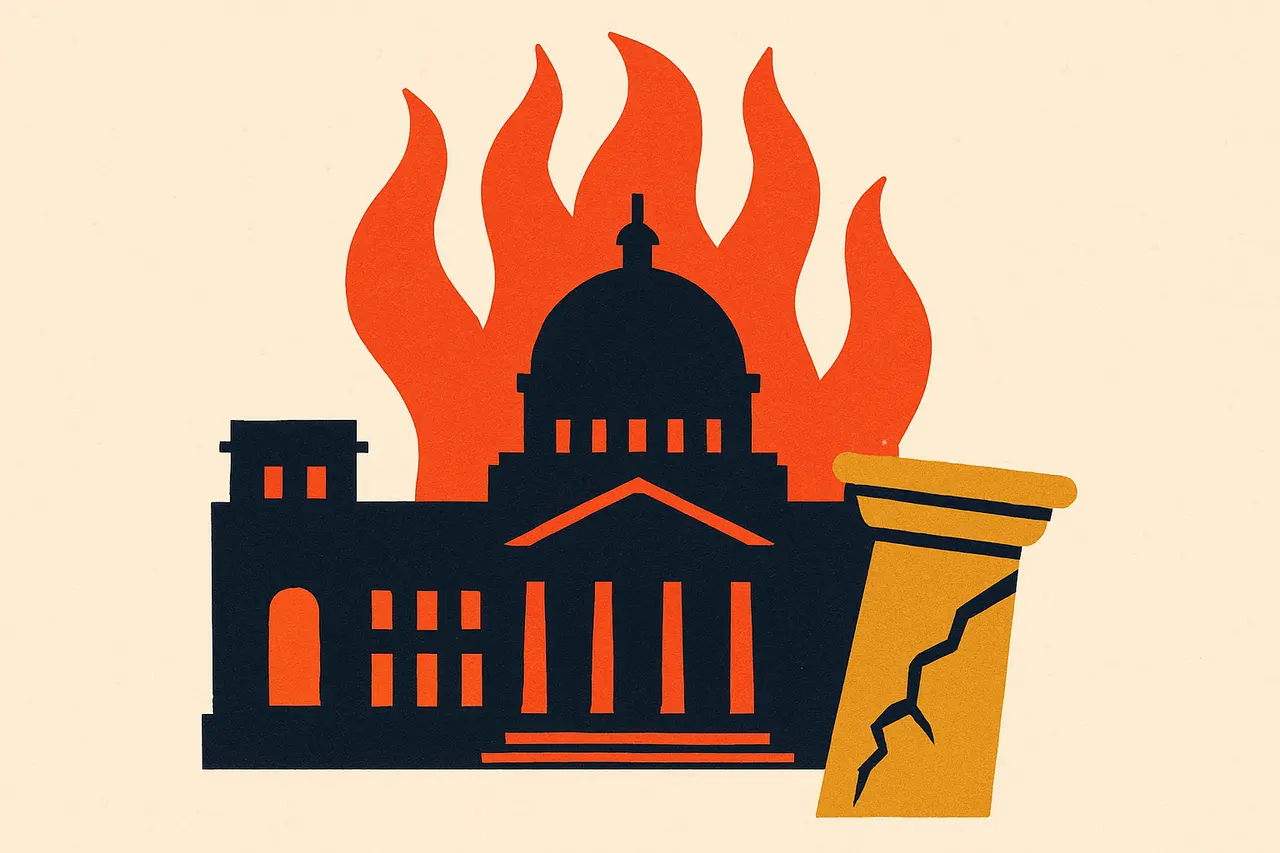
A single night's blaze in Berlin's parliament gave the Nazis the pretext to suspend civil liberties and never give them back.
On the night of February 27, 1933, just four weeks after Adolf Hitler became chancellor, fire engulfed the Reichstag, the German parliament building in Berlin. Flames gutted the debating chamber, and police arrested a young Dutch laborer, Marinus van der Lubbe, at the scene.
The Nazis instantly blamed a communist plot. The very next day, February 28, 1933, President Hindenburg signed the Reichstag Fire Decree, suspending freedom of speech, the press, and assembly, and allowing arrests and house searches without normal legal limits.
The decree stayed in force until the regime’s defeat in May 1945.
Armed with these emergency powers, the regime jailed political opponents, especially communists, and cleared the path to the Enabling Act that made Hitler’s dictatorship law within weeks. Historians still debate who truly set the fire, but its political use is beyond dispute: a burning building became the excuse to extinguish a republic.
Sources & references
2 referencesWell-established. Corroborated by 2 independent sources.