The Pacific Ocean is bigger than all of Earth's land combined
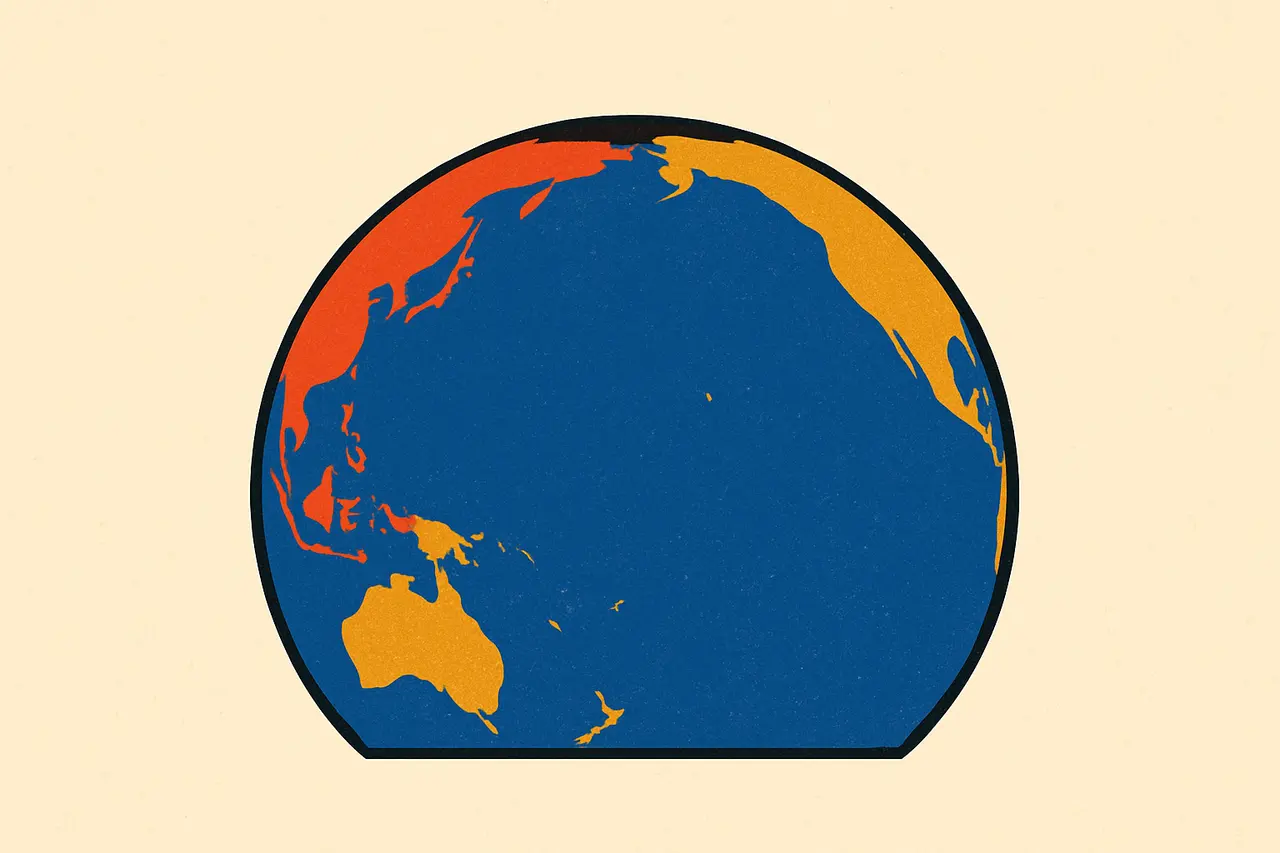
One ocean is so vast you could pile every continent and island into it and the Pacific would still be larger.
We tend to think of land as the main event and water as the gaps in between. The Pacific Ocean turns that picture inside out. Spanning roughly 165 million square kilometers (about 63 million square miles), it is so enormous that you could gather up every continent and island on Earth, drop them in, and the Pacific would still be bigger.
NOAA describes it bluntly: the Pacific basin is “larger than the landmass of all the continents combined,” covering more than 155 million square kilometers. By comparison, all of Earth’s dry land adds up to only about 150 million square kilometers.
Put every continent together, and the Pacific would still be larger.
The Pacific does not just dominate the map—it dominates the planet’s water, too. NOAA notes it holds more than half of the free water on Earth, nearly twice the volume of the Atlantic, the next-largest ocean. From California to China, it stretches across roughly a third of the globe’s entire surface.
It is also the deepest. The Mariana Trench, tucked into the western Pacific, plunges to about 11 kilometers below the surface—deep enough to swallow Mount Everest with room to spare. Vast, deep, and holding half the world’s open water, the Pacific is less a feature of the planet than its defining one.
Sources & references
2 referencesWell-established. Corroborated by 2 independent sources.