The Mayflower finally left England — on its third attempt
On this day · 6 September 1620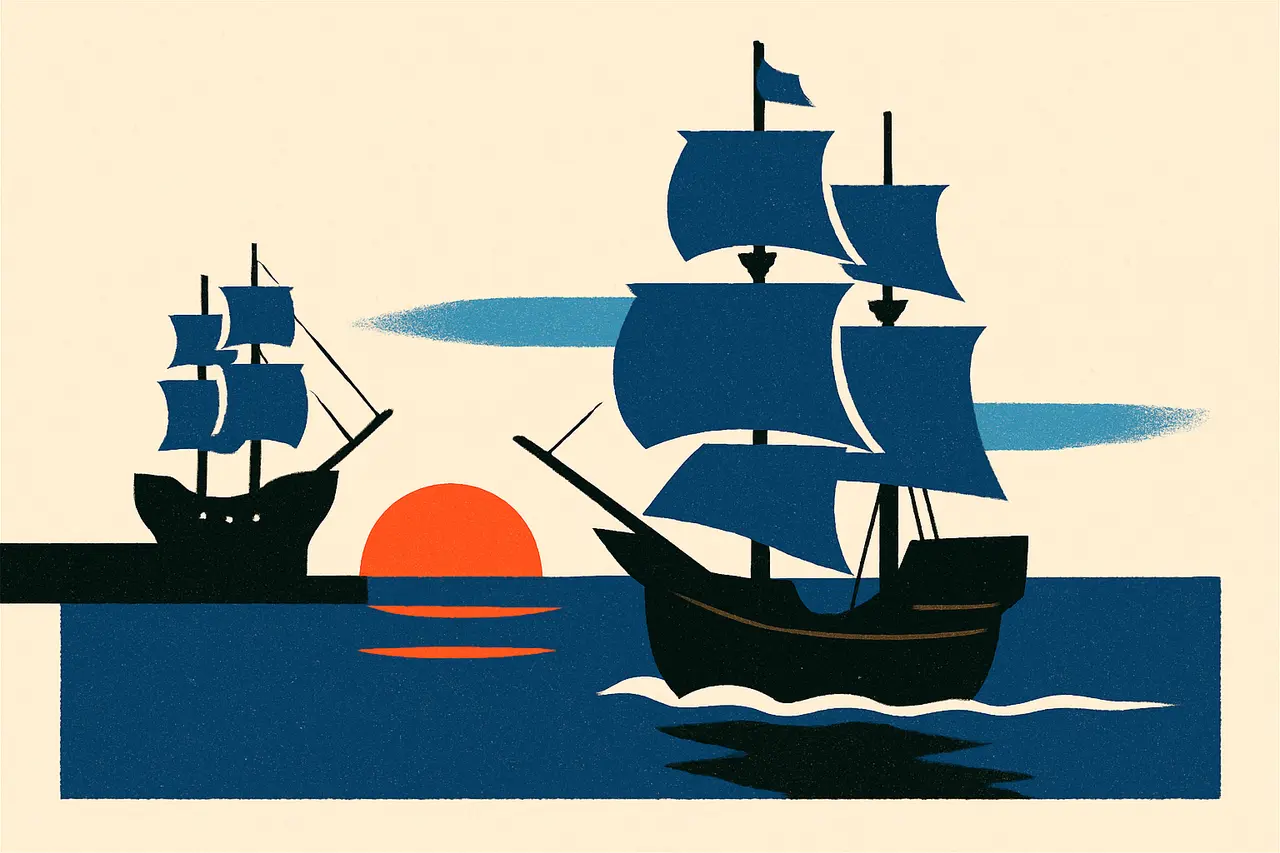
After two false starts and a leaky companion ship, the Mayflower struck out alone across the Atlantic toward an unknown coast.
On September 6, 1620, the Mayflower at last cleared Plymouth, England, bound for the New World. It was a departure the ship had already attempted twice. A companion vessel, the Speedwell, kept springing leaks, forcing the convoy back to port until its passengers crowded aboard the Mayflower and left the Speedwell behind.
What followed was a brutal 66-day crossing. Land — the tip of Cape Cod — was not sighted until November 9, 1620, far north of the Virginia territory the passengers had been granted.
Roughly 102 passengers made the voyage, packed into a merchant ship never meant for transatlantic settlement.
A note on the calendar: that September 6 follows the Old Style (Julian) dating England used at the time. Convert to the modern Gregorian calendar and the same day reads September 16 — which is why both dates turn up in the history books.
Sources & references
2 referencesWell-established. Corroborated by 2 independent sources.