The last known thylacine died in a Tasmanian zoo
On this day · 7 September 1936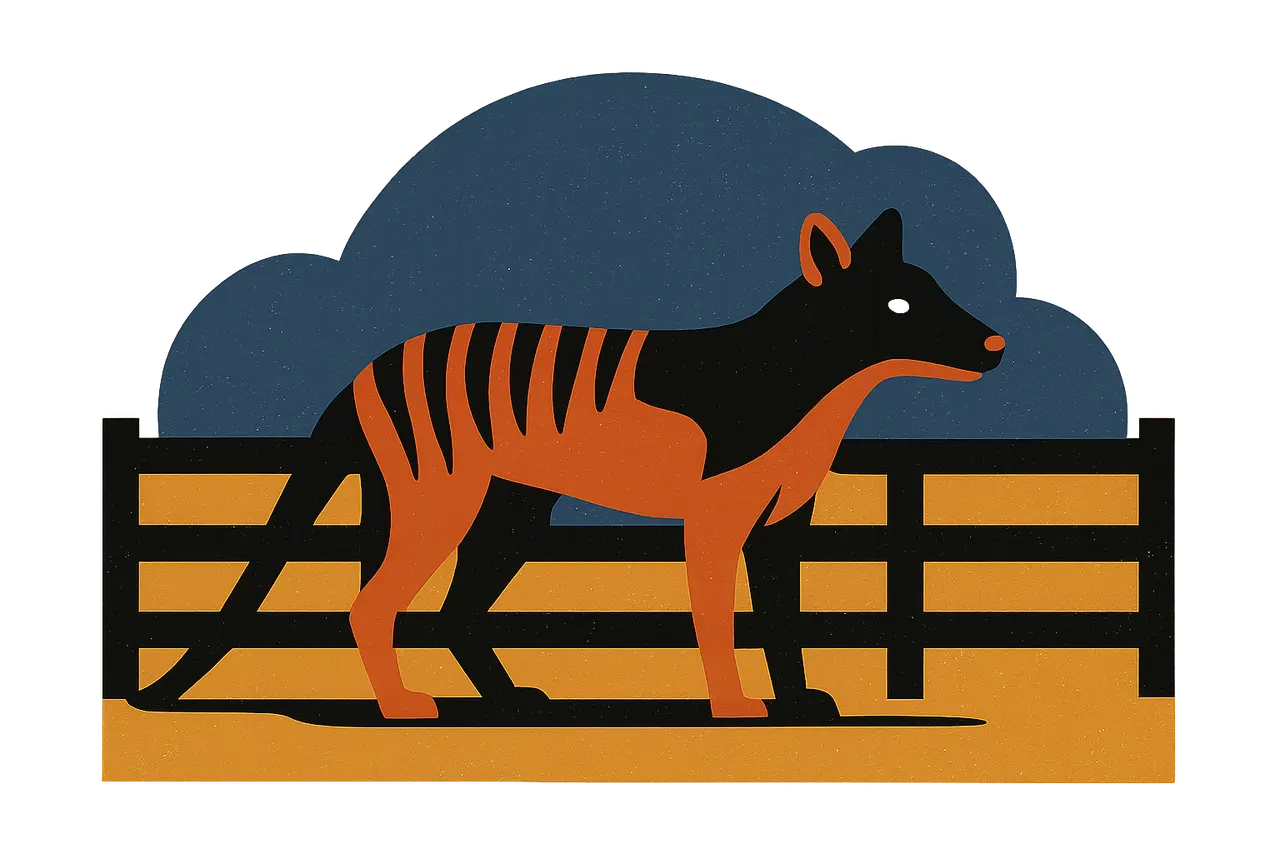
The world's last captive Tasmanian tiger died in a Hobart zoo, ending a lineage that had survived for millions of years.
On 7 September 1936 the world’s last known thylacine died at the Beaumaris Zoo in Hobart, Tasmania. The striped, dog-like marsupial carnivore once roamed mainland Australia and New Guinea before retreating to the island of Tasmania, where European settlers, fearing for their sheep, hunted it relentlessly. A government bounty scheme paid out thousands of rewards between 1888 and 1909, and the population collapsed.
The final captive animal had been held at the zoo for nearly six years. By a bitter irony, the species had been granted legal protection only weeks before this last individual died.
Protection came too late to save a creature that had survived for millions of years.
No thylacine has been confirmed in the wild since, despite countless reported sightings and search expeditions. The species was officially declared extinct in 1986. Today the date is marked in Australia as a reminder of how quickly a species can vanish.
Sources & references
2 referencesWell-established. Corroborated by 2 independent sources.