The platypus is a venomous, egg-laying mammal that hunts by electricity
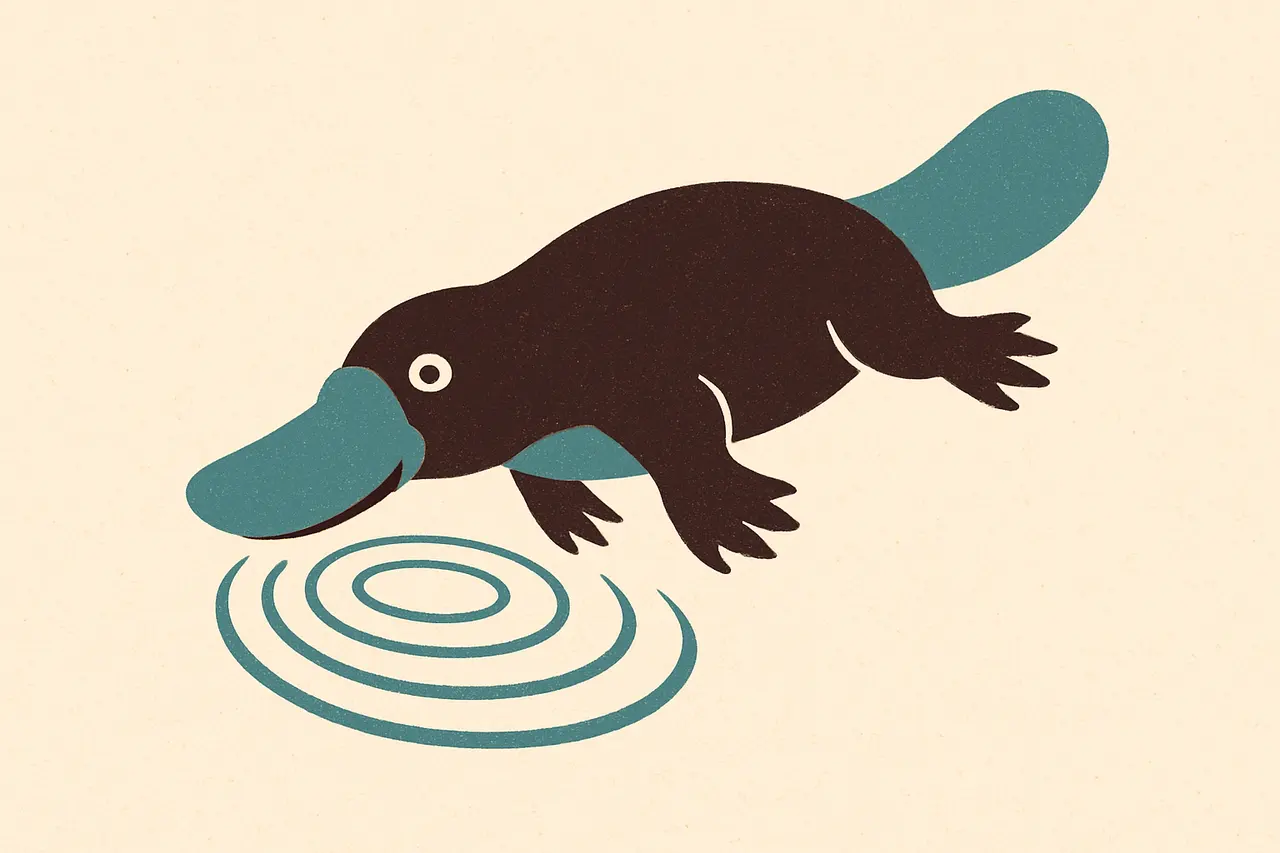
One animal that breaks nearly every rule of what a mammal should be.
When the first platypus specimen reached Europe, naturalists suspected a hoax — and the closer you look, the more reasonable that suspicion seems. This Australian animal is a mammal that lays eggs, one of just five surviving monotreme species (the platypus plus four echidnas), which reproduce through a single opening called a cloaca and nurse young without teats, sweating milk through patches of abdominal skin instead.
It is also venomous, a true rarity among mammals. Males carry a sharp spur on each hind heel, linked to a venom gland that swells during the breeding season. The toxin — a cocktail of defensin-like peptides — won’t kill a person, but the pain is so severe that even morphine barely touches it, and it can last for days. The spur is thought to settle contests between rival males.
Strangest of all is the bill. It is studded with electroreceptors that detect the faint electrical pulses of muscle contractions in prey, paired with mechanical “push-rod” receptors that sense water ripples. By comparing the tiny lag between the electric signal and the ripple, and sweeping its bill side to side as it dives, the platypus can pinpoint crustaceans and larvae with its eyes, ears, and nostrils all shut.
The oddities don’t stop there: the platypus carries ten sex chromosomes (most mammals have two), lacks a true stomach, and its fur glows green under ultraviolet light.
The duck-billed mammal that confused 18th-century science turns out to be even stranger than the forgers it was mistaken for.
Sources & references
3 referencesWell-established. Corroborated by 3 independent sources.