WWII's first attack may have hit Wieluń, not Westerplatte
On this day · 1 September 1939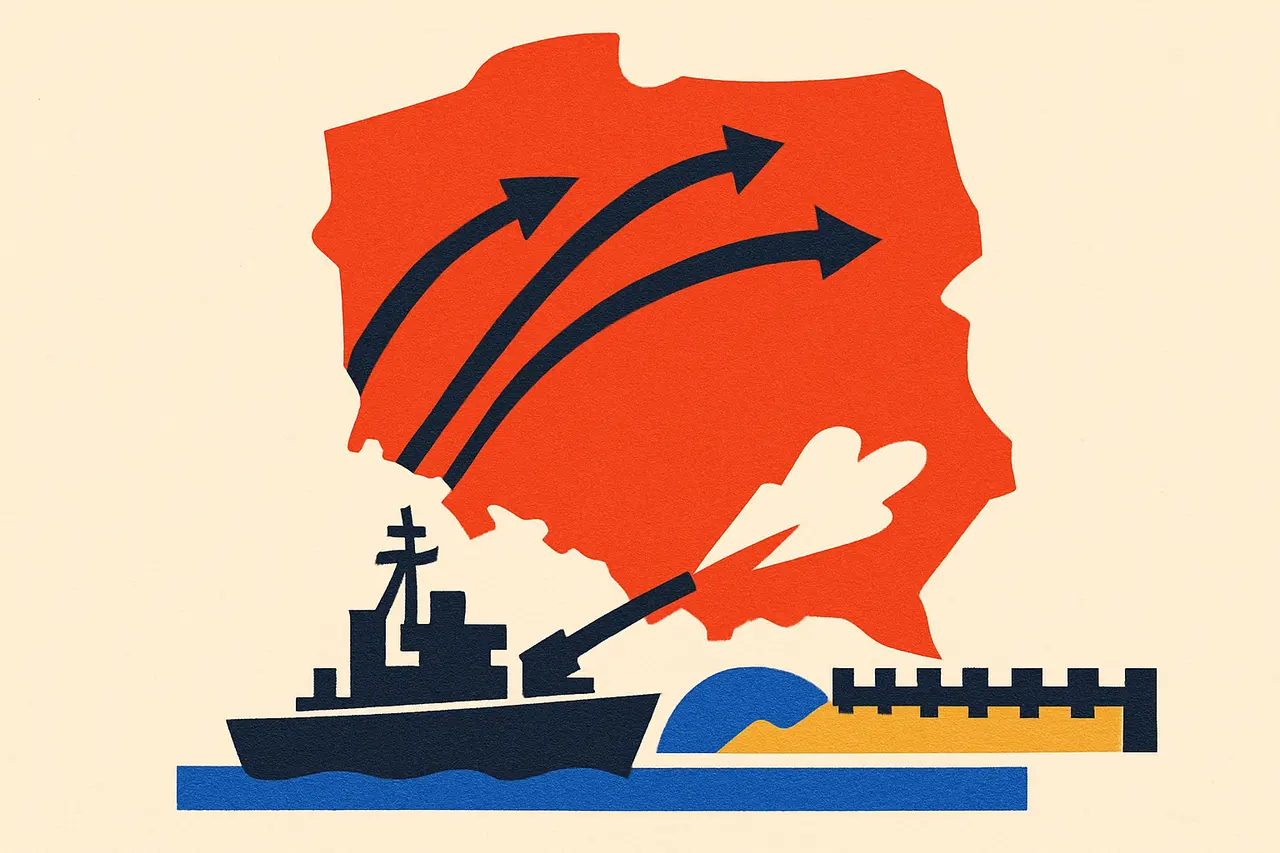
Germany invaded Poland on September 1, 1939 — but the first bombs, a faked Polish raid and the cavalry-versus-tanks story all need correcting.
Germany invaded Poland on September 1, 1939, starting World War II in Europe, and Britain and France, which had guaranteed Poland’s border, declared war on Germany on September 3. Germany committed about 1.5 million men, 2,750 tanks and 2,315 aircraft to the attack.
Where were the first shots fired?
The textbook answer is Westerplatte, the Polish military depot at the mouth of Danzig harbour, where the old German battleship Schleswig-Holstein opened fire at 4:43 a.m. Polish commemoration points to an earlier strike inland: the Luftwaffe raid on Wieluń, a small town near the border with no significant military target, traditionally timed at 4:40 a.m. One of the first bombs hit the town’s hospital, marked with a red cross. More than 70% of Wieluń was destroyed, and estimates of the civilian dead run from 700 to 2,000, the first civilian casualties of the war.
That minute is less certain than the memorials suggest: the European Network Remembrance and Solidarity notes that Luftwaffe documents and some testimonies put the raid at 5:40. What is not in doubt is that the war opened with the bombing of civilians.
Did Germany really fake a Polish attack?
Yes. On the night of August 31, the SS staged a bogus raid on the German radio station at Gleiwitz, near the border, and left the body of a murdered local man, Franciszek Honiok, as “evidence” of Polish aggression. It was the best known of several staged incidents meant to cast Poland as the aggressor.
A third popular story is a myth: Polish cavalry did not charge tanks with sabres. That image came from German propaganda. The cavalry brigades fought with rifles, machine guns and anti-tank rifles, and at Mokra one brigade destroyed more than 50 German tanks.
Poland, invaded from the east by the Soviet Union on September 17, lost its last organised resistance after the Battle of Kock on October 6. It never formally surrendered. The campaign opened what became the deadliest conflict in human history.
Sources & references
4 referencesWell-established. Corroborated by 3 independent sources.