Zarya, the first ISS module, launched on Nov. 20, 1998
On this day · 20 November 1998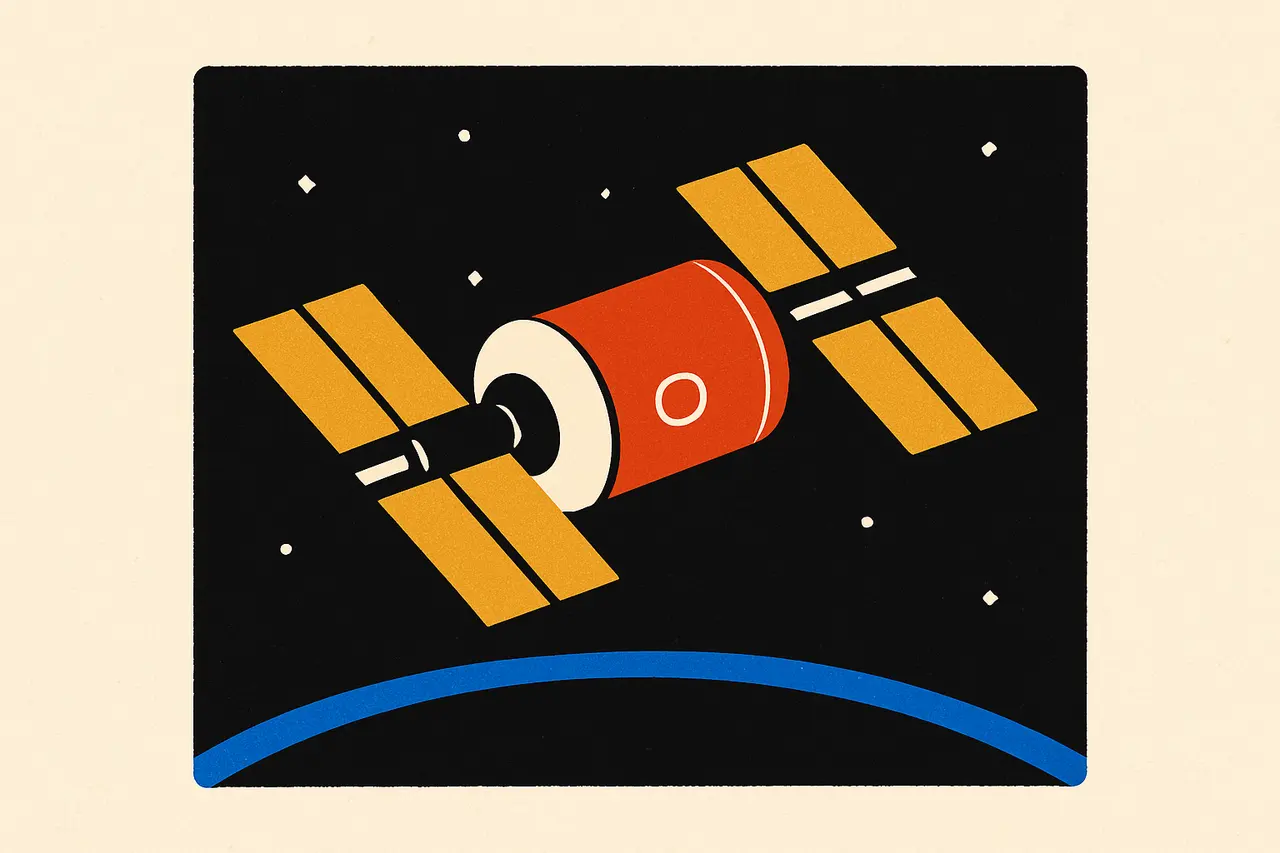
The Russian-built, US-funded 'Sunrise' block is less than 5% of today's station by mass, and it now serves mainly as storage and fuel tankage.
The first module of the International Space Station was Zarya, launched on a Russian Proton rocket from the Baikonur Cosmodrome in Kazakhstan at 1:40 a.m. EST on November 20, 1998. Its name means “sunrise.”
Technically the Functional Cargo Block, Zarya was built in Moscow by the Khrunichev centre under a subcontract to Boeing for NASA. So although Russia built and launched it, it was funded by the United States and counts as a U.S. component of the station.
It was a small seed. Zarya weighs 42,600 lb and is 41.2 feet long. The finished station weighs 925,335 lb and stretches 356 feet end to end, one yard shy of an American football field including the end zones, so the first module is under 5% of its mass. Getting there took 42 assembly flights: 37 by space shuttle and five by Russian rockets.
What happened next
- November 20, 1998: Zarya reached orbit, where it flew alone.
- 16 days later, in December 1998: Space Shuttle Endeavour arrived on mission STS-88, and astronaut Nancy Currie used the shuttle’s robotic arm to grapple it. It was the heaviest object the arm had ever moved, and she guided it using only television views.
- Early December 1998: the crew joined Zarya to the U.S.-built Unity node.
- November 2000: the station became continuously occupied, as it has been ever since.
- 2030: NASA has committed to operating it through that year and then deorbiting it.
Zarya kept the young station running through its earliest assembly. Once Russia’s Zvezda service module arrived and took over its functions, Zarya became mainly a storage room and a carrier of external fuel tanks. A deorbit would end the career of a module that has been in orbit since the 1990s.
Sources & references
5 referencesWell-established. Corroborated by 3 independent sources.