Oregon's 1843 wagon train was huge, but not the first
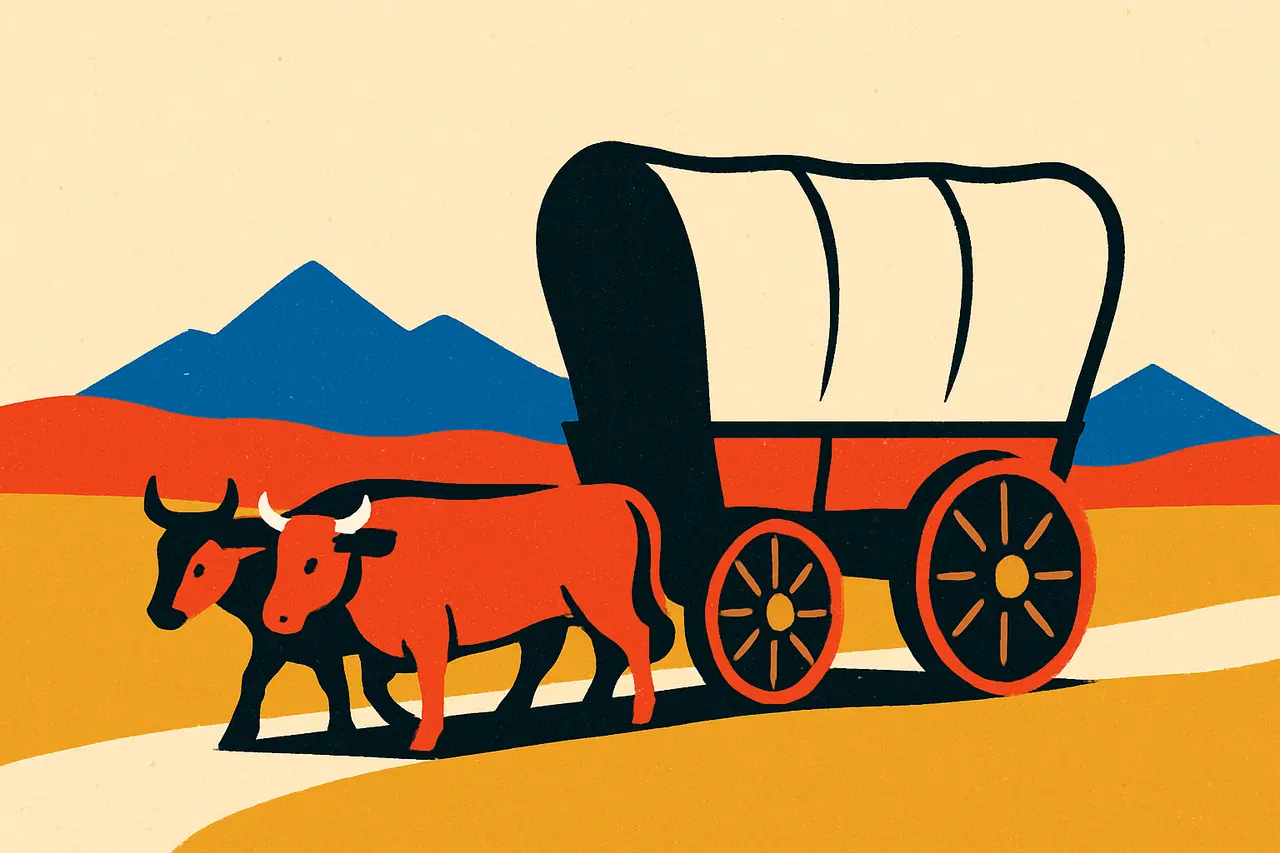
Nearly 1,000 emigrants set out for Oregon in 1843, seven years after the first wagons tried the trail, and their arrival helped decide who owned the Northwest.
The Great Migration of 1843, a wagon train of nearly 1,000 people that organised at Independence, Missouri, that spring, was the first mass migration to Oregon, not the first to take wagons there. Its success over a trail of more than 2,000 miles persuaded thousands more to follow.
The route had been opening for years before that:
- 1836: Missionaries Marcus and Narcissa Whitman take the first wagons west from Missouri. They abandon them 200 miles short of Oregon but show that families can travel on wheels.
- 1841: A band of about 70 pioneers, mostly would-be farmers, leaves Independence for Oregon.
- 1842: A slightly larger party of about 100 makes the journey.
- 1843: Around 1,000 people with some 5,000 oxen and cattle head out from Independence, against a chorus of doubters.
- 1845: Nearly 3,000 emigrants take the trail.
- 1847: The yearly flow across the central Plains reaches 4,000 to 5,000.
The 1843 numbers are often garbled. About 1,000 is the usual count of those who set out; the Encyclopedia of the Great Plains puts that season’s travellers at 875, and some sites turn that into the number who reached Oregon.
What made the trail possible was the discovery in 1824 of South Pass, a gentle crossing of the Rocky Mountains in present-day Wyoming. The danger emigrants feared most, attack by Plains Indians, killed few. Accidents with firearms, drownings and mishaps with wagons and livestock killed many more, and disease, above all cholera, killed the most.
The migration also helped redraw a border. Oregon Country, covering today’s Oregon, Washington and part of Idaho, was still claimed by Britain. By 1846 enough Americans had settled there that Britain ceded the territory south of the 49th parallel, and by 1866 something like 250,000 to 300,000 people had crossed the Plains on the overland trails.
Sources & references
3 referencesWell-established. Corroborated by 3 independent sources.