The First Commercial Kinetoscope Parlor Opened
On this day · 14 April 1894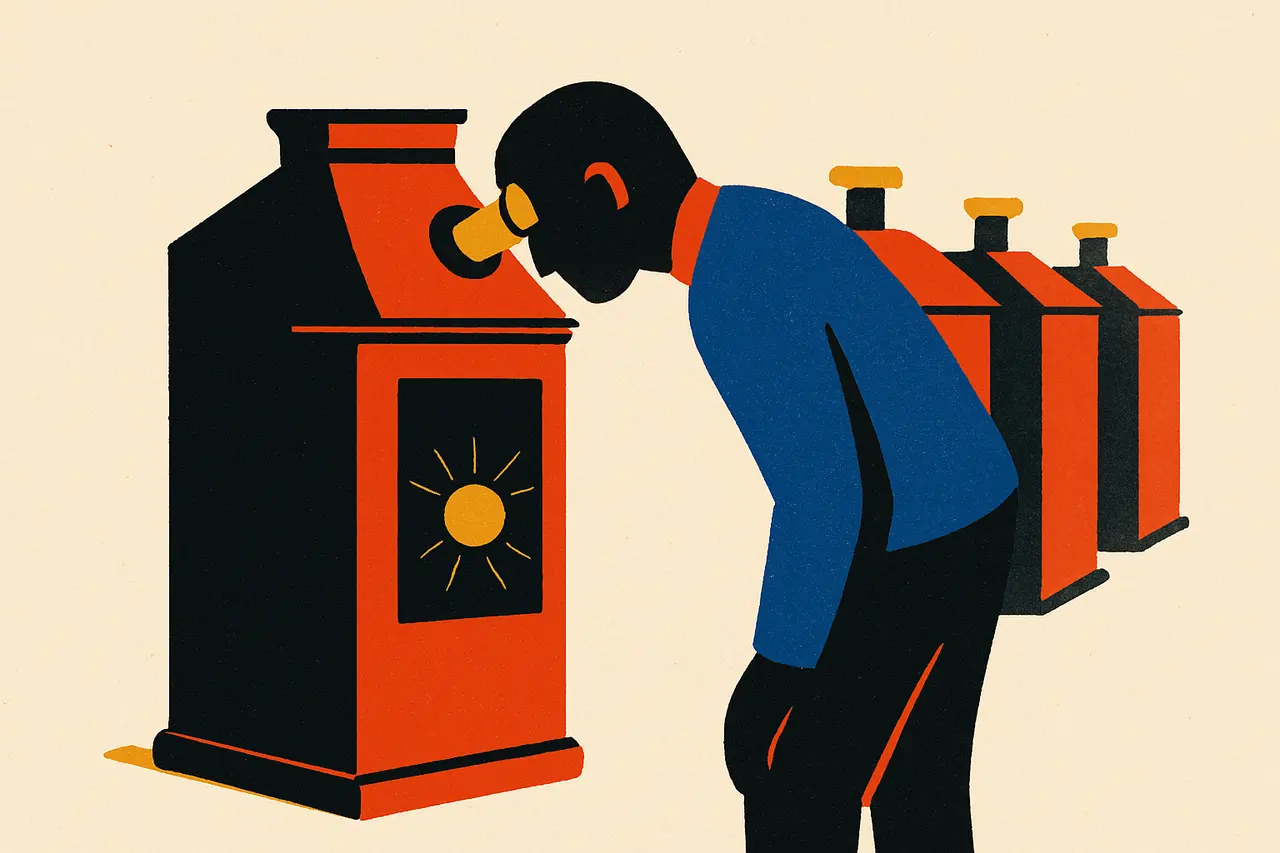
A converted Broadway shoe store became the world's first movie house, letting strangers pay to watch film whenever they pleased.
On Saturday, April 14, 1894, the first commercial Kinetoscope parlor opened in New York City, at 1155 Broadway. The Holland Brothers had rented a former shoe store and lined it with Thomas Edison’s peephole viewing machines, devices built by W. K. L. Dickson in which a single customer leaned over an eyepiece to watch a strip of film loop past a lamp.
For 25 cents, a patron could peer into a row of machines, each running a short scene of barely a minute: a barber shop, a blacksmith, wrestlers, a trapeze act. It was the first time the public could simply walk in off the street and watch moving pictures on demand, rather than at a one-off scientific demonstration.
Cinema began not on a screen, but bent over a wooden cabinet, one viewer at a time.
The novelty was an instant hit, drawing roughly 500 customers on opening day and keeping the doors open past midnight. Within months, copycat parlors spread to other American cities, seeding the commercial film industry years before projection turned the peepshow into the picture show.
Sources & references
2 referencesWell-established. Corroborated by 2 independent sources.