A galloping horse settled a question in 1878 — and helped invent the movies
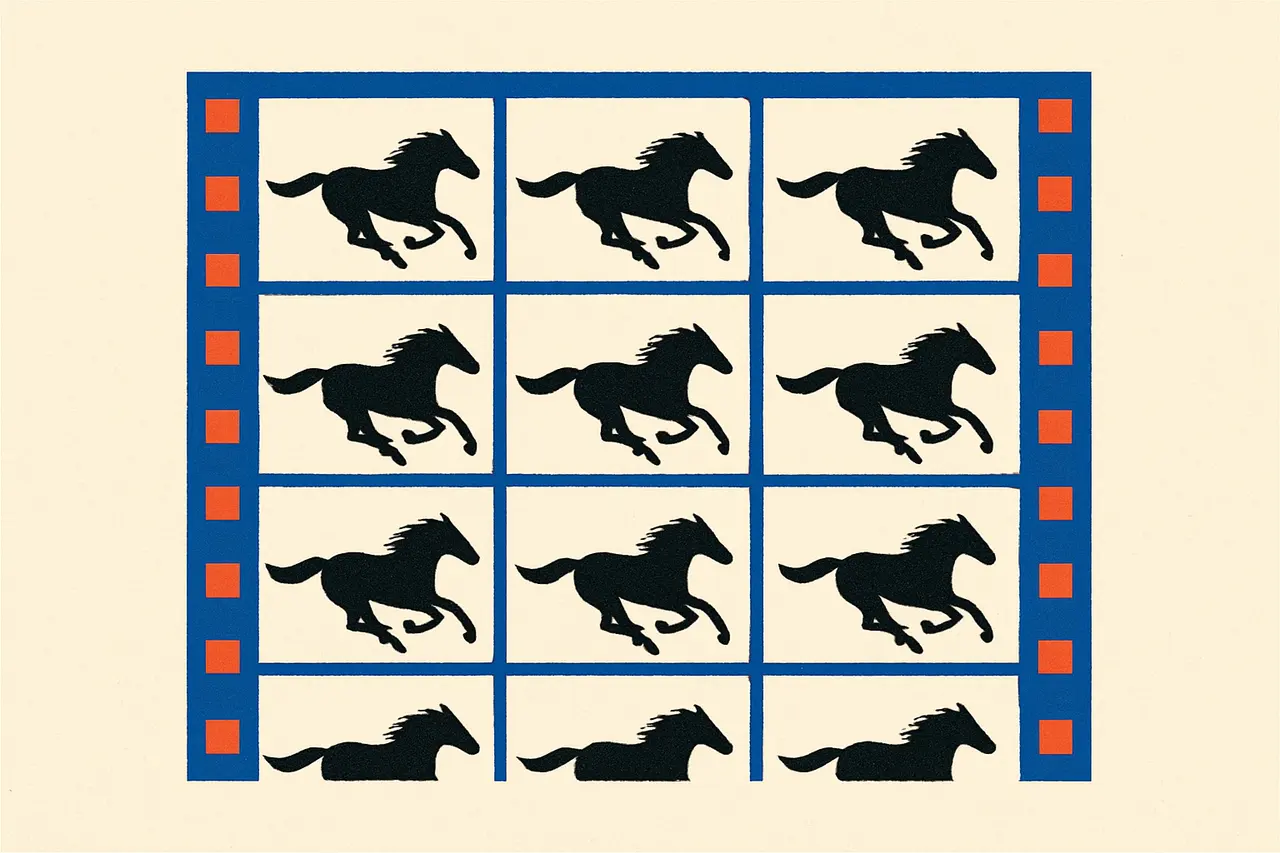
To find out whether a galloping horse ever has all four hooves off the ground, a railroad tycoon hired a photographer to freeze time.
In the 1870s painters and horsemen argued over a deceptively simple question: during a gallop, are all four hooves ever off the ground at once? The motion was far too fast for the human eye to judge, and artists had long painted the “rocking-horse” pose, legs splayed fore and aft, simply because it looked dynamic.
Railroad magnate Leland Stanford hired photographer Eadweard Muybridge to settle it. In 1878, at Stanford’s Palo Alto track, Muybridge lined up a battery of 12 cameras along the rail, each triggered by a trip-wire as the horse swept past. Exposures as brief as 2/1000 of a second froze the animal mid-stride — and the result was counterintuitive. Yes, there is an airborne instant when no hoof touches the ground, but it comes when the legs are tucked together beneath the body, not extended in the dramatic spread painters had assumed.
Muybridge was an unlikely scientific pioneer. In 1874, before the horse experiments, he had shot and killed his wife’s lover; a California jury acquitted him, accepting the killing as “justifiable homicide.”
A popular legend claims Stanford had a $25,000 bet riding on the answer, but historians who have dug into it find no evidence any wager existed.
Viewed in sequence, the frames made a tiny moving filmstrip. To project them, Muybridge built the zoopraxiscope, a spinning glass disc that threw the images onto a screen in apparent motion — a direct ancestor of the movie projector, and of cinema itself.
Sources & references
2 referencesWell-established. Corroborated by 2 independent sources.