The bombardment that inspired the U.S. anthem began
On this day · 13 September 1814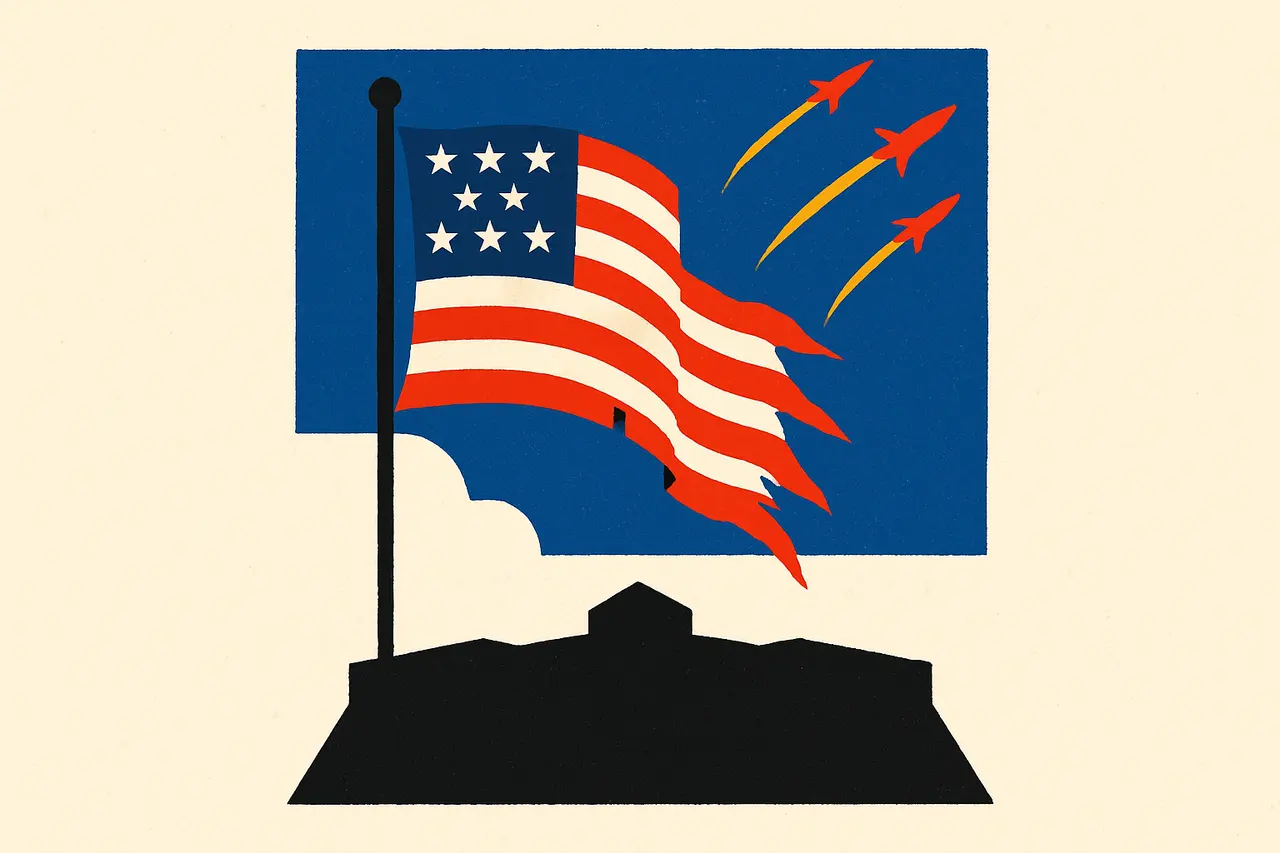
A 25-hour British shelling of a Baltimore fort failed to lower one flag, and gave a young lawyer his most famous lines.
At dawn on September 13, 1814, British warships in the Chesapeake opened fire on Fort McHenry, the star-shaped guardian of Baltimore harbor. For roughly 25 hours they hurled mortar shells and Congreve rockets at the garrison, most bursting short or overhead. The fort, low on long-range guns, mostly held its fire and absorbed the storm.
Watching from a truce ship downriver was Francis Scott Key, a 35-year-old lawyer detained while negotiating a prisoner’s release. He had seen the assault begin; through the smoke he could not tell who had won.
When dawn on the 14th showed the American flag still flying, Key began scribbling the lines on the back of a letter.
His poem, Defence of Fort M’Henry, was published within the week and set to a popular melody. As “The Star-Spangled Banner,” it became the United States’ official national anthem in 1931 — born from a battle the fort’s defenders, against the odds, did not lose.
Sources & references
2 referencesWell-established. Corroborated by 2 independent sources.