Nelson won Trafalgar and lost his life in the same afternoon
On this day · 21 October 1805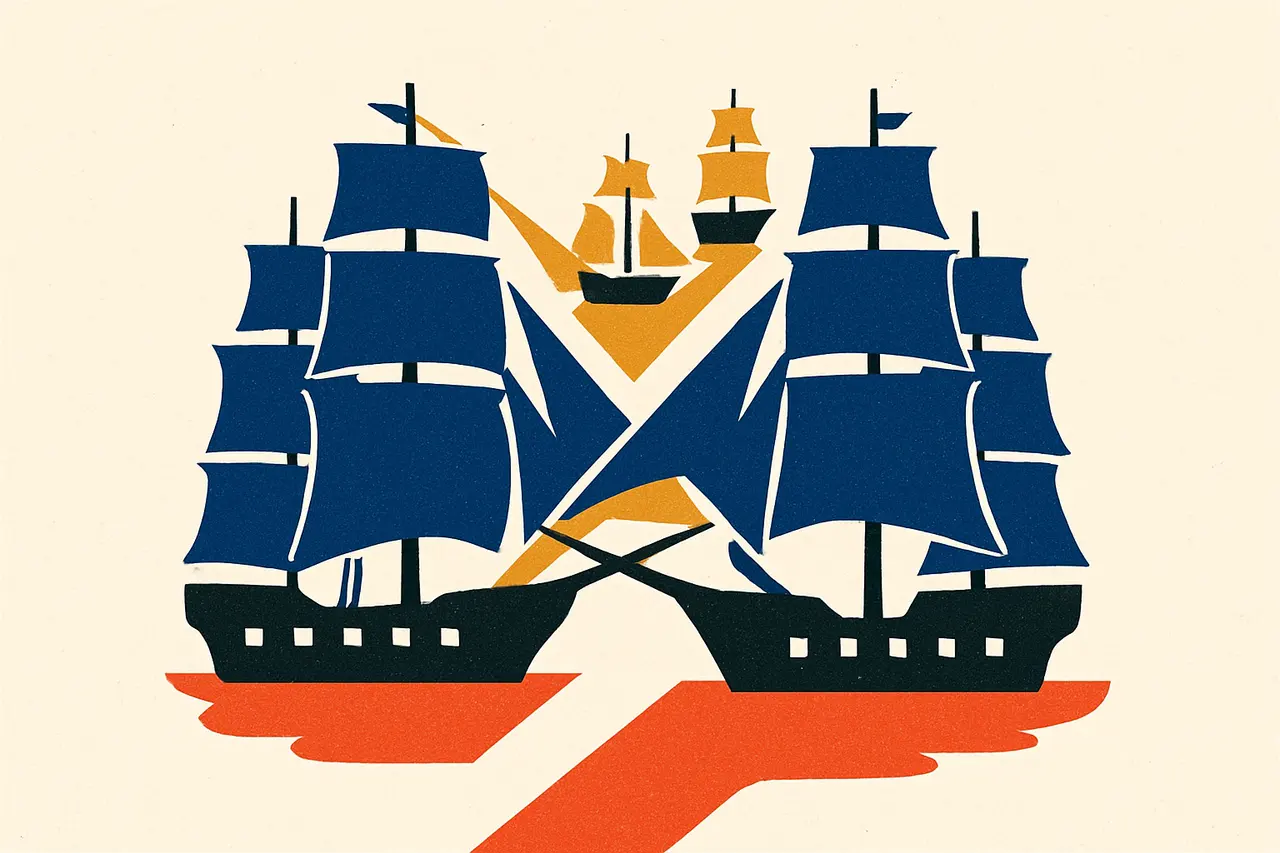
In five hours off Cape Trafalgar, Nelson's outnumbered fleet shattered the Franco-Spanish navy — and a sniper's ball ended his life.
On 21 October 1805, off Cape Trafalgar on Spain’s southwestern coast, Vice-Admiral Horatio Nelson led 27 British ships against a combined French and Spanish fleet of 33. Rather than trade broadsides in parallel lines, Nelson drove his fleet in two columns straight through the enemy formation, breaking it into pieces it could not defend.
The gamble worked devastatingly well. By the time firing ceased around 5:30 p.m., the British had captured 17 enemy ships and burned another, without losing a single vessel of their own.
Nelson did not see the victory completed.
Shot by a French marksman early in the action, he was carried below and died of his wounds. The triumph cemented British naval supremacy for roughly a century and wrecked Napoleon’s hopes of invading Britain. Nelson’s last signal — “England expects that every man will do his duty” — passed straight into legend.
Sources & references
2 referencesWell-established. Corroborated by 2 independent sources.